Owner’s manual
 Error Codes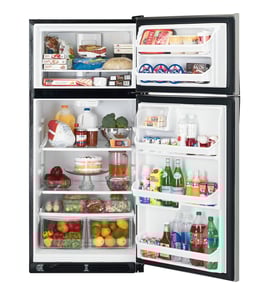



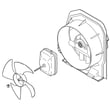
How to order GE appliance parts?
For your GE GTE17GTNDRWW top-mount refrigerator, we recommend ordering replacement parts directly from the parts list for this model so you get the correct fit. If you are shopping by model number across appliances, you can also search on Sears PartsDirect.
The fastest way to order the right part
- Find your model number on the rating label and match it exactly: GTE17GTNDRWW.
- Use the model-specific parts list to choose the exact part ID.
- Compare the part name to what you are replacing (fan motor, gasket, control board, etc.).
- Check whether you need related mounting pieces (for example, a grommet with a fan motor).
- Keep your serial number handy in case your refrigerator has production changes.
Common parts customers order for this model
These are examples of parts available for GE GTE17GTNDRWW that customers often replace:
| What you need | Example part for this model | What it affects |
|---|---|---|
| Noisy or warm fridge section | GE refrigerator evaporator fan motor WR60X31522 | Airflow across the evaporator for cooling |
| Door not sealing, frost, sweating | Refrigerator door gasket WR14X27232 | Temperature stability and energy use |
| Ice maker not producing ice (if equipped) | Icemaker rep WR30X30972 | Ice production |
Before you place the order
- Confirm the symptom so you do not replace the wrong part (for example, airflow issues can be fan, damper, or frost buildup).
- Use the wiring diagrams and part location views in the owner's manual to identify the correct component.
- If you are ordering a cooling-system component (compressor, evaporator, drier), plan for professional sealed-system service.
Why it matters
Ordering by the exact model number and part ID helps prevent returns and downtime. On refrigerators like the GE GTE17GTNDRWW, small differences in door gaskets, fan motors, and controls can change fit and performance.
Last updated: February 2026
How to find GE refrigerator part number?
For your GE GTE17GTNDRWW top-mount refrigerator, the fastest way to find the correct part number is to start with the model and serial label inside the fresh food compartment, then match the part by diagram and description in the parts list and your owner's manual.
Where to find the model and serial label
GE places the identification label on the left side, near the middle of the refrigerator compartment (fresh food section). Write down both numbers before you search; the model number narrows the parts list, and the serial number can help confirm production details.
- Open the refrigerator (not the freezer)
- Look on the left interior wall, around mid-height
- Record MODEL and SERIAL exactly as shown
- Use the full model number: GTE17GTNDRWW
How to look up the right part number (the reliable method)
Once you have the model number, use the exploded-view diagrams and part descriptions to identify the exact item you need.
- Find the section that matches the repair (cooling, doors, ice maker, controls)
- Match the part by location and shape in the diagram
- Confirm the part name and part ID before ordering
- If multiple similar parts appear, compare mounting points, wire connectors, and finish color
Example part lookups for this model
| What you are fixing | What to search for | Example part on this model |
|---|---|---|
| Warm fridge or noisy airflow | Evaporator fan motor | GE refrigerator evaporator fan motor WR60X31522 |
| Door not closing or sweating | Door gasket | Refrigerator door gasket WR14X27232 |
| No water to ice maker (if equipped) | Water inlet valve | Refrigerator water inlet valve WR57X32213 |
Why it matters
Using the exact GTE17GTNDRWW model-based parts list prevents ordering a look-alike part that does not fit, especially for electrical items like a control board, fan motor, or door switch.
Ordering tip
We recommend ordering directly from the parts list for this model first; if you are searching more broadly by model number, use Sears PartsDirect.
Last updated: February 2026
How to clean coils on GE top freezer refrigerator?
For your GE GTE17GTNDRWW top-freezer refrigerator, we clean the condenser coil area by unplugging the refrigerator, pulling it straight out on its rollers, and removing dust with a coil brush and vacuum. This restores airflow, helps cooling performance, and can reduce compressor run time.
Steps to clean the condenser coil area
- Unplug the refrigerator before cleaning.
- Turn the front leveling legs counterclockwise to transfer weight to the rollers.
- Pull the refrigerator straight out (avoid moving it sideways to protect flooring).
- Vacuum loose dust from the rear and bottom area; use a soft coil brush for packed lint.
- Keep the vacuum nozzle and brush gentle so you do not bend tubing or damage wiring.
- Push the refrigerator straight back in; do not roll over the power cord or water line (if equipped).
- Turn the leveling legs clockwise until they bear the refrigerator’s weight again.
What to use (and what to avoid)
| Item | Good choice? | Why |
|---|---|---|
| Vacuum with brush attachment | Yes | Removes loose dust quickly |
| Long, soft coil-cleaning brush | Yes | Reaches lint in tight areas |
| Compressed air | Sometimes | Blows dust out, but can make a mess |
| Water or wet cleaner on coils | No | Adds corrosion risk and can push debris into components |
How often we recommend cleaning
Most homes do best cleaning the coils every 6 to 12 months. Clean more often if you have pets, heavy dust, or the refrigerator sits near a laundry area.
Why it matters
Condenser coils release heat from the sealed system. When lint and dust block airflow, the refrigerator can run longer, struggle to hold temperature, and put extra strain on the compressor.
Helpful references for this model
- Use the GTE17GTNDRWW owner’s manual for safe moving, roller and leveling-leg steps, and cleaning precautions.
- If you are troubleshooting warm temperatures or airflow issues after cleaning, the GE refrigerator evaporator fan motor WR60X31522 is one of the common airflow-related parts for this model.
- For parts and diagrams specific to GTE17GTNDRWW, shop the parts list on this page or search by model at Sears PartsDirect.
Last updated: February 2026
What is the most common problem with a GE refrigerator?
The most common problem we see with GE refrigerators like model GTE17GTNDRWW is a cooling complaint (warm fresh food section, weak freezer performance, or temperature swings). In most cases, the root cause is restricted airflow or heat removal, or a fan issue that prevents cold air from circulating correctly.
Most common causes to check first (in order)
- Dirty condenser coils: Dust buildup makes it hard to shed heat, so temperatures rise.
- Blocked air vents: Overpacking can block return or supply vents and create warm spots.
- Evaporator fan problem: If the fan is noisy, intermittent, or not running, the refrigerator section often warms up.
- Door not sealing: A leaking gasket lets humid air in, causing frost and poor cooling.
- Defrost system issue: Frost buildup on the evaporator can choke airflow over time.
Quick symptom-to-likely-cause guide
| Symptom | Most likely cause | What to do next |
|---|---|---|
| Freezer cold, fridge warm | Airflow or evaporator fan | Check vents; listen for fan; review GTE17GTNDRWW owner's manual |
| Both sections warm | Condenser airflow or control issue | Clean coils; confirm condenser fan area is clear |
| Frost on back wall of freezer | Defrost or door seal issue | Inspect gasket; reduce door openings |
| Warm spots after grocery load | Blocked vents | Reorganize to keep vents open |
Parts that commonly relate to cooling complaints on GTE17GTNDRWW
If troubleshooting points to a failed component, these model-matched parts are commonly involved:
- GE refrigerator evaporator fan motor WR60X31522 (circulates cold air)
- Refrigerator defrost heater assembly WR55X31113 (helps prevent frost buildup)
- Refrigerator door gasket WR14X27232 (fresh food door seal)
- Refrigerator freezer door gasket WR14X27230 (freezer door seal)
You can order replacement parts from the parts list for your model, or search by model number on Sears PartsDirect.
Why it matters
Cooling problems usually get worse, not better. Poor airflow and warm temperatures can lead to food spoilage, excess frost, longer run times, and higher energy use. Catching a fan, gasket, or defrost issue early helps protect the compressor and keeps temperatures stable.
Last updated: February 2026