 Owner’s manual
 Error Codes




Why is the bottom drawer of my GE refrigerator freezing food?
Food freezing in the bottom drawer on your GE CVE28DM5NBS5 usually happens when too much cold air is being pushed into that zone or the temperature sensor feedback is off. We focus on airflow blockages, drawer settings, and temperature-sensing parts first; then we check for defrost-related icing that can redirect airflow.
Quick checks we recommend first
- Confirm the drawer is set to the correct mode (some CVE models have a convertible drawer with selectable temps).
- Make sure packages are not blocking vents inside the drawer area or along the back wall.
- Avoid packing the drawer tightly; leave space for air circulation.
- Verify the refrigerator temperature is set around 37°F and the freezer around 0°F.
- Check that the drawer closes fully and the seals are making contact.
Likely causes and what to do
| What’s happening | Common cause | What we do next |
|---|---|---|
| Drawer items freeze but rest of fridge seems normal | Airflow aimed into the drawer or vents blocked | Clear vents; reorganize; recheck temps after 24 hours |
| Drawer freezes and temps swing | Temperature sensor (thermistor) reading wrong | Test/replace the sensor if readings are out of range |
| Freezing follows frost buildup | Defrost system issue causing ice to redirect airflow | Inspect defrost heater and defrost sensor |
Parts that commonly relate to freezing symptoms
If troubleshooting points to a sensor or defrost problem, these model-matched parts are commonly involved:
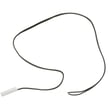
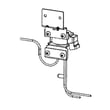
- Convertible thermistor WR55X31992 (helps the control board “know” the drawer temperature)
- Refrigerator defrost sensor WR55X29875 (monitors evaporator temperature during defrost)
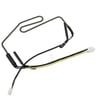
- Freezer defrost heater WR51X31995 (melts frost so airflow stays normal)
Why it matters
When a drawer runs too cold, produce can freeze, containers can crack, and the refrigerator may run longer than necessary. Fixing airflow and temperature feedback early helps stabilize temperatures across the fresh food section and the freezer.
Helpful references for this model
- Use the owner's manual to confirm drawer features, recommended temperature settings, and storage guidance.
- If you need to order a replacement sensor or defrost part, use the parts list for GE CVE28DM5NBS5 on this page, or search by model on Sears PartsDirect.
Last updated: February 2026
Is a top or bottom mount fridge better?
A bottom-mount refrigerator like the GE CVE28DM5NBS5 is better when you want everyday fresh-food items at eye level and more organization options (bins, shelves, pull-out storage). A top-mount refrigerator is better when you want a simpler layout and typically lower purchase and repair costs.
How the two styles compare
| Feature | Bottom-mount (like CVE28DM5NBS5) | Top-mount |
|---|---|---|
| Fresh-food access | Easier; fridge section is on top | Requires more bending |
| Freezer access | Requires bending; freezer drawer below | Easier; freezer on top |
| Organization | More drawers, bins, and zones | Usually simpler storage |
| Efficiency | Often slightly higher energy use | Often slightly lower energy use |
| Repairs | More features can mean more parts | Fewer features, fewer parts |
When a bottom-mount is the better choice
We recommend a bottom-mount layout when these are your priorities:
- You use the refrigerator section more than the freezer
- You want more “zone” storage (produce bins, convertible storage, door bins)
- You prefer pull-out freezer baskets instead of a top freezer shelf
- You want features like water filtration and dispenser-related options
- You want easier organization for weekly grocery loads
Your CVE28DM5NBS5 includes features such as spillproof shelves, humidity-controlled storage, and a convertible zone (for fresh food, frozen food, or wine). See the CVE28DM5NBS5 owner's manual for the exact feature set and how each compartment is intended to be used.
When a top-mount is the better choice
A top-mount refrigerator is the better fit when you want:
- The lowest upfront cost for the size
- A simpler design with fewer electronic features
- Easier access to frozen foods without bending
- A layout that is straightforward for small households or secondary kitchens
Why it matters
“Better” depends on how you shop and cook. If you open the refrigerator door far more than the freezer, bottom-mount designs reduce bending and make daily items easier to reach. If you rely heavily on frozen foods, a top-mount can feel more convenient.
Parts and ownership tips for CVE28DM5NBS5
No matter which style you choose, keeping up with basic maintenance helps performance:
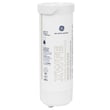
- Replace the water filter on schedule; use GE refrigerator water filter XWFE
- If you need to run the refrigerator without a filter temporarily, use refrigerator water filter bypass WR17X33825
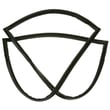
- Keep door seals clean and sealing evenly; replace if torn (this model uses a door gasket such as refrigerator door gasket WR14X32082)
- Order model-correct replacement parts from the parts list for CVE28DM5NBS5, or search by model on Sears PartsDirect
Last updated: February 2026
Why is there water in the bottom of my GE refrigerator?
Water in the bottom of your GE CVE28DM5NBS5 refrigerator almost always means defrost water is not draining to the evaporator drain pan as intended, so it overflows into the fresh food section or down into the freezer area. A clogged drain, ice blockage, or a door seal leak are the most common causes.
Quick checks we recommend first
- Make sure the doors close fully and nothing is holding them open (bins, food packages, shelves).
- Look for frost or a sheet of ice on the freezer floor; that often points to a frozen defrost drain.
- Check for water only after using the dispenser or icemaker; that points to a supply or filter-area leak.
- Confirm the refrigerator is level front-to-back and side-to-side; poor leveling can change how water flows.
- Inspect the door gasket for gaps, tears, or areas that do not seal.
Most common causes and what to do
| What you notice | Most likely cause | What to do next |
|---|---|---|
| Water pooling under crisper drawers | Defrost drain partially clogged | Clear the drain opening and flush with hot water (unplug first). |
| Ice sheet on freezer bottom, then water | Defrost drain frozen | Thaw the drain area, then clear the drain tube so it stays open. |
| Water appears after dispensing water/ice | Water line or valve seepage | Inspect fittings and tubing; test the refrigerator water inlet valve assembly WR57X32000 for leaking or weeping. |
| Condensation and intermittent puddles | Warm air leak at door | Check/clean the gasket; replace if it will not seal (see refrigerator door gasket WR14X32082). |
Why this happens (and why it matters)
During normal operation, moisture on the evaporator melts during defrost and should drain to a pan where it evaporates. When that drain path is blocked or warm air keeps creating excess frost, water ends up where it should not; it can cause odors, ice buildup, and floor leaks.
Model-specific notes for CVE-series bottom freezer refrigerators
- Your model uses a cold water supply for the icemaker and dispenser; correct water pressure and secure connections help prevent leaks.
- If you use a reverse osmosis system and also have a refrigerator filter, the manual notes using a bypass plug can be necessary for proper operation.
For diagrams and the exact drain and access points on your model, use the CVE28DM5NBS5 owner's manual. For replacement parts for this refrigerator, order from the parts list for CVE28DM5NBS5 or search by model on Sears PartsDirect.
Last updated: February 2026





