Error Codes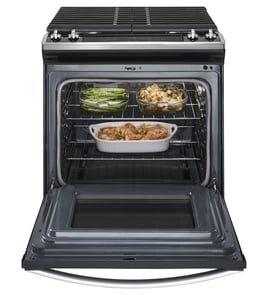



What kind of gas is used in stoves?
Most stoves like the Whirlpool WFG525S0JZ1 are set up to burn natural gas or propane (LP) to produce heat. The correct fuel depends on how your home is supplied and whether the range is configured for natural gas or converted for LP.
Natural gas vs. propane (LP): what’s the difference?
Both fuels work well in a gas range, but they require different burner orifices and regulator settings.
- Natural gas is typically delivered through a utility gas line.
- Propane (LP) is typically supplied from a tank and runs at different pressure.
- A range must be properly configured for the fuel type to light correctly and heat evenly.
- Using the wrong configuration can cause poor ignition, weak flames, or sooting.
| Fuel type | Common home supply | Typical signs it’s misconfigured |
|---|---|---|
| Natural gas | Utility gas line | Lazy yellow flames, soot, strong odor |
| Propane (LP) | Propane tank | Very large flames, overheating, hard-to-control burners |
How to tell which gas your stove is using
Use these quick checks to confirm what your kitchen is set up for.
- Look at your home’s supply: gas line (natural gas) vs tank (propane).
- Check the shutoff valve and connector behind the range (a technician can confirm safely).
- If flames are consistently yellow or leaving soot, the range may need adjustment.
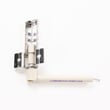
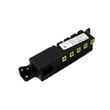
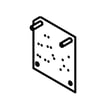
- If burners are hard to light, also check ignition components such as the module-spark W11162730 (spark module issues can mimic fuel or airflow problems).
Why it matters
Correct fuel setup helps your Whirlpool gas range ignite reliably, maintain steady blue flames, and cook evenly. It also reduces nuisance issues like soot buildup on cookware and inconsistent oven temperatures.
Last updated: January 2026
What does F5E1 mean?
On a Whirlpool WFG525S0JZ1 gas range, F5E1 is not a standard range fault code; it is commonly used on Whirlpool washers to indicate a door lock problem. If you see F5E1 on this range’s display, start with a power reset and then check the control panel and wiring.
Quick checks to try first
- Turn the range off, then unplug it (or switch the breaker off) for 1 minute; restore power.
- Confirm the display is showing F5E1 (not a similar code like F5 or E1 separately).
- If the code returns, try a different outlet (if safely accessible) to rule out a loose connection.
- If the oven was running, let the range cool; heat can aggravate marginal connections.
What usually causes a “wrong” code on a range
On gas ranges, unexpected or “non-range” codes typically point to an issue with the user interface or control circuit.
| Likely cause | What you may notice | What to do next |
|---|---|---|
| Control panel key stuck or moisture | Beeping, random inputs | Clean and dry the panel; retry after reset |
| Loose or damaged wire connection | Code appears after moving/cleaning | Inspect harness connections (power off) |
| Control failure | Code returns immediately after reset | Plan for control diagnosis/replacement |
Parts that may be involved (when the code keeps coming back)
If the reset does not clear the issue, the problem is often in the control area. For this model, common related parts include the control assy W11159621 and the control panel (stainless) W11026866.
Why it matters
A persistent error code can prevent normal oven operation and can also indicate an electrical connection problem that may worsen over time. Addressing it early helps avoid intermittent heating, ignition issues, or a non-responsive keypad.
Last updated: January 2026
How long does a Whirlpool gas stove last?
A Whirlpool gas range like model WFG525S0JZ1 typically lasts about 15 years with normal household use and basic maintenance. Keeping burners clean, ensuring proper ignition, and fixing small issues early helps you get the full life out of the oven and cooktop.
Typical lifespan and what to expect
Most gas ranges fall into a similar lifespan range, but real-world life depends on heat exposure, cleaning habits, and how quickly worn parts are replaced.
- Typical lifespan: ~15 years
- Common “wear” items: igniters, knobs, door hinges, door gasket
- Most common end-of-life drivers: repeated ignition failures, oven temperature problems, heavy corrosion, or costly control issues
Parts that often extend the life of a gas range
If your WFG525S0JZ1 is otherwise in good shape, replacing a few common parts can restore safe, reliable operation.
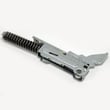
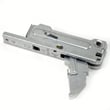
- If the oven door won’t close tightly or drops open, check the range oven door hinge WPW10299224.
- If the oven struggles to light or takes too long to ignite, the range oven burner igniter WPW10333842 is a common fix.
- If heat leaks around the oven door or cooking times are inconsistent, inspect the door seal W11542153.
| Symptom | Likely area | Typical fix |
|---|---|---|
| Oven won’t ignite or ignites slowly | Ignition system | Replace igniter, check wiring and connections |
| Door doesn’t shut evenly | Door hardware | Replace hinge(s), verify alignment |
| Oven heats but seems weak or uneven | Door seal, burner/ignition | Replace gasket, verify proper ignition |
Why it matters
A gas range can keep running for years past the first symptom, but ignition and door-seal problems can waste fuel, cause poor baking results, and put extra strain on components like the spark module and control.
Maintenance that helps you reach 15 years
- Keep burner caps and ports clean and dry
- Wipe spills quickly to prevent corrosion
- Avoid slamming the oven door (protects hinges)
- Address slow ignition promptly (protects the ignition system)
- Use the right tools and testing methods when checking electrical parts (see how to use a multimeter to test electrical parts video)
Last updated: January 2026
How do I know if my igniter is bad on my gas stove?
A bad igniter on your Whirlpool gas range model WFG525S0JZ1 usually shows up as a burner that clicks but won’t light, lights slowly (often with a gas smell), or an oven that won’t heat because the igniter is too weak to open the gas valve.
Common signs the igniter is failing
- Surface burner keeps clicking but the flame never appears.
- Burner lights after a long delay (more than a few seconds).
- You smell gas before ignition (shut the burner off and ventilate).
- Oven bake or broil will not ignite, or it ignites inconsistently.
- Igniter glows dimly (oven) or you see cracks/chips on the igniter.
Quick checks you can do safely
- Turn the burner off if you smell gas; wait for the smell to clear.
- For surface burners: remove the grate and cap; clean and dry the burner head ports.
- Make sure the burner cap is seated correctly (misalignment causes delayed ignition).
- Listen for steady clicking and look for a strong spark at the electrode.
- If the oven will not light, the issue is commonly the oven igniter circuit; a weak igniter can glow but still fail under load.
What to test (and what it tells you)
| What you observe | Most likely cause | What to do next |
|---|---|---|
| Clicking, no flame | Dirty/wet burner parts or weak spark | Clean/dry, then inspect spark system |
| Slow ignition with gas smell | Weak ignition or poor cap alignment | Re-seat cap, clean ports, then test components |
| Oven won’t heat, igniter glows | Weak oven igniter not drawing enough current | Replace the oven igniter |
| No clicking/sparking at all | Spark module, switch, or wiring issue | Electrical diagnosis with a meter |
Parts that commonly fix ignition problems on WFG525S0JZ1
- Range oven burner igniter WPW10333842 (for bake ignition issues)
- Spark module (red) WPW10475149 (for surface burner sparking issues)
- Module-spark W11162730 (alternate spark module used on some builds)
Why it matters
Delayed ignition can allow unburned gas to build briefly before lighting, which can cause a small flare-up and uneven cooking. Fixing ignition issues also prevents extra wear on the spark system and improves oven temperature reliability.
Last updated: January 2026