View engine





How to tell if a snowblower auger belt is bad?
A bad auger belt on your Craftsman 536885470 24" snow thrower usually shows up as augers that stop under load, slip, or barely turn even though the engine runs normally. You will often see belt damage (cracks, glazing, fraying) or notice a hot rubber smell after trying to blow snow.
Quick symptoms you can check
- Auger does not turn when you engage the auger control
- Auger turns slowly, then stops as soon as it hits heavier snow
- Squealing or chirping from the belt and pulley area
- Burning rubber smell or light smoke near the belt cover
- Excessive vibration when the auger is engaged
- Belt looks shiny (glazed), cracked, stretched, or has missing chunks
What to inspect (engine off)
- Shut the engine off, remove the key (if equipped), and let all moving parts stop.
- Remove the belt cover and look at the belt surface and edges.
- Check belt tension by engaging the auger control; the belt should tighten noticeably and ride firmly in the pulleys.
- Spin the auger by hand (with the machine off). If it binds, the belt can overheat and fail quickly.
Belt condition guide
| What you see or smell | What it usually means | What to do next |
|---|---|---|
| Shiny, hard belt surface | Belt is glazed and slipping | Replace belt; check pulley alignment |
| Cracks, frayed cords, missing rubber | Belt is worn out | Replace belt |
| Burning smell after engagement | Belt is slipping or auger is binding | Check for jammed auger, seized bearing, or misadjusted tension |
| Belt sits very deep in pulley groove | Belt is stretched | Replace belt; verify idler action |
Why it matters
The auger belt is the power link between the engine and the auger/impeller system. When it slips, you lose throwing performance and the heat from friction can damage pulleys, idlers, and nearby components.
Helpful related repair skill
If you find damaged wiring near the belt cover area (from rubbing or vibration), use our guide: how to repair broken or damaged wires video.
Last updated: February 2026
Should I spray my snowblower with WD-40?
Yes, you can use WD-40 on your Craftsman 536885470 24-inch snow thrower, but we recommend using it sparingly and only on the right areas. A light coat on the chute and discharge path can help reduce snow sticking; keep it off belts, friction surfaces, and hot engine parts.
Where WD-40 helps (and where it does not)
Use WD-40 as a light protectant and short-term anti-stick coating on bare metal; avoid anywhere it can contaminate drive components.
Good places to spray (light coat, wipe excess):
- Inside the chute and on the chute deflector (anti-stick)
- Inside the auger housing where snow flows (anti-stick)
- On exposed metal surfaces after cleaning (rust prevention)
Places to avoid spraying:
- Any belts, pulleys, or drive/friction surfaces (can cause slipping)
- The recoil starter mechanism and rope (can attract dirt and gum up)
- Muffler, cylinder head area, or other hot engine parts (fire and smoke risk)
Best practice: quick routine after use
- Shut the engine off and let the machine cool completely.
- Knock off packed snow and ice; dry the chute area.
- Apply a very light spray, then wipe until the surface looks damp, not wet.
- Store the snowblower in a dry spot to reduce corrosion.
Common alternatives (often better for snow)
| Option | Best for | Notes |
|---|---|---|
| Silicone spray | Snow shedding | Typically lasts longer on the chute than WD-40 |
| Dedicated snowblower chute spray | Heavy, wet snow | Designed specifically to reduce clogging |
| Light oil wipe-down | Off-season rust prevention | Wipe thin to avoid drips onto drive parts |
Why it matters
Overspray is the real problem. If lubricant gets onto the drive system, your snowblower can lose traction or stop moving under load. Keeping sprays limited to the snow path helps performance without creating slipping issues.
If you are already seeing drive slipping or inconsistent movement, inspect the drive components and related hardware such as the pulley 1502120MA for wear or contamination.
Last updated: February 2026
Is it worth fixing a snowblower?
Yes, it’s worth fixing a Craftsman 536885470 24" snow thrower when the problem is a normal wear item or a fuel-system service and the total repair cost stays well below the cost of replacing the machine. For major drivetrain or engine damage, replacement usually makes more sense.
Quick way to decide (cost, age, and what failed)
Use these practical checkpoints to decide if repair is the smart move:
- Repair it when it needs routine parts (starter rope/handle, carburetor service parts, springs, pulleys) and the machine is otherwise solid.
- Repair it when the issue is seasonal or storage-related (stale fuel, gummed carburetor, stuck float).
- Replace it when the auger/impeller system or drive system needs multiple expensive assemblies at once.
- Replace it when the frame, auger housing, or engine has severe damage (cracks, heavy corrosion, low compression).
- Repair it when you can fix the root cause in one visit (for example, carburetor rebuild instead of repeated cleaning).
Common “worth fixing” repairs for model 536885470
These are frequent, high-value fixes that restore starting and performance without turning into a full rebuild:
- Replacing a broken starter rope with Craftsman lawn & garden equipment engine recoil starter rope, 98-in 590535
- Replacing a cracked starter handle with Craftsman lawn & garden equipment engine recoil starter handle 590574
- Fixing fuel leaks or flooding by servicing the carburetor (float, needle seat, bowl, O-rings)
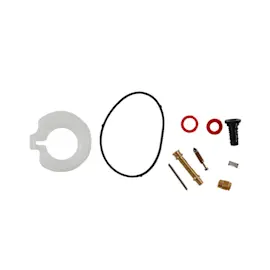
- Rebuilding a dirty carburetor using lauson lawn & garden equipment engine carburetor rebuild kit 31840
- Replacing a worn drive or auger pulley such as pulley 1502120MA (when the belt keeps slipping or squealing)
Repair vs replace: simple comparison
| Situation | Usually best choice | Why |
|---|---|---|
| Won’t start after storage; fuel smell; surging | Repair | Carburetor service is straightforward and restores reliability |
| Pull cord won’t retract or rope snapped | Repair | Low-cost parts and quick turnaround |
| Needs multiple major drive/auger components | Replace | Parts and labor stack up fast |
| Engine has persistent low power and hard starting even after fuel-system service | Replace | Internal engine wear becomes a long-term cost |
Why it matters
A snowblower that starts easily and throws consistently is safer and faster to use. Fixing the right wear parts (especially fuel-system and recoil-starter parts) prevents repeat no-starts, reduces downtime during storms, and protects bigger components like the auger and drive system.
Last updated: February 2026
How do I tell how old my snowblower is?
To tell how old your Craftsman snowblower model 536885470 is, use the model and serial number tag on the snowblower frame and match that information to the correct parts diagrams for your exact build. Craftsman serial-number formats vary by production run, so the most reliable approach is confirming the full serial number and any date code printed on the tag.
Where to find the identification tag
On Craftsman 24-inch snow throwers like model 536885470, the model and serial tag is typically on the main frame (not the engine). Check these common spots:
- Rear frame near the handle supports
- Side of the auger housing (near the bucket)
- Frame area near the engine mounting plate
- Under or near the belt cover area
- On the engine shroud (engine model/type code is separate from the snowblower)
How to interpret what you find (without using the wrong serial format)
Instead of assuming a specific “first 2 digits = year” pattern, use what is actually printed on your tag.
- Write down the entire serial number exactly as shown
- Look for an explicit date code (some tags include a printed date or a coded date)
- Use the engine tag as a cross-check; engine build date is usually close to the snowblower assembly date
- If the tag includes a second model reference (sometimes a 247.xxxxx style number), record that too
| Tag you’re reading | What it identifies | Why it helps |
|---|---|---|
| Snowblower frame tag | Snowblower build/version | Ensures the right diagrams and hardware |
| Engine tag | Engine build/version | Helps date the unit and match carburetor parts |
Why it matters
The build/version affects which parts fit your unit, especially for fuel system and starting components that change across production runs.
Parts that often come up when servicing an older unit
If you’re already checking tags and doing a tune-up, these are common wear items for this model’s engine system:
- Carburetor 640084B
- Needle seat 631021B
- Float 632019A
- Craftsman lawn & garden equipment engine recoil starter rope, 98-in 590535
Last updated: February 2026