Owner’s manual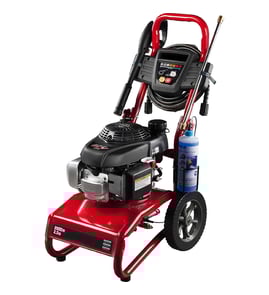



What kind of gas goes in a Craftsman 3000 PSI pressure washer?
For the Craftsman pressure washer model 580752102, use clean, fresh unleaded gasoline with a minimum rating of 87 octane (87 AKI, 91 RON). Gasoline blended with up to 10% ethanol (gasohol) or up to 15% MTBE is acceptable; do not use E85 and do not mix oil into the gas. See the owner's manual for the full fuel and safety instructions.
Fuel requirements for model 580752102
Use fuel that meets these basics:
- Unleaded gasoline only
- Minimum 87 octane (87 AKI, 91 RON)
- Fresh, clean fuel (old fuel causes hard starting and poor performance)
- Up to 10% ethanol or up to 15% MTBE is acceptable
- No E85 or other unapproved fuels
Quick do and don’t table
| Item | OK to use? | Notes |
|---|---|---|
| Unleaded 87 octane (or higher) | Yes | Minimum required rating |
| Ethanol blend up to E10 | Yes | Acceptable per manual |
| MTBE up to 15% | Yes | Acceptable per manual |
| E85 | No | Can damage the fuel system |
| Oil mixed into gasoline | No | This is a 4-cycle engine setup |
Why it matters
Using the correct gasoline helps your engine start easier, run smoothly under load, and reduces fuel-system issues like gum deposits in the carburetor during storage. It also helps protect warranty coverage by following the operator fuel recommendations.
Helpful tip for storage (over 30 days)
If you store the pressure washer for more than 30 days, treat the fuel to prevent stale-gas problems. Alcohol-blended fuels can attract moisture during storage, which can lead to separation and acids that harm the fuel system. Follow the storage steps in the owner's manual.
Last updated: February 2026
How many PSI for my pressure washer?
Your Craftsman gas pressure washer model 580752102 is rated for 2,700 PSI maximum output pressure. That level is a solid fit for most home cleaning jobs like siding, decks, patios, fences, and light concrete, as long as you use the right spray tip and keep a safe distance (see the owner's manual).
What 2,700 PSI means for real-world cleaning
We recommend matching pressure to the surface and starting gently to avoid damage.
- Cars, patio furniture, grills: use lower pressure and wider spray patterns
- Decks and fences (wood): use moderate pressure; keep the nozzle moving
- Siding: use a wider fan spray; avoid forcing water behind panels
- Concrete (light duty): higher pressure works well; test a small area first
- Painted or older surfaces: start low; increase only if needed
Quick PSI guide by task
Use this as a practical reference for typical household jobs.
| Task | Typical PSI range | How your 2,700 PSI unit fits |
|---|---|---|
| Washing vehicles | 1,200 to 1,900 | Use low pressure and a wider spray |
| Decks and fences | 1,500 to 2,500 | Works well; test first on wood |
| Siding | 1,300 to 2,500 | Works well; keep distance |
| Patios and walkways | 2,000 to 3,000 | Good match for most surfaces |
Settings and setup that affect PSI at the wand
Even with a 2,700 PSI rating, what you feel at the spray gun changes based on setup.
- Spray tip/selector position: higher pressure tips increase impact; start with a wider fan
- Distance to surface: closer increases cutting power quickly
- Water supply: your garden hose should provide at least 20 PSI at the hose end and more than 3.5 GPM flow
- Hose condition: kinks, cuts, or restrictions reduce performance
- Detergent mode: detergent application is typically lower pressure
Why it matters
Using the right pressure protects surfaces and helps the pump last longer. We also recommend never running the pump without water connected and turned on, and keeping water temperature not to exceed 100% as specified for this model.
Last updated: February 2026
Is it worth repairing a pressure washer?
Yes; repairing your Craftsman pressure washer model 580752102 is worth it when the problem is a wear item (hose, clips, chemical pickup parts) or overdue maintenance. It is not worth it when the pump or engine has major internal damage and the repair total approaches replacement cost.
Use the 50% rule to decide
- Add up parts plus any labor you plan to pay.
- If the total is under about 50% of replacement cost, repair.
- If the total is over about 50%, replace.
- If you rely on it for work, include downtime in the cost.
Repairs that are usually worth doing
- Fix leaks by replacing seals or O-rings (not sealant); see the safety and maintenance guidance in the owner's manual.
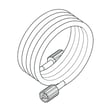
- Replace a worn or leaking hose: pressure washer hose 84006753.
- Replace broken retaining hardware: pressure washer retainer clip 703976.
- Restore chemical pickup by replacing the chemical line or cap: pressure washer chemical hose A1040NGS, chemical cap 199955GS.
Repair vs replace: quick guide
| Problem type | Best choice | Why it matters |
|---|---|---|
| Hose leak, missing clip, chemical line issue | Repair | Low cost, fast return to safe pressure |
| Maintenance overdue (oil, air filter, spark plug) | Repair | Prevents hard starting and power loss |
| Major pump failure | Replace (often) | High parts cost relative to unit value |
| Major engine internal issue | Replace (often) | Labor and parts add up quickly |
Why it matters
A pressure washer operates at high pressure; small leaks and neglected maintenance can quickly damage the pump and create safety risks. Fixing simple issues early keeps performance consistent and extends service life.
Last updated: February 2026