Owner’s manual
 Error Codes


What is force defrost RD or FD?
On the Samsung RS25J500DWW refrigerator, RD and FD are service-mode labels for defrost functions: RD typically means a forced defrost for the refrigerator (fresh food) section, and FD means a forced defrost mode (often the next step in the sequence). Use these modes only for troubleshooting and exit service mode when finished; see the owner's manual for safe operation guidance.
When you see these codes while stepping through forced operation modes:
- RD: refrigerator (fresh food) defrost cycle is being forced on
- FD: forced defrost mode (commonly the next defrost option you reach)
- The refrigerator is frost-free, so normal defrosting happens automatically during regular operation
Forced defrost is commonly used to help diagnose or correct symptoms tied to frost buildup or airflow restriction, such as:
- Warm refrigerator section with the freezer still cold
- Frost or ice buildup on the evaporator cover
- Evaporator fan noise or fan hitting ice
- Water leaking or puddles caused by a frozen drain path
Because forced defrost intentionally heats components, we recommend keeping the door closed and monitoring the unit.
| What you notice | What it usually indicates | What to do next |
|---|---|---|
| Water dripping into drain pan | Ice is melting normally | Let the cycle finish, then confirm cooling returns |
| Heavy steam or strong hot smell | Heater is working, but airflow may be restricted | Check for ice buildup and blocked vents |
| No change after a full cycle | Defrost system issue possible | Inspect defrost heater, sensors, and airflow components |
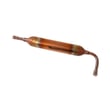
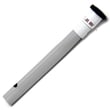
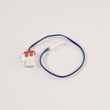
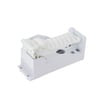
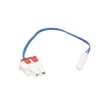
If you suspect a defrost-system failure, common related parts for this model include the refrigerator defrost heater DA47-00311A and a refrigerator temperature sensor DA32-10109W.
If frost is not cleared on schedule, airflow across the evaporator drops and temperatures rise, even though the compressor and fans may still run. Forced defrost helps confirm whether the defrost heat circuit can melt ice so the refrigerator can cool normally again.
Last updated: February 2026
Does the RS25J500DWW have adjustable shelves?
Yes. The Samsung RS25J500DWW side-by-side refrigerator uses removable shelves that you can take out and reposition to fit taller items, then reinstall. Our RS25J500DWW owner's manual shows how to remove and reinstall shelves safely.
We adjust shelves by removing them first, then placing them back at the height we want.
- Remove food and heavy items from the shelf.
- Pull the shelf out as far as it goes.
- Lift the front of the shelf up.
- Remove the shelf completely.
- Reinstall by setting the shelf on the supports at the desired height, then push it fully back.
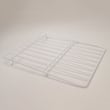
The manual describes shelf removal for both wire and glass shelves, which is the practical way shelves are adjusted in this refrigerator.
| Shelf type | How it adjusts | Best use |
|---|---|---|
| Glass shelf | Remove and reposition on supports | Everyday items, spill control |
| Wire shelf | Remove and reposition on supports | Bulk frozen items, airflow |
Correct shelf placement improves airflow and temperature stability, which helps prevent warm spots, freezing in the fresh food section, and overworking the compressor.
- Confirm the refrigerator is level front-to-back and side-to-side.
- Make sure the shelf is fully seated on both side supports.
- Check that door bins are not interfering with shelf placement.
- Inspect for ice buildup or debris on the shelf rails and wipe clean.
Last updated: February 2026
What's the average lifespan of a Samsung fridge?
Most Samsung refrigerators, including the Samsung RS25J500DWW side-by-side, typically last 10 to 14 years with normal household use. Regular cleaning, correct temperature settings, and fixing cooling or ice-maker issues early helps you reach the high end of that range; see the care guidance in the owner's manual.
A refrigerator’s life is mainly driven by compressor run time, airflow, and how hard the sealed system has to work.
- Keeping condenser and air vents clear reduces compressor strain
- Door seals that leak make the unit run longer and wear faster
- Overpacking blocks airflow and causes warm spots and frost
- Skipping filter changes can reduce water flow and stress the inlet valve
- Ice maker issues left unresolved can lead to freezing and airflow problems
These steps are simple and directly tied to longer compressor and fan life.
- Clean interior shelves and bins with mild detergent; dry before reinstalling
- Wipe the control panel with a soft cloth (spray water on the cloth, not the panel)
- Confirm doors close fully and nothing is holding them open
- Replace the water filter on schedule using refrigerator water filter DA29-00019A
- If water flow is weak, check for kinked tubing and avoid setting temps too cold
| What you notice | What it usually means | What to do first |
|---|---|---|
| Runs constantly | Airflow restriction, dirty coils, door leak, warm room | Clear vents, check door seal, clean coils |
| Frost buildup, fan noise | Defrost/airflow issue | Reduce overpacking, check for blocked vents |
| No ice or slow ice | Water supply, filter restriction, ice maker problem | Replace filter, verify supply, inspect ice maker |
| Warm fridge or freezer | Cooling system or fan issue | Check settings, airflow, listen for fan operation |
A refrigerator that runs longer to maintain temperature wears out high-value components sooner (compressor, inverter, evaporator fan). Basic cleaning and airflow habits reduce run time and extend overall service life.
Last updated: February 2026
Why is my Samsung two door fridge not making ice?
If your Samsung RS25J500DWW side-by-side refrigerator is not making ice, the most common causes are the ice maker being turned off, the water shut-off valve being closed, low water pressure, or not waiting long enough after connecting the water line. Use the steps in the owner's manual to confirm settings and water supply.
- Make sure Ice Off is not selected; set Ice Type to Cubed or Crushed.
- Confirm the water line is connected and the shut-off valve is fully open.
- Verify home water pressure is 20 to 125 psi (required for proper ice maker operation).
- If the water line was just installed, wait at least 12 hours for ice production.
- Check the ice bucket for clumped ice; dump it and dry the bucket.
- If the freezer is warm, lower the freezer temperature and allow 24 hours to stabilize.
A restricted water supply can stop ice production even when the dispenser still works.
- If water flow at the dispenser is slow, replace the refrigerator water filter DA29-00019A.
- If you hear unusual noises and the water line is connected, recheck that the supply valve is open.
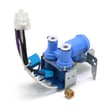
- If the valve is open but the ice maker still does not fill, the inlet valve can be the issue; consider the refrigerator water inlet valve DA62-02360B.
| What you notice | Most likely cause | What to do |
|---|---|---|
| No ice at all after hookup | Not enough time | Wait 12 hours |
| Ice maker on, no fill | Shut-off valve closed or low pressure | Open valve; confirm 20 to 125 psi |
| Ice clumps in bucket | Partial melting or humidity | Empty bucket; improve door closing |
| Freezer not cold enough | Temperature too warm | Lower freezer temp; wait 24 hours |
The ice maker depends on steady freezer temperature and consistent water pressure. If either is off, the ice maker may not cycle, may not fill, or may produce small or hollow cubes.
For model-specific control panel steps and operating modes, follow the owner's manual.
Last updated: February 2026
What is the most common problem with Samsung refrigerators?
Cooling problems and ice maker issues are the most common complaints we see on Samsung refrigerators, including the Samsung RS25J500DWW. Many “cooling” symptoms come from airflow restrictions, dirty door seals, or a defrost or fan problem rather than a sealed-system failure; your owner's manual covers key care and safety steps.
- Not cooling or warm temps: fresh food section warms up, freezer softens, or temps swing.
- Ice maker not making ice: slow production, hollow cubes, or no ice at all.
- Water dispenser problems: weak flow, no water, or odd taste.
- Frost buildup: heavy frost on the evaporator cover or vents, reduced airflow.
- Door not sealing well: moisture, condensation, or the unit runs longer than normal.
- Confirm vents are not blocked by food packages (blocked vents can cause overcooling or poor circulation).
- Clean the rubber door seals with mild detergent and a damp cloth; dry thoroughly.
- If you recently unplugged the refrigerator, wait at least 5 minutes before plugging it back in.
- If water flow is weak, replace the filter and purge air from the line by dispensing water for a few minutes.
- If ice production is low, verify the freezer is cold enough and the ice bin seats fully.
| Symptom | Common part to check/replace | What it affects |
|---|---|---|
| Bad taste or slow water | Refrigerator water filter DA29-00019A | Water quality and dispenser flow |
| No ice or inconsistent ice | Refrigerator ice maker assembly DA97-08059A | Ice harvest and fill cycles |
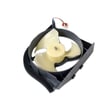
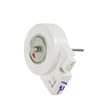
| Warm temps, fan noise, poor airflow | Refrigerator evaporator fan motor assembly DA97-08061A | Cold air circulation |
| Temp swings or false readings | Refrigerator temperature sensor DA32-10109W | Temperature feedback to controls |
Most “common problems” are really performance issues that get worse over time: restricted airflow, poor door sealing, and water system maintenance can make the refrigerator run longer, warm up, or stop making ice. Addressing the basics early often prevents repeat failures.
Last updated: February 2026