Owner’s manual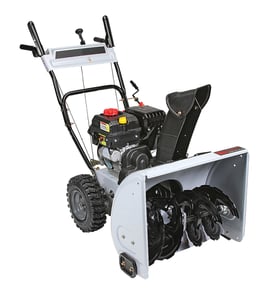



What is better, a 2 stage or 3 stage snow blower?
A 2-stage snowblower is the better choice for most homeowners because it handles typical driveway snow efficiently using an auger plus an impeller. A 3-stage is better when you regularly face deep, wet, or icy snow and want faster intake, but it adds cost, weight, and complexity. Your Snapper I7243 is a 2-stage snow thrower (as shown in the owner's manual).
Quick comparison: 2-stage vs 3-stage
| Feature | 2-stage snowblower | 3-stage snowblower |
|---|---|---|
| Snow intake system | Auger feeds snow to an impeller | Adds an accelerator ahead of the auger |
| Best for | Most driveways; moderate to heavy snow | Deep, wet, packed, or icy snow; large areas |
| Speed through heavy snow | Strong | Typically faster in extreme conditions |
| Weight and complexity | Lower | Higher |
| Maintenance and parts | Fewer wear points | More wear points |
How we recommend choosing
- Choose 2-stage if you clear a typical driveway and want strong performance with simpler maintenance.
- Choose 3-stage if you often deal with heavy, wet snow, plow berms, or packed snow and want quicker clearing.
- If storage space matters, 2-stage models are usually easier to maneuver and store.
- If you prefer fewer adjustments and fewer moving parts to service, 2-stage is the practical pick.
- If you already own a solid 2-stage (like the Snapper I7243), focus on upkeep and setup to get the most performance.
Why it matters
A “better” snowblower is the one that matches your snow conditions and how much area you clear. Overbuying a 3-stage can mean extra cost and maintenance you do not need; underbuying can mean slower clearing and more clogging in heavy snow.
Getting the most from your Snapper I7243 (2-stage)
- Keep shear pins, belts, and skid shoes in good shape so the auger and impeller can move snow efficiently.
- Lubricate key points on schedule; a worn or dry drive system can reduce throwing performance.
- Use the correct grease fittings and lubrication points; the Snapper lube fitting 7013864SM is one example of a lubrication-related part used on this model.
Last updated: February 2026
What is the life expectancy of a snowblower?
A typical gas snowblower like the Snapper I7243 lasts 15 to 20 years with normal residential use and consistent maintenance. The biggest factors are end-of-season storage, lubrication, and keeping the fuel system and drive components in good condition (see the owner's manual).
What affects snowblower lifespan most
- Fuel care and storage: drain the fuel tank and run the engine until the carburetor is dry at season end.
- Corrosion prevention: clean the underside of the auger housing and oil exposed metal.
- Lubrication: grease axle shafts and lubricate moving points so parts do not seize.
- Wear items: belts, scraper blade, and shear bolts wear out over time and are normal replacements.
- Storage location: a dry shed or garage dramatically reduces rust and cable deterioration.
End-of-season checklist (I7243-FOCUSED)
Our recommended routine matches the I7243 maintenance and storage steps:
| Task | When | Why it matters |
|---|---|---|
| Drain fuel and run engine dry | End of season | Prevents varnish and carburetor clogging |
| Disconnect spark plug wire before service | Before maintenance | Reduces accidental start risk |
| Clean underside of auger housing | End of season | Prevents rust and packed debris damage |
| Light oil on exposed metal | End of season | Slows corrosion |
| Grease axle shafts and chute retainers | End of season | Keeps wheels removable and chute rotating smoothly |
Signs your snowblower is nearing end of life
- Frequent hard starting even with fresh fuel and a good spark plug
- Drive or auger slipping soon after belt adjustment
- Excessive vibration from the auger/impeller area
- Rust-through on the auger housing or frame
- Repeated breakdowns in the same season
Helpful maintenance how-tos
- How to change snowblower oil video
- How to check a snowblower spark plug video
- How to lubricate a snowblower drive hex shaft video
Why it matters
A snowblower that is stored correctly and lubricated at the end of each season avoids the two biggest lifespan killers: fuel-system problems and corrosion. That is what keeps an I7243 running reliably year after year.
Last updated: February 2026
Should I spray my snowblower with WD-40?
Yes, you can spray a light coat on key snow-contact areas of your Snapper I7243 snow thrower to help reduce snow sticking and to protect bare metal from corrosion; keep it off belts, friction-drive parts, and hot engine surfaces. For model-specific maintenance and storage steps, follow the owner's manual.
Where it’s OK to spray (and where it’s not)
Use a light, even film and wipe off excess.
Good places (non-stick and rust protection):
- Inside the discharge chute and deflector
- Auger housing interior (after cleaning and drying)
- Impeller surfaces you can safely reach
- Exposed metal surfaces for off-season corrosion protection
Avoid these areas:
- Belts and pulleys (auger drive belt, wheel drive belt)
- Friction disc and drive plate area (any friction-drive components)
- Engine muffler, cylinder, and other hot engine parts
- Electrical connections and switches
Best practice for the I7243 after-use and end-of-season care
Your I7243 maintenance guidance emphasizes cleaning and then protecting exposed metal with a light coating of oil to prevent corrosion.
- Shut the engine off and let all hot parts cool
- Remove packed snow and ice; dry the chute and auger housing
- Apply a light protective coating to exposed metal
- Store in a dry, weather-protected area
Quick comparison: WD-40 vs silicone spray vs light oil
| Product | Best use on a snowblower | Notes |
|---|---|---|
| WD-40 | Short-term moisture displacement and light rust protection | Reapply as needed; keep off friction-drive parts |
| Silicone spray | Non-stick help in chute and housing | Typically stays slick longer; keep off belts/friction surfaces |
| Light oil | Corrosion protection for exposed metal in storage | Matches typical “light coating of oil” storage guidance |
Why it matters
Spraying the right surfaces helps snow flow through the chute and helps prevent rust during storage. Spraying the wrong surfaces (especially belts or friction-drive parts) can cause slipping, poor drive performance, and premature wear.
Related DIY help
If you’re also doing routine lubrication, a replacement grease fitting can help restore proper service points; see the Snapper lube fitting 7013864SM.
Last updated: February 2026
How many horsepower is a 254cc snow blower?
A 254cc snowblower engine is commonly marketed in the 7 to 9 HP class, depending on the engine design and how the manufacturer rates output. For Snapper model I7243 specifically, the operator documentation groups this model in the 7.0 engine HP class; see the owner's manual.
Typical HP range for 254cc snowblower engines
Displacement (cc) is engine size, not horsepower; two 254cc engines can be rated differently.
- Most 254cc two-stage snowblower engines are listed around 7 to 9 HP
- Cold-weather tuning, governed RPM, and torque curve affect the published HP
- Wet, heavy snow loads the engine more than powder, even at the same HP rating
- Maintenance (oil level, spark plug, belts) has a direct impact on usable power
What applies to Snapper I7243
The Snapper I7243 manual’s model-number explanation shows this model family’s engine HP class and includes a 7.0 HP designation for the “I7243” model format.
| Item | What it tells you | Why it matters |
|---|---|---|
| 254cc | Engine displacement | Helps compare engine size across brands |
| 7.0 HP class (I7243) | Rated output class for this model | Better match for parts and performance expectations |
| Real-world performance | Torque under load | Depends on tune and drivetrain condition |
Why it matters
Horsepower is only part of snow-throwing performance. Auger/impeller condition, belt grip, and drivetrain drag often determine how far and how consistently your snow thrower throws.
Quick ways to keep power up
- Keep engine oil at the correct level and change it on schedule
- Use fresh fuel and keep the fuel system clean
- Check and replace a worn spark plug
- Reduce drivetrain drag by lubricating service points on schedule
- Follow a proven procedure such as how to lubricate a snowblower drive hex shaft video
Last updated: February 2026
Is it worth fixing a snowblower?
Yes; it’s worth fixing a Snapper I7243 snow thrower when the issue is routine maintenance or a common wear item (belts, scraper blade, shear bolts, lubrication) and the repair cost stays well below replacement cost. If it needs repeated major repairs or has persistent excessive vibration after impact, replacement is the better value.
Quick decision checklist
- Fix it for maintenance: oil service, spark plug service, lubrication
- Fix it for common wear: belt slippage, belt tension adjustment, scraper blade, shear bolts
- Fix it if the auger does not stop within about 5 seconds after releasing the auger clutch (belt tension adjustment)
- Replace it if major repairs repeat season after season (engine or drivetrain)
- Replace it if excessive vibration returns after tightening and repairing damaged components
What the I7243 manual points to first
The owner's manual emphasizes safe servicing (engine off, key removed, spark plug wire disconnected) and focuses on adjustments and wear items that restore performance quickly.
| Symptom | Likely cause | What to do |
|---|---|---|
| Auger keeps spinning too long | Belt tension out of adjustment | Adjust belt tension |
| Poor snow discharge | Clogged chute, belt slippage | Stop engine, clear chute, inspect belt |
| Chute crank hard to turn | Worm gear/ring gear needs lube or adjustment | Adjust bracket, grease gears |
Parts and maintenance that pay off
- Keep belts adjusted and replace them when worn or slipping
- Lubricate bearings and gears on schedule to prevent binding
- Keep shear bolts on hand to protect the auger/impeller when something jams
- Replace damaged grease fittings as needed; Snapper lube fitting 7013864SM restores a proper grease point
Why it matters
Most “won’t throw well” or “weak drive” complaints trace back to belts, adjustments, lubrication, or basic tune-up items; those repairs cost far less than replacing the entire snowblower.
Last updated: February 2026