



How much does a 6 foot tiller weigh?
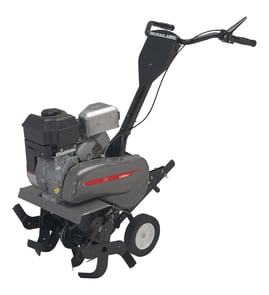
A “6-foot tiller” weight depends on the tiller type and build; most 6-foot 3-point rotary tillers weigh roughly 600 to 900 lb. Your Craftsman 917298140 is a smaller front-tine, 5-hp walk-behind tiller, so it weighs far less than a 6-foot tractor-mounted unit.
Typical weights by tiller type
A 6-foot width is most common on tractor-mounted rotary tillers, not walk-behind front-tine models.
- 3-point rotary tiller (6 ft): commonly 600 to 900 lb
- Pull-behind tiller (wide): often 400 to 800 lb
- Walk-behind front-tine tiller: commonly 90 to 140 lb
- Walk-behind rear-tine tiller: commonly 150 to 300 lb
Quick comparison table
| Tiller description | Typical width | Typical weight |
|---|---|---|
| Tractor 3-point rotary tiller | 6 ft | 600 to 900 lb |
| Walk-behind front-tine tiller (like Craftsman 917298140) | 16 to 24 in | 90 to 140 lb |
| Walk-behind rear-tine tiller | 20 to 26 in | 150 to 300 lb |
Why the “6-foot” detail matters
A 6-foot tiller usually means a Category 1 3-point hitch implement for a compact tractor. That weight affects:
- Whether your tractor can safely lift it (3-point lift capacity)
- Transport and storage needs (trailer rating, ramps)
- Soil performance (heavier units bite better but need more horsepower)
- Setup parts (PTO driveline, shear pins, slip clutch)
If you are trying to identify the right parts
If you are actually working on the Craftsman 917298140 walk-behind tiller, focus on the drive and control hardware that matches this model, such as the cbl/cltch t 583731701 and related linkage pieces.
Last updated: January 2026
Where is the model number on a tiller?
On a Craftsman tiller like model 917298140, the model number is printed on an ID label (a sticker or metal tag) attached to the tiller frame. It’s most often found near the tine shield/guard area or on the engine area near the fuel tank.
Common places to check on a front-tine tiller
Look for a rectangular label with a model number and sometimes a serial number. Check these spots first:
- On the tine shield or tine guard (rear of the tines)
- On the main frame rail near the tines
- Near the engine mounting area
- On or near the fuel tank support or engine shroud
- Near the handle support brackets (lower handle area)
What the label looks like (and what to write down)
Most tiller ID labels include more than one number. Recording the right ones helps us match the correct Craftsman parts.
| Label item | What it’s used for | Example format |
|---|---|---|
| Model number | Identifies the exact tiller version for parts lookup | 917298140 |
| Serial number | Identifies the production run | Letters and numbers |
| Engine model/type/code (if shown) | Helps match engine-specific parts | Varies by engine brand |
Why it matters
The same 5-hp tiller platform can use different cables, sheaves, and hardware depending on the exact model and production run. Using the full model number helps prevent ordering a clutch cable, belt drive part, or fastener that does not fit.
If the label is missing or unreadable
Use these practical options to identify the unit:
- Clean the frame and tine guard area; dirt and oil often hide the tag
- Look for stamped numbers on the frame near the tine shield
- Compare your controls and linkage to common wear parts like the cbl/cltch t 583731701
- If you find partial digits, write them down exactly as shown and keep the spacing
Last updated: January 2026
What tiller is made in the USA?
Mantis tillers are made in the USA; Mantis states its tillers are designed, engineered, and manufactured in the United States. For your Craftsman 917298140 5-hp front-tine tiller, the country of manufacture varies by production run, so we focus on matching the correct Craftsman parts by model number and component.
How to confirm what you have (and get the right parts)
To avoid ordering the wrong belt, cable, or hardware, we match parts to the exact model and the specific assembly on your tiller.
- Confirm the model number is 917298140 on the ID tag
- Identify the system you are servicing (tines, drive, handle, or clutch)
- Compare the old part’s shape, hole pattern, and measurements
- Replace worn fasteners when you remove them (nuts, washers, retainers)
- If the tiller won’t drive or the tines won’t engage, inspect the clutch cable and engine sheave
Common parts customers replace on Craftsman 917298140
These parts are frequently involved when controls feel loose, the drive slips, or hardware is missing.
| What you are fixing | Part to check | What it affects |
|---|---|---|
| Tines or drive not engaging smoothly | Cbl/cltch t 583731701 | Clutch engagement and control feel |
| Belt drive slipping or squealing | Tiller engine sheave 592642101 | Belt alignment and drive transfer |
| Loose handle or linkage hardware | Gripco nut 596322601 | Secures pivots and brackets |
| Missing clip or linkage retention | Spring retainer 532003146 | Keeps pins and linkages from backing out |
Why it matters
“Made in the USA” is a brand and sourcing question, but repairs are a fit and function question. Using the exact Craftsman 917298140 model number and the correct part ID prevents mismatched hardware, poor clutch engagement, and repeat failures.
Last updated: January 2026
Which way should a tiller spin?
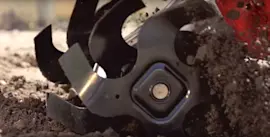
On a Craftsman 917298140 tiller, the tines should rotate so the leading edges bite into the soil and pull the machine into the ground during forward travel. If the tiller bounces, skates, or throws soil forward, the tines are usually installed backward or swapped left to right.
How to confirm tine rotation safely
- Work on level ground; keep bystanders away.
- Stand to the side of the tine area, never in front of it.
- Start the engine at low throttle.
- Briefly engage the tine drive and watch the tine tips.
- The tines should “dig in” and help the tiller move forward, not push it away.
What “correct” looks like (quick check)
Use this as a visual guide when the tiller is moving forward.
| What you see | What it usually means | What to do |
|---|---|---|
| Tines bite and pull the tiller into the soil | Normal rotation and correct tine orientation | Continue tilling |
| Tiller hops or rides up on hard soil | Tines installed backward or left/right tine sets swapped | Reinstall tines so cutting edges lead |
| Soil is thrown forward and the tiller pushes away | Tines oriented incorrectly for forward travel | Correct tine direction and hardware placement |
Common causes when the tines “spin the wrong way”
- Left and right tine assemblies were swapped during reassembly.
- Individual tines were flipped so the sharpened edge trails instead of leading.
- The tine drive is not fully engaging because the clutch cable is out of adjustment or binding.
- Loose mounting hardware lets the tine set shift under load.
If engagement feels inconsistent, inspect the clutch cable and linkage; a worn or damaged control cable such as the cbl/cltch t 583731701 can prevent full engagement and make tilling performance seem wrong.
Why it matters
Correct tine direction and tine orientation improve soil breakup, reduce bouncing, and prevent extra wear on the belt and drive components (including the engine sheave).
Last updated: January 2026