Owner’s manual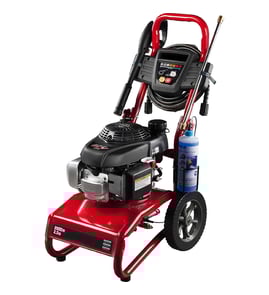

Can you put 87 gas in a pressure washer?
Yes. For the Craftsman 580752532 gas pressure washer, regular unleaded gasoline with an 87 octane rating is the standard, safe choice for normal operation. Use fresh fuel and follow the fuel and storage guidance in the 580752532 owner's manual to prevent hard starting and poor performance.
Recommended fuel for best performance
Most gas pressure washers like this Craftsman model run best on:
- Regular unleaded gasoline (87 octane)
- Fresh fuel (ideally less than 30 days old)
- Clean fuel from a sealed container (keeps out moisture and dirt)
- The correct oil level (low oil can mimic “bad gas” symptoms)
Higher octane (89 to 93) is not required for typical small engines unless the manual specifically calls for it.
What to avoid
Using the wrong fuel or old fuel is one of the most common causes of “won’t start” and “losing power” complaints.
- Stale gasoline (varnish buildup can clog the carburetor)
- Gasoline contaminated with water (causes surging and no-start)
- Overfilling the tank (can flood the engine or spill onto hot surfaces)
- Leaving fuel in the tank during long storage without proper prep
Quick troubleshooting if it runs poorly after refueling
If you added 87 octane and the engine still surges, stalls, or won’t start, focus on fuel delivery and airflow basics.
| Symptom | Common fuel-related cause | What we do next |
|---|---|---|
| Won’t start | Stale fuel or flooded engine | Drain/refill with fresh gas; check spark plug condition |
| Starts then dies | Clogged carburetor jet | Clean carburetor; replace if needed |
| Loses power under load | Restricted fuel flow or dirty air filter | Check fuel line/filter; service air filter |
| Surges at idle | Water in fuel or partially clogged carb | Replace fuel; clean carb |
For step-by-step symptom help, use pressure washer won't start or pressure washer engine losing power.
Why it matters
Correct fuel (and fresh fuel) protects the carburetor, helps the unloader and pump operate smoothly, and reduces downtime. It also makes seasonal storage and spring startup much easier.
Last updated: February 2026
How many PSI for my pressure washer?
Your Craftsman gas pressure washer model 580752532 has a specific rated PSI set by the pump and engine; use the PSI rating and operating limits listed in the 580752532 owner's manual as your maximum. For cleaning, we recommend using the lowest effective pressure and the correct spray tip to avoid damage.
Where to find the correct PSI for model 580752532
Check these spots in the 580752532 owner's manual:
- Specifications section (rated PSI and sometimes GPM)
- Operating instructions (recommended nozzle use and safe distance)
- Maintenance and troubleshooting (symptoms of low or fluctuating pressure)
Practical PSI ranges by job (how to choose safely)
Use these typical ranges as a starting point, but do not exceed your 580752532’s rated PSI:
- 1,300 to 1,900 PSI: vehicles, patio furniture, grills, small equipment
- 2,000 to 2,800 PSI: decks, fences, siding (use proper distance and tip)
- 2,900 to 3,500 PSI: concrete, driveways, heavy grime (higher damage risk)
PSI vs GPM (what actually cleans faster)
PSI is impact force; GPM is rinsing volume. Higher GPM often reduces cleaning time even at the same PSI.
| Measure | What it means | Why it matters |
|---|---|---|
| PSI | spray force | too high can etch wood or strip paint |
| GPM | water volume | higher rinses dirt faster |
| PSI × GPM | cleaning units | best quick comparison of overall output |
Tips to get the right pressure without damage
- Start with a wider fan tip and increase aggressiveness only as needed
- Keep the wand moving; do not dwell on one spot
- Increase distance first before increasing pressure
- If pressure surges or drops, inspect the unloader system and pump inlet restrictions
Why it matters
Running more pressure than the surface can handle can gouge wood, peel paint, and force water behind siding; it also increases wear on pump seals and valves.
For nozzle selection and technique, use choosing the correct spray tip for a pressure washer.
Last updated: February 2026
Can you use a 4000 PSI pressure washer on a car?
Using a 4000 PSI pressure washer on a car is not recommended because that pressure can damage paint, clear coat, decals, trim, and rubber seals, and it can force water into seams and electrical connectors. The Craftsman model 580752532 is a high-pressure gas unit; use the lowest-pressure approach and the widest spray pattern.
Safe PSI approach for washing a car
For car washing, we use low effective pressure at the surface by choosing the right tip and keeping distance.
- Use the widest fan tip available (commonly 40-degree) or a soap/low-pressure nozzle
- Start 3 feet away and move closer only if needed; never “point-blank” spray
- Spray at an angle across panels; do not spray straight into gaps
- Use detergent through the low-pressure soap setting, then rinse gently
- Test on an inconspicuous spot first (older paint and decals lift easily)
What to avoid (where damage happens fastest)
High pressure becomes destructive when it is concentrated or aimed into edges.
| What you spray | What can happen at high PSI | Safer method |
|---|---|---|
| Paint/clear coat | Etching, peeling on weak spots | Wide fan tip, more distance |
| Decals/badges/trim edges | Lifting, tearing | Hand wash or gentle rinse |
| Door seals, window seals, seams | Water intrusion | Spray across seams, not into them |
| Engine bay, connectors | Electrical and corrosion issues | Avoid direct spraying |
Notes for Craftsman 580752532
Even though your Craftsman 580752532 is not a 4000 PSI unit, it is still powerful enough to damage automotive finishes if you use a narrow tip or spray too close. Follow nozzle selection, detergent pickup, and safety cautions in the 580752532 owner's manual.
Why it matters
Car paint systems and weather seals are built for rain and gentle rinsing, not concentrated high-pressure impact. Using a wide tip, extra distance, and angled spraying prevents paint damage and water intrusion.
Last updated: February 2026