Owner’s manual
 Error Codes


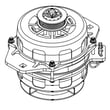
What is the most common problem with Whirlpool washers?
Across Whirlpool washers (including model WTW5105HW2), the most common service issues we see are draining problems, spin or agitation problems, and water leaks. These symptoms are often caused by a small set of wear parts or installation factors, so a quick, targeted check can usually narrow it down fast.
- Won’t drain or leaves water in the tub: drain pump or a restriction in the tub-to-pump hose
- Won’t spin or stops mid-cycle: lid lock or shift actuator not engaging correctly
- Not filling or fills slowly: water inlet valve, kinked hoses, or low supply pressure
- Loud banging or walking: washer not level, load out of balance, or suspension damping wear
- Water on the floor: loose hose connections, cracked drain hose, or internal hose clamp issues
For model-specific care and setup checks (leveling, drain hose routing, inlet hose guidance), use the WTW5105HW2 installation & care manual.
If your WTW5105HW2 is showing one of the symptoms above, these model-compatible parts are common suspects:
| Symptom | Common part to inspect | What it does |
|---|---|---|
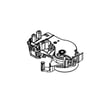
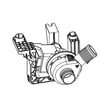
| Won’t drain | Pump assembly, drain W11399437 | Pumps water out during drain and spin |
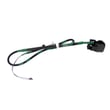
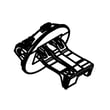
| Won’t spin / lid error | Lid lock-sol W11700916 | Confirms the lid is locked so the washer can spin |
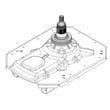
| Agitates/spins incorrectly | Actuator, shift W11481722 | Shifts the drive system between agitation and spin |
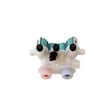
| Slow/no fill | Washer water inlet valve W11165546 | Controls hot/cold water flow into the washer |
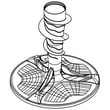
| Burning rubber smell / weak spin | Drive belt W11239857 | Transfers motor power to the drive system |
These “most common” problems tend to overlap in symptoms. For example, a lid lock issue can look like a spin problem, and a partial drain restriction can look like a control problem. Checking the basics first helps avoid replacing the wrong part.
- Unplug the washer for 1 minute to reset the control
- Confirm the washer is level and on a solid floor
- Verify both water faucets are fully open
- Inspect inlet hoses for kinks and screens for debris
- Make sure the drain hose is secured and not shoved too far into the standpipe
Last updated: January 2026
Is a 4.5 cu ft washer large?
Yes. A 4.5 cu. ft. washer is generally considered large capacity, and it can handle bigger everyday loads and many bulky items more comfortably than standard-capacity machines. For your Whirlpool WTW5105HW2, the exact tub capacity isn’t confirmed in the model documentation we have, but 4.5 cu. ft. is typically “large.”
A 4.5 cu. ft. washer is often a good fit if you regularly wash:
- Family-size mixed loads (clothes, towels, and jeans together)
- Queen comforters and bedding sets (depending on fill and weight)
- Multiple bath towels in one cycle
- Larger loads that reduce the number of weekly wash cycles
For model-specific use and care guidance (including cleaning and maintenance routines), follow the WTW5105HW2 installation & care manual.
Use this as a practical sizing guide when shopping or comparing models.
| Washer capacity | Common label | Best for |
|---|---|---|
| 3.0 to 4.4 cu. ft. | Standard | Couples, smaller households, lighter weekly volume |
| 4.5 to 4.9 cu. ft. | Large | Families, frequent laundry, many bulky items |
| 5.0+ cu. ft. | Extra-large | Very large households, frequent comforters, oversized loads |
Even with a larger tub, performance depends on loading and cycle choice.
- Load loosely; don’t pack items down (it reduces wash action and rinsing)
- Keep bulky items balanced (bedding on one side can cause vibration)
- Use HE detergent and measure carefully to avoid residue and odors
- Choose the right cycle for bulky loads (bedding, bulky, or deep water options if available)
- Leave the lid open between loads to help the tub dry and reduce odor
Choosing the right capacity helps prevent overloading (poor cleaning, extra wear) and underloading (wasted water and energy). A “large” tub can save time by reducing how many cycles you run each week.
Last updated: January 2026
What is the life expectancy of a Whirlpool washing machine?
We can’t confirm a specific “life expectancy” in years for the Whirlpool WTW5105HW2 washer because Whirlpool does not state a model-specific lifespan in the provided documentation. In real-world use, longevity varies most with installation, load habits, and routine care outlined in the WTW5105HW2 installation & care manual.
The WTW5105HW2 manual focuses on maintenance actions that reduce common wear issues (odor, residue buildup, vibration, hose failures). Following these steps typically helps the washer run reliably longer.
- Use only HE detergent and avoid over-dosing
- Run the Clean Washer cycle monthly or every 30 cycles
- Leave the lid open between loads to help the tub dry
- Inspect inlet hoses regularly for bulges, kinks, cuts, wear, or leaks
- Replace inlet hoses every 5 years (the manual recommends this interval)
- Keep the washer level to reduce vibration and “washer walk”
Instead of a fixed year number, we recommend watching for patterns that signal increasing wear.
| What you’re noticing | Often maintenance-related | More likely a worn part/system |
|---|---|---|
| Musty odor, residue | Yes | Sometimes |
| Excess vibration or walking | Sometimes | Yes |
| Won’t drain or leaves water | Sometimes | Yes |
| Slow fill or no fill | Sometimes | Yes |
If symptoms point to a specific system, checking the related components can prevent repeat breakdowns.
- Drain problems can involve the pump assembly, drain W11399437
- Slow or inconsistent filling can involve the washer water inlet valve W11165546
- Spin or agitation issues can involve the belt drive system such as the drive belt W11239857
A washer’s usable life is usually determined by how quickly residue, vibration, and water-supply issues create avoidable stress on the drive and drain systems. For WTW5105HW2, the monthly Clean Washer routine and hose care are two of the highest-impact habits.
Last updated: January 2026