


How to hard reset kenmore washer?
A hard reset for your Kenmore Elite washer model 11047892702 is a simple power reset: unplug the washer (or switch off the breaker) for 2 minutes, then restore power and try a normal cycle. This clears many temporary control glitches and stuck states.
Hard reset steps (power cycle)
- Press Power/Cancel to stop the cycle (if the controls respond).
- Unplug the washer from the outlet; if it’s hardwired, turn OFF the washer breaker.
- Wait 2 full minutes (this lets the control fully discharge).
- Plug back in (or turn the breaker ON).
- Press Power, then run a Rinse/Spin or a quick cycle to confirm operation.
If the washer still won’t start after a reset
These checks fix the most common “looks dead” or “won’t run” situations on front-load washers:
- Confirm the outlet has power (test with a lamp or small appliance).
- Make sure the door closes firmly; a weak hinge or misalignment can prevent locking.
- Listen for the door lock click; no click often points to a door lock issue.
- Check for standing water; some models won’t unlock or advance if they can’t drain.
- If the tub is heavily off-balance, correct the load and retry.
Quick part-to-symptom guide
| Symptom after reset | Most common cause | Part to check |
|---|---|---|
| Door won’t lock, cycle won’t start | Door lock not engaging | Washer door lock WP8183270 |
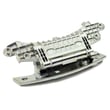
| Door sags or won’t close squarely | Hinge worn or loose | Washer door hinge WP8183202 |
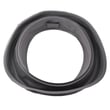
| Leaks at the door, musty odor | Door boot torn or not sealing | Washer door boot WP8182119 |
Why it matters
Resetting clears minor electronic faults, but repeat failures usually mean a mechanical issue (door not closing) or a control/drive problem. Fixing the root cause prevents repeated no-starts, leaks, and mid-cycle stops.
For code-related problems, use our DIY help for Kenmore front-load washers, such as Kenmore front load washer le error code.
Last updated: February 2026
Does a Kenmore 11047892702 Elite washer have a filter?
Yes. The Kenmore Elite washer model 11047892702 uses a drain pump clean-out style filter (often called a pump filter or coin trap) that catches lint and small items before they reach the pump. Cleaning it regularly helps prevent no-drain problems and odors.
Where the “filter” is and what it does
On most Kenmore front-load designs like this, the filter is part of the drain pump clean-out area behind a small lower access panel. It protects the drain system by trapping:
- Lint and hair
- Coins, screws, and small toys
- Buttons and bra wires
- Fabric strings that can wrap the pump
How to check and clean the pump filter (safe, basic steps)
- Unplug the washer.
- Place towels and a shallow pan under the lower front access area.
- Open the lower access panel.
- Slowly loosen the clean-out cap to let water drain into the pan.
- Remove debris from the trap and rinse the cap.
- Reinstall the cap firmly and run a quick rinse/drain to confirm no leaks.
If you find the cap area leaking afterward, the door boot and clamps are separate parts, but leaks at the front door opening are commonly tied to the boot and its retaining clamps.
Parts that commonly relate to leaks after servicing
If you notice water at the door opening (not the lower pump area), these model-matched parts are common fixes:
- Washer door boot WP8182119
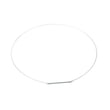
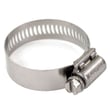
- Washer door boot spring clamp WP8182210
- Washer door boot spring clamp W10902779
Quick symptom guide
| Symptom | Most likely area | What to do first |
|---|---|---|
| Won’t drain or drains slowly | Pump filter/trap | Clean the pump filter and check for debris |
| Rattling during drain | Pump filter/trap | Remove coins or small items from the trap |
| Water at door opening | Door boot/clamps | Inspect boot for tears; check clamp seating |
| Musty odor | Filter/trap and tub | Clean filter; run a hot cleaning cycle |
Why it matters
A clogged pump filter is one of the most common causes of “no drain” complaints. Keeping it clean reduces strain on the drain pump, helps the washer spin properly, and prevents standing water that leads to odors.
Last updated: February 2026
Is Kenmore 11047892702 Elite high end?
Yes. Kenmore Elite model 11047892702 is positioned as a higher-end Kenmore washer line, typically offering stronger wash performance, higher spin speeds, and more feature-focused cycles than basic Kenmore models. “High end” also means repairs often involve more specialized parts and higher part costs.
What “Kenmore Elite” means for this washer
Kenmore Elite is Kenmore’s premium tier. For a front-load style platform like the 11047892702, that usually translates into better cleaning efficiency and more advanced control and suspension components compared with entry-level washers.
Common “premium” traits you’ll notice:
- Higher-speed spin to remove more water (shorter dry times)
- More cycle and temperature options
- Tighter door sealing and locking system (to prevent leaks)
- More complex electronics (motor control and sensing)
Parts that often define the “high-end” feel (and repair cost)
If you’re comparing this washer to a standard model, these components are good indicators of a more premium design:
- Door sealing system: washer door boot WP8182119
- Door safety/locking: washer door lock WP8183270
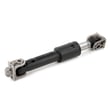
- Vibration control: washer shock absorber W10822553
- Electronic drive control: washer motor control board WP8183196
Quick comparison: basic vs Elite-style front-load design
| Area | Basic washer | Elite-style washer (like 11047892702) |
|---|---|---|
| Controls | Simpler timer/control | More sensors and electronic control |
| Spin/vibration | Lower spin, simpler suspension | Higher spin, stronger suspension parts |
| Door system | Simpler seal/lock | More robust boot, clamps, and lock |
| Repair approach | Fewer high-cost parts | More component-level diagnosis |
Why it matters
A “high-end” washer can deliver better results and efficiency, but it also means that issues like leaks, door lock failures, or vibration often point to specific wear parts (boot, clamps, shocks) that should be matched to the model for proper fit and performance.
Last updated: February 2026
How many cubic feet is my Kenmore 11047892702 Elite washer?
Your Kenmore Elite washer model 11047892702 has a 4.5 cu. ft. tub capacity. That capacity is considered a large front-load size; it helps you wash bulkier items while still needing proper loading and balance for strong spin performance.
What 4.5 cu. ft. means for everyday loads
- Handles most queen bedding sets and larger mixed loads
- Works best when you load loosely (do not pack items down)
- Overloading increases vibration, noise, and out-of-balance spinning
- Underloading can also cause balance issues with heavy single items
Quick capacity comparison
| Washer size class | Typical capacity | Where 11047892702 fits |
|---|---|---|
| Compact front-load | 2.0 to 2.6 cu. ft. | Smaller than yours |
| Standard front-load | 3.5 to 4.4 cu. ft. | Slightly smaller |
| Large front-load | 4.5 to 5.0+ cu. ft. | Your category |
Parts that affect “usable” capacity and performance
A washer can feel like it holds less when leaks, poor tumbling, or vibration force smaller loads. These model-compatible parts help restore normal operation:
- If you see water at the door opening, replace the washer door boot WP8182119
- If clothes are not tumbling well, check the washer baffle WP8182233
- If the washer shakes or walks during spin, inspect the washer shock absorber W10822553
Why it matters
Matching capacity (4.5 cu. ft.) keeps your load sizes, cycle results, and dry times consistent when comparing machines or troubleshooting performance issues like vibration and poor spin.
Last updated: February 2026
Is it worth repairing a Kenmore washing machine?
Yes, repairing a Kenmore Elite washer like model 11047892702 is worth it when the problem is a common wear item (door boot leak, door lock issue, vibration) and the repair restores reliable operation for a fraction of replacement cost. It is most cost-effective when the washer is otherwise in good condition and the fix is straightforward.
Quick decision checklist
- Repair when the washer still fills, drains, and spins, but has a specific symptom (leak, door won’t latch, excessive shaking).
- Repair when the cost is comfortably below about half the price of a comparable new washer.
- Repair when the issue is a known wear part you can replace without major teardown.
- Replace when multiple major systems are failing (leaks plus no-spin plus repeated error codes).
- Replace when the outer tub or structural components are damaged and labor is extensive.
Common repairs that are usually worth it on 11047892702
These are frequent front-load failure points that often deliver a big improvement for the money:
- Door seal leaks or mold tears: washer door boot WP8182119
- Door won’t lock or unlocks mid-cycle: washer door lock WP8183270
- Door sagging or not aligning: washer door hinge WP8183202
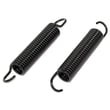
- Excessive vibration or banging: washer shock absorber W10822553 and washer suspension spring set W10135004
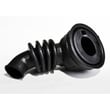
- Drain or recirculation leaks: washer tub-to-pump hose WPW10467168 and clamp WP285655
Cost and complexity guide
| Repair type | Typical difficulty | Typical “worth it” scenario |
|---|---|---|
| Door boot, clamps, hinge, door lock | Low to medium | One clear symptom; washer otherwise runs normally |
| Shocks, suspension springs | Medium | Vibration during spin; tub not stable |
| Control board | Medium to high | Verified electrical fault; no other major issues |
| Outer tub or frame-related repairs | High | Usually only worth it if the washer is in excellent shape otherwise |
Why it matters
A targeted repair can stop leaks, prevent floor damage, and restore safe door locking and stable spinning. Fixing a single failed component also helps you avoid chasing secondary problems caused by vibration, water intrusion, or repeated cycle interruptions.
If you’re seeing an error code
Start by matching the code to the symptom (unbalanced load, drain problem, motor issue) before buying parts. Our Kenmore 110 high efficiency front load washer error codes guide helps you narrow the failure to the most likely part or system.
Last updated: February 2026





