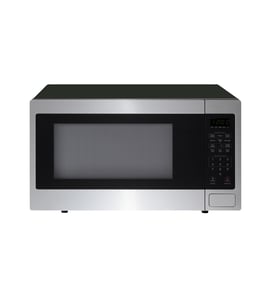


What is the highest rated countertop microwave?
There is no single “highest rated” countertop microwave for every shopper; ratings change by retailer and by what you value most (heating performance, sensor cooking, quiet operation, size, and price). If you already own a Panasonic NN-SD987S, the best choice is keeping it running safely with the right replacement parts and basic care.
How we recommend choosing a top-rated countertop microwave
Use these criteria to compare models across brands like Panasonic, LG, Toshiba, Breville, and others:
- Wattage: most full-size countertop microwaves run about 900 to 1,200 watts for faster heating.
- Inverter vs. non-inverter: inverter-style power control can improve low-power cooking and defrosting consistency.
- Sensor cooking: helps prevent overcooking by adjusting time automatically.
- Interior capacity and turntable size: match the dishes you actually use.
- Controls and usability: readable display, quick-start keys, and easy-to-clean keypad.
If your “rating” problem is really performance (not shopping)
Many people start searching for “best microwave” when their current unit stops heating evenly, gets noisy, or the door will not latch. For the Panasonic NN-SD987S, these part categories are common starting points:
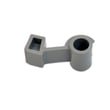
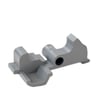
- Door latch and interlock components
- Door switches and levers
- Interior light
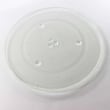
- Turntable tray and drive components
- High-voltage heating system (service-level repair)
If the microwave runs but does not heat, follow a proven diagnostic path in why is my microwave not heating.
Quick comparison: what “highest rated” usually means
| What you care about most | What to look for | Typical tradeoff |
|---|---|---|
| Even heating/defrosting | Inverter-style power control, good sensor programs | Higher price |
| Value and reliability | Simple controls, common replacement parts | Fewer cooking modes |
| Large dishes | Bigger cavity and turntable | More counter space |
| Quiet operation | Solid door fit, stable fan, good build | Harder to judge online |
Why it matters
A microwave that matches your cooking habits (power level control, sensor features, and size) feels “top rated” in daily use. If you already have the Panasonic NN-SD987S, replacing a worn door or switch component can restore safe operation and avoid nuisance issues like intermittent starting.
Last updated: January 2026
What is the life expectancy of a Panasonic microwave?
Most Panasonic countertop microwaves, including model NN-SD987S, typically last 7 to 10 years with normal household use. Heavy daily cooking, poor ventilation, and repeated door slams shorten lifespan; keeping the cavity clean and the door latching smoothly helps it reach the full range.
What affects microwave lifespan most
- Daily run time: frequent long cook cycles wear high-voltage components faster.
- Door use and alignment: a worn latch or switch system can stop operation even if the microwave still “powers on.”
- Ventilation and heat: blocked vents and grease buildup raise internal temperatures.
- Power quality: repeated breaker trips or surges can stress the inverter/control board.
- Cleaning habits: food splatter and steam damage surfaces and can lead to arcing.
Quick “repair vs. replace” guide
If your NN-SD987S is within the typical 7 to 10-year window, a repair often makes sense when the issue is a door or control input problem.
| Symptom | Common cause | Typical next step |
|---|---|---|
| Runs but won’t start when door closes | Door switch or latch issue | Inspect latch alignment; test door switches |
| Buttons don’t respond | Keypad/control input issue | Check for stuck keys; consider keypad replacement |
| Light out but heats normally | Lamp failed | Replace lamp |
| No heat but runs | High-voltage/inverter issue | Professional diagnosis recommended |
Parts that commonly end a microwave’s “useful life”
These are frequent wear or failure points that can make a microwave seem “dead” even when the unit is otherwise fine:
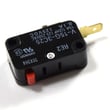
- Door interlock switch: switch 6600W1K001Q
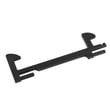
- Door latch hardware: microwave door latch F30186P40CP
- Interior light: Panasonic lamp F612E5Y30AP
Why it matters
Microwaves often fail from a small safety-interlock or input issue first, not from the cooking system. Catching door-latch and switch problems early helps prevent nuisance shutdowns and avoids stressing electrical components.
Last updated: January 2026
How many watts is a Panasonic NN-SD987S?
The Panasonic NN-SD987S countertop microwave is a 1250-watt unit (cooking power). That wattage helps it heat food faster and more evenly, especially when the door switches and inverter system are working correctly.
What “1250 watts” means in daily use
- Higher wattage usually means shorter cook times for the same food.
- You may need to reduce time on recipes written for 900 to 1100 watt microwaves.
- Power level settings still matter; “Power 5” runs at a lower average output than “Power 10.”
- If cook times suddenly get longer, it can point to a heating-system issue.
Quick cook-time adjustment guide
Use this as a starting point when converting recipes.
| Recipe written for | Start by adjusting time on 1250W to | Example: 4:00 becomes |
|---|---|---|
| 900W | 70% to 75% | 2:48 to 3:00 |
| 1000W | 80% to 85% | 3:12 to 3:24 |
| 1100W | 88% to 92% | 3:31 to 3:41 |
If your NN-SD987S runs but does not heat
A microwave can light up and “run” even when it is not producing heat. Check these common causes:
- Door not fully latching; worn latch parts can prevent proper interlock operation.
- Failed door interlock switch or related mechanism.
- Blown internal fuse (often after a power surge or door-slam event).
- Inverter or magnetron problem (typically requires advanced diagnosis).
Helpful next steps:
- Inspect the door latch action and listen for a solid “click” when closing.
- If the door feels loose or does not latch consistently, check the microwave door latch F30186P40CP.
- Use our troubleshooting guide: why is my microwave not heating.
Why it matters
Matching cook times to a 1250-watt microwave prevents overcooking and helps you spot performance changes early, which can reduce strain on components like the inverter, door switches, and fan motor.
Last updated: January 2026


