
Are all table saw arbor nuts the same size?
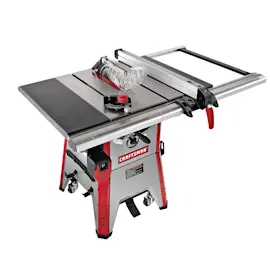
No. Arbor nuts are not universal; the correct nut depends on the saw’s arbor shaft diameter and thread direction. On a Craftsman 35122654 10-inch tilting arbor saw, you must match the arbor nut to the exact arbor threads so the blade clamps securely and stays tight during cutting.
What’s usually standardized (and what isn’t)
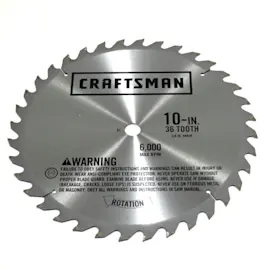
Many 10-inch table saw blades share a 5/8-inch arbor hole, but that does not mean the arbor nut is the same across brands or models.
- Blade arbor hole: often 5/8 inch on many 10-inch saw blades
- Arbor shaft threads: vary by model (diameter, pitch, and length)
- Thread direction: can be right-hand or left-hand depending on design
- Nut style: standard hex, flange nut, or a nut used with a specific washer set
- Washer stack-up: inner/outer flange washers can be model-specific
How to identify the correct arbor nut for Craftsman 35122654
Use these checks to ensure you get the right replacement part for your Craftsman table saw.
- Confirm the model number is 35122654 on the ID label
- Inspect whether the arbor nut loosens clockwise or counterclockwise (this indicates thread direction)
- Measure arbor shaft outside diameter with calipers (common sizes exist, but you must match yours)
- Check for a flange washer or special outer washer that mates to the nut
- Replace damaged parts as a set if the nut or washers are rounded, warped, or galled
Quick comparison: blade fit vs. arbor nut fit
| Item | What it must match | What happens if it’s wrong |
|---|---|---|
| Saw blade arbor hole | Arbor diameter (often 5/8 inch on 10-inch blades) | Blade will not seat correctly or will wobble |
| Arbor nut | Arbor thread diameter, pitch, and direction | Blade may not clamp, may loosen, or may damage threads |
Why it matters
The arbor nut is a primary safety and performance part. If it does not match the arbor threads exactly, the blade can slip, wobble, or loosen under load, which increases kickback risk and ruins cut quality.
Helpful related DIY reading
For safe troubleshooting habits when you’re inspecting electrical parts or wiring on a power tool, use our guide: are diy appliance repairs safe.
Last updated: February 2026
Can I add sawstop to any table saw?
No. You cannot add the SawStop flesh-sensing brake system to a non-SawStop table saw like the Craftsman 35122654 because the detection electronics, brake cartridge, arbor assembly, and cabinet design are engineered as an integrated system. For SawStop-style braking, the practical solution is using a saw that is built with that technology.
What you can do to improve safety on a Craftsman 35122654
Even without a flesh-sensing brake, we can reduce risk significantly by tightening up setup, guarding, and work habits.
- Use a blade guard and anti-kickback pawls if your saw is equipped for them
- Keep the rip fence parallel to the blade to reduce binding and kickback
- Use a riving knife or splitter if your saw has one (or a compatible retrofit kit designed for your saw)
- Add push sticks, push blocks, and featherboards for narrow rips
- Use a zero-clearance insert to reduce tear-out and help support small offcuts
- Keep the blade sharp and appropriate for the cut (rip blade vs. crosscut blade)
Quick safety checklist before you cut
These checks help prevent the two most common table saw injuries: kickback and hand contact.
| Check | Target | Why it matters |
|---|---|---|
| Blade height | Gullets just above the workpiece | Reduces exposed blade and improves cut control |
| Fence alignment | Parallel to blade | Prevents pinching and kickback |
| Work support | Flat, stable infeed/outfeed | Prevents tipping and binding |
| PPE | Eye and hearing protection | Reduces injury risk from debris and noise |
Why SawStop is not a bolt-on accessory
SawStop braking works by detecting a change in an electrical signal at the blade and firing a brake into the blade within milliseconds. That requires a matched brake cartridge mount, a compatible arbor and trunnion structure, and a control system designed around that mechanism. Most traditional 10-inch tilting arbor saws, including the Craftsman 35122654, are not built to accept those components.
Helpful DIY reading
For general repair readiness and safe troubleshooting habits, we recommend: are diy appliance repairs safe.
Last updated: February 2026
Can you use an 8 inch blade on a 10 inch table saw?
Yes. On a Craftsman 35122654 10-inch tilting arbor saw, you can typically run an 8-inch blade as long as the arbor size matches and the blade is rated for the saw’s RPM; the main tradeoff is reduced maximum cut depth.
What changes when you use an 8-inch blade
Using a smaller diameter blade is usually straightforward, but it affects performance and setup.
- Less cutting depth: an 8-inch blade cuts shallower than a 10-inch blade.
- Guard and riving knife alignment: the blade may sit lower, so the guard, splitter, or riving knife may not line up correctly.
- Different best-use cases: smaller blades are common for certain non-through operations (for example, some dado setups) and for specialty blades.
- Same safety expectations: you still need proper guarding, stable fence setup, and correct feed technique.
Quick compatibility checklist
Before installing the blade, confirm these basics.
| What to check | What “fits” looks like | Why it matters |
|---|---|---|
| Arbor hole size | Matches the saw’s arbor (commonly 5/8 inch on many 10-inch saws) | Prevents wobble and runout |
| Blade speed rating | Blade RPM rating meets or exceeds saw RPM | Reduces risk of blade failure |
| Kerf thickness | Works with your splitter/riving knife and throat plate | Helps prevent binding and kickback |
| Blade type | Rip, crosscut, combo, or dado (if supported) | Improves cut quality and control |
Safety and setup tips we recommend
- Unplug the saw before changing blades.
- Hand-spin the blade after tightening to ensure it clears the throat plate and guard.
- If the guard or riving knife cannot be used correctly with the smaller blade, switch back to a 10-inch blade for through-cuts.
- Use a zero-clearance insert sized for the blade/kerf when possible to reduce tear-out.
- If you’re troubleshooting power or switch issues before a blade change, use how to use a multimeter to test electrical parts video.
Why it matters
Blade diameter affects cut depth, guarding geometry, and kickback protection. Matching arbor size, kerf, and speed rating keeps your Craftsman 35122654 cutting accurately and safely.
Last updated: February 2026