Owner’s manual
 Error Codes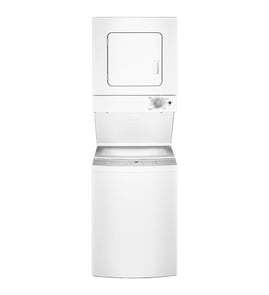


How many cubic feet is the Kenmore washer model 11088732790?
The exact washer capacity (in cubic feet) for Kenmore laundry center model 11088732790 is not listed in the available owner's manual excerpt for this unit. Most 24-inch Kenmore stacked laundry centers of this style are typically in the about 2.0 to 2.5 cu. ft. range for the washer.
If you want a close estimate, we use the washer tub’s inside measurements and calculate volume.
- Unplug the laundry center for safety before measuring inside the tub
- Measure the inside diameter of the wash basket (in inches)
- Measure the usable depth from the bottom to the normal fill line (in inches)
- Convert cubic inches to cubic feet (divide by 1,728)
- Use the result to compare to common capacity ranges
- Radius = diameter ÷ 2
- Volume (cu. in.) = 3.14 × radius² × depth
- Capacity (cu. ft.) = volume ÷ 1,728
These are practical ranges we see for compact, 24-inch stacked washer/dryer laundry systems.
| Laundry center type | Typical washer capacity | What it’s best for |
|---|---|---|
| 24-inch stacked laundry center (like 11088732790) | ~2.0 to 2.5 cu. ft. | Apartments, small loads |
| Full-size top-load washer | ~3.5 to 4.8 cu. ft. | Larger families, bulky items |
Washer capacity affects how much you can load without poor agitation, incomplete rinsing, or extra wear on drive components. Overloading can also contribute to issues like poor wash performance or strain on the drive system.
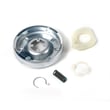
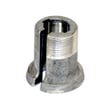
If you are troubleshooting weak agitation or slipping, common wear items on this model include the agitator dog 80040 and the coupling 285753A.
Last updated: February 2026
How to read Kenmore washer model numbers?
Kenmore washer model numbers are structured so you can identify who built the unit and which design family it belongs to. For Kenmore laundry centers like model 11088732790, the first three digits are the manufacturer prefix, followed by digits that narrow down the base model and its specific variation (features, color, or production run). For model-specific labeling details, use the owner's manual.
Most Kenmore model numbers follow this pattern:
- Prefix (first 3 digits): identifies the original manufacturer (OEM) behind the Kenmore-branded unit
- Middle digits: identify the base design series (the core platform used for parts and service)
- Ending digits: identify variations (revisions, feature packages, or cosmetic differences)
| Example model | Prefix | What it’s used for | Why it matters |
|---|---|---|---|
| 11088732790 | 110 | Manufacturer ID | Helps match the correct parts diagrams and compatible replacement parts |
On stacked washer/dryer laundry systems, the model/serial tag is typically on one of these areas:
- Inside the washer lid area (around the rim)
- On the dryer door opening or door frame
- Behind a small access panel (varies by design)
If the tag is hard to read, compare the characters to the identification section in the owner's manual.
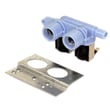
Using the full model number (all digits) prevents ordering the wrong part when there are mid-series changes. Even small suffix differences can affect fit for items like a water inlet valve, drain pump, or drive motor.
If you are ordering parts for this Kenmore 11088732790 laundry center, match parts by the complete model number and the diagram callout, not just by appearance.
Last updated: February 2026
What is the average lifespan of a Kenmore washer?
A Kenmore washer typically lasts 10 to 15 years. For your Kenmore laundry center model 11088732790, lifespan depends most on load size, detergent use, and basic upkeep like keeping hoses and lint areas clean (maintenance steps are outlined in the 11088732790 owner's manual).
Most washers land in the 10 to 15 year range; heavy use and poor maintenance shorten that, while lighter use and routine care extend it.
Common factors that change lifespan:
- Load size and balance (overloading and unbalanced loads increase wear)
- Water quality (hard water can speed up valve and pump issues)
- Drain performance (slow draining strains the pump)
- Agitation and spin wear (clutch, coupling, and gear case take the hit)
- Vent and lint buildup on the dryer side (heat and lint issues can affect the whole unit’s reliability)
We recommend these habits for the 11088732790 stacked laundry center:
- Load items evenly and avoid packing the tub
- Use the right amount of detergent (too much can cause residue and odors)
- Periodically inspect water inlet hoses for bulges, cracking, or leaks
- Keep the washer area dry; address small leaks quickly
- Follow the manual’s cleaning guidance for the washer and lint areas
| Task | How often | Why it matters |
|---|---|---|
| Check inlet hoses | Every 3 to 6 months | Prevents leaks and fill problems |
| Clean lint areas | Monthly | Reduces airflow restriction and heat stress |
| Avoid overloading | Every load | Protects drive parts and improves cleaning |
| Verify draining | Monthly | Prevents pump strain and standing water |
If your washer still fills but will not agitate or spin, these are frequent wear items for this style of Kenmore unit:
- Agitator dog 80040 (worn dogs can stop proper agitation)
- Coupling 285753A (a common no-agitate/no-spin failure point)
- Washer drain pump WP3363394 (for slow drain, no drain, or grinding noises)
Knowing the 10 to 15 year average helps you decide whether routine maintenance and a targeted repair make sense, especially when the symptom points to a common wear part instead of a major assembly.
Last updated: February 2026