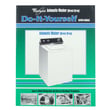
Owner’s manual

How do I fix a low flow error on my washing machine?
On the Whirlpool LSR7233EQ0 washer, a “low flow” or slow-fill problem is almost always caused by restricted water supply to the inlet valve (closed supply valve, kinked hose, clogged inlet screen) or low home water pressure. Restoring full flow usually fixes the fill issue immediately.
Quick checks that fix most low-flow problems
- Make sure both hot and cold supply valves at the wall are fully open.
- Straighten any kinked inlet hoses; replace hoses that are swollen or collapsing.
- Clean the inlet hose screens at the washer’s water inlet valve (sediment and scale commonly clog them).
- Confirm your home water pressure is strong at the laundry faucets (weak flow points to a plumbing issue).
- If the washer sat unused for 2 weeks or more, run hot water at a sink or tub faucet for a few minutes before washing (this also helps clear the line). See the safety notes in the LSR7233EQ0 owner’s manual.
When a part is likely needed
If the hoses and screens are clear and the wall valves are fully open, the inlet valve can still fail internally (sticking solenoids or debris that will not flush out). For this model, the inlet valve is commonly listed as a mixing valve.
- Replace the inlet valve if the washer fills very slowly on both hot and cold.
- Replace the inlet valve if you hear humming at fill but water barely enters.
- Replace the inlet valve if flow is normal on one temperature but weak on the other.
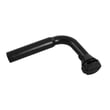
Part to consider: Mixing valve 285805
Symptom-to-cause guide
| What you see | Most common cause | What we do first |
|---|---|---|
| Slow fill on hot and cold | Clogged inlet screens or low pressure | Clean screens, verify pressure |
| Slow fill on one temp | One side of valve restricted/failed | Check that hose and screen, then valve |
| Fills, then stops and restarts | Intermittent supply or valve sticking | Verify valves, then replace valve |
Why it matters
Low flow can prevent proper agitation timing and cleaning performance because the washer is designed to fill to the selected load size before agitation begins. Getting normal fill speed back helps cycles run correctly and protects components from unnecessary strain.
Last updated: January 2026
What is the capacity of LSR7233EQ0?
The Whirlpool LSR7233EQ0 washer is a Super Capacity Plus top-load washer; its wash basket capacity is about 3.2 cubic feet, which supports full-sized loads like multiple towels or several pairs of jeans. For loading guidance by fabric type, use the LSR7233EQ0 owner's manual.
How that capacity translates to real loads
In a 3.2 cu. ft. top-load washer like the LSR7233EQ0, you can typically wash:
- A full mixed load (T-shirts, shorts, shirts, pillowcases)
- A large towel load (multiple bath towels plus hand towels)
- Several pairs of jeans or heavy work clothes
- Full-sized sheet sets (depending on thickness)
Quick capacity reference
| Capacity (cu. ft.) | Washer type | What it’s best for |
|---|---|---|
| ~3.2 | Top-load, traditional agitator | Larger everyday loads, towels, jeans |
| 2.5 to 2.9 | Compact top-load | Smaller households, lighter loads |
| 3.5+ | Large-capacity top-load | Bulky items more often (comforters, large bedding) |
Why it matters
Capacity affects cleaning and wear: overloading reduces agitation and rinsing, while underloading can cause off-balance spinning. Using the right load size setting and cycle helps the drive system, clutch, and suspension work as designed.
Tips to get the best results at this capacity
- Load items loosely; do not pack clothes down
- Mix large and small items to help balance during spin
- Use the correct water level for the load size
- Reduce wash time for small loads
- For heavy items (towels, jeans), choose a cycle and spin speed that matches the fabric
Last updated: January 2026
What is the most common problem with Whirlpool washers?
For Whirlpool washers like model LSR7233EQ0, the most common service issues are no spin and no drain, followed by excess vibration/noise and leaks. Many of these problems trace back to simple checks (lid closed, hoses clear) or a few high-wear drive and pump parts.
Quick checks we recommend first
Before replacing parts, start with the basics listed in the LSR7233EQ0 owner's manual:
- Confirm the lid is fully closed.
- Make sure the cycle control knob is set and pulled out.
- Verify the washer is plugged into a live outlet and the breaker is not tripped.
- Confirm hot and cold faucets are on.
- Check for kinked/clogged fill hoses.
- Verify the drain hose height and routing (too low or siphoning can cause drain issues).
Most common symptoms and likely causes
| Symptom | What it usually points to | Common next step |
|---|---|---|
| Won’t drain | Drain restriction or weak pump | Check hose for clogs; inspect/replace washer drain pump WP3363394 |
| Won’t spin (but drains) | Lid switch or drive system issue | Check lid switch operation; inspect coupling/clutch |
| Agitates poorly or “skips” | Worn agitator dogs | Replace agitator dog 80040 |
| Loud noise or burning smell | Drive coupling/clutch/motor strain | Inspect coupling 285753A and clutch; stop use if severe |
| Shakes or bangs in spin | Load out of balance or suspension wear | Redistribute load; inspect suspension springs |
Why it matters
No-drain and no-spin problems can leave clothes soaking wet and can strain the drive system. Catching a clog, worn agitator dogs, or a failing pump early often prevents bigger repairs to the motor, clutch, or gearcase.
Helpful DIY guidance
If your main complaint is no fill, no drain, or no spin, we use these step-by-step resources to narrow it down fast:
- Troubleshooting a top load washer that wont drain or spin video
- Troubleshooting a direct drive top load washer that wont fill video
Last updated: January 2026