Owner’s manual
 Error Codes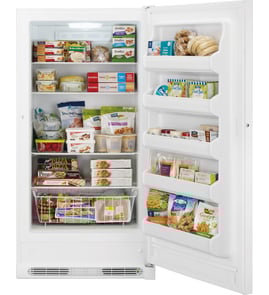



What are the disadvantages of an upright freezer?
Upright freezers like the Frigidaire FFU20FC6AW4 are convenient for organizing food, but the main disadvantages are less usable space for bulky items, higher energy use than many chest freezers, and more risk of frost or warm-air intrusion when the door is opened. For model-specific use and care details, follow the FFU20FC6AW4 owner's manual.
Common disadvantages (what most owners notice)
- Less room for bulky items: Shelves, bins, and the door opening can limit tall or wide packages.
- More temperature swings: Opening a vertical door lets cold air spill out faster than a chest design.
- Often higher operating cost: Many upright freezers use more electricity than comparable chest freezers.
- More frost management on some models: If your unit is not fully frost-free, you may need periodic defrosting.
- Door-seal sensitivity: If the freezer is not level, the door can misalign and leak air, leading to frost and moisture issues.
What to check on FFU20FC6AW4 to reduce the downsides
The manual highlights a few setup and care items that directly affect performance and frost buildup:
- Keep the freezer where ambient temperatures stay at or below 110°F (43°C).
- Leave 3 inches (75 mm) of clearance on all sides for airflow.
- Level the cabinet so the door closes and seals easily.
- Defrost and clean when frost reaches about 1/4 to 1/2 inch (if your configuration requires manual defrosting).
- Use only plastic tools for frost removal; avoid sharp metal tools.
Upright vs chest freezer: quick comparison
| Feature | Upright freezer | Chest freezer |
|---|---|---|
| Bulk storage | Lower (shelves reduce flexibility) | Higher (open cavity fits large items) |
| Cold-air loss when opened | Higher | Lower |
| Organization | Easier (shelves/bins) | Harder (stacking) |
| Typical energy use | Often higher | Often lower |
Why it matters
These disadvantages usually show up as higher energy bills, more frost, or soft/failing door seals. Good installation (leveling and airflow clearance) and basic care help your FFU20FC6AW4 hold temperature and reduce frost-related problems.
Last updated: January 2026
How do I reset my Frigidaire upright freezer?
To reset your Frigidaire FFU20FC6AW4 upright freezer, we recommend doing a simple power reset: unplug it for about 1 minute, then plug it back in and allow time for temperatures to stabilize. This clears many control glitches after a power interruption or temperature change.
Reset steps (power reset)
- Turn the temperature control to a normal setting (do not force the knob).
- Unplug the freezer from the wall outlet.
- Wait 60 seconds.
- Plug the freezer back in.
- Allow a full cool-down period before judging performance (about 4 hours for safe food storage).
For model-specific operating details and control locations, use the FFU20FC6AW4 owner's manual.
What to expect after a reset
After power is restored, it is normal for the freezer to run steadily for several hours as it pulls down to temperature.
| What you notice | What it usually means | What to do |
|---|---|---|
| Runs continuously at first | Normal cool-down | Wait 4 hours before loading unfrozen food |
| Frost building up quickly | Door not sealing or frequent openings | Check door closure and gasket condition |
| Warm temps after several hours | Airflow, defrost, or sealed-system issue | Check vents, then troubleshoot defrost components |
If “resetting” does not fix the problem
A reset will not correct mechanical or defrost problems. These checks often pinpoint the real cause:
- Confirm the door closes and seals; a leak can cause frost and poor cooling.
- Make sure the freezer is level so the door seals properly.
- Verify airflow is not blocked by packages against interior vents.
- If you see heavy frost on the back wall, suspect a defrost failure.
- If the freezer is warm and you hear clicking near the compressor area, suspect a start device issue.
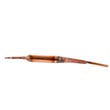
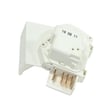
If you are troubleshooting a defrost-related symptom, the defrost timer 5304518034 and freezer defrost heater 216730700 are common components in the defrost circuit for this model.
Why it matters
A proper reset is a fast first step, but the 4-hour cool-down guidance helps prevent unnecessary part replacement and protects food safety by giving the freezer time to reach a stable freezing temperature.
Last updated: January 2026
What is the average lifespan of an upright freezer?
Most upright freezers last 10 to 20 years, with 12 to 15 years being typical for many homes. For a Frigidaire FFU20FC6AW4, lifespan depends most on installation conditions (heat, airflow, leveling) and routine care outlined in the FFU20FC6AW4 owner's manual.
Typical lifespan and what affects it
Key factors that most often shorten or extend upright freezer life:
- Room temperature and ventilation: keep the freezer where ambient temps stay under 110°F, and allow about 3 inches of clearance on all sides for airflow.
- Door sealing: a poor seal forces longer run times and can lead to frost and moisture issues.
- Leveling: if the cabinet is not level, the door may not close and seal correctly.
- Defrost and cleaning habits: heavy frost buildup and dirty surfaces reduce efficiency.
- Usage patterns: frequent door openings and overloading with unfrozen food increase strain.
Maintenance that helps you reach the high end of the range
These habits typically add years by reducing compressor run time and preventing frost problems:
- Keep the freezer level so the door closes easily when left halfway open.
- Maintain 3-inch clearance on all sides for air circulation.
- Allow a full 4-hour cool-down before loading unfrozen food.
- Defrost and clean when frost reaches about 1/4 to 1/2 inch (if your unit is not frost-free).
- Use a plastic scraper, not metal tools, to remove frost.
Quick reference: lifespan expectations
| What you do | What you can expect | Why it helps |
|---|---|---|
| Good airflow, level cabinet, good door seal | Closer to 15 to 20 years | Less run time, fewer frost and moisture issues |
| Hot location, poor airflow, door not sealing | Closer to 10 to 12 years | Higher heat load and longer compressor cycles |
Why it matters
A freezer that runs longer to hold temperature uses more energy and is more likely to develop cooling and frost issues. Proper placement, leveling, and defrost practices reduce wear on the sealed system and compressor.
Last updated: January 2026