 Error Codes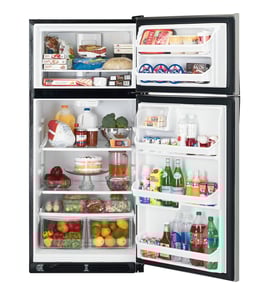



What are the disadvantages of a top mount fridge?
Top-mount refrigerators like the Hotpoint CTX18HABBRWW are reliable and efficient, but their main disadvantages are less convenient fresh-food access (you bend more), fewer premium organization features, and fewer built-in dispenser options compared with many bottom-freezer designs.
- More bending for everyday items: the refrigerator section sits lower, so produce and deli items are below waist height.
- Less “premium” organization: many top-mount models have simpler bins, fewer adjustable zones, and less flexible storage layouts.
- Fewer dispenser features: top-mount designs are less likely to include through-the-door water or ice.
- Freezer access is easiest: this is a plus if you use frozen foods often, but it can feel unbalanced if you mostly use fresh foods.
- Narrower shelf and bin options: replacement shelves, drawers, and door bins can be more model-specific.
| Feature | Top-mount refrigerator | Bottom-freezer refrigerator |
|---|---|---|
| Fresh-food access | Lower, more bending | Higher, easier reach |
| Freezer access | Eye-level | Lower drawer style |
| Organization features | Often simpler | Often more flexible |
| Dispensers | Less common | More common |
If your household uses fresh foods multiple times a day, the extra bending and simpler organization can be the biggest day-to-day drawback. If frozen foods are used more often, a top-mount layout can still be a practical fit.
Some frustrations come from worn or missing storage parts rather than the layout itself. For example:
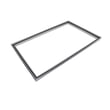
- If the door doesn’t seal well, temperature swings can make organization feel harder; check the refrigerator gasket WR24X10228.
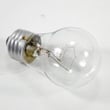
- If interior visibility is poor, replacing a dim bulb can help; use the 40A15/22 40A15.
- If drawers are cracked or missing, restoring the original bins can improve usability.
Last updated: January 2026
Which is better, top mount or bottom mount refrigerator?
A top-mount refrigerator like the Hotpoint CTX18HABBRWW is usually the better pick when you want simple, reliable cooling with a lower purchase price and fewer features to maintain. A bottom-mount is usually better when you want fresh-food items at eye level and easier access to the refrigerator section.
| Feature | Top-mount (freezer on top) | Bottom-mount (freezer on bottom) |
|---|---|---|
| Everyday access | Freezer is easiest to reach | Fresh-food section is easiest to reach |
| Typical cost | Lower | Higher |
| Complexity | Simpler design | More drawers, rails, and seals |
| Organization | Basic shelves and bins | Often better fresh-food layout |
| Repair profile | Fewer moving parts overall | More door and drawer hardware |
- You want a straightforward refrigerator with fewer “extras” to troubleshoot.
- You use the freezer often and want it at chest or eye level.
- You want a lower upfront cost and typically lower repair complexity.
- You have limited kitchen space and prefer a lighter door swing feel.
- You want a classic layout that is easy to live with long-term.
- You use fresh food more than frozen food and want it at eye level.
- You prefer wide refrigerator shelves and easier access to produce drawers.
- You want a freezer drawer that can hold bulky frozen items.
- You are willing to pay more for layout and convenience.
Both styles can cool well when the doors seal tightly and airflow is unobstructed. If you are comparing long-term upkeep, door sealing and temperature stability matter more than freezer position. For example, worn gaskets can cause warm spots, frost, and longer run times; for this model, common seal replacements include the refrigerator gasket WR24X10228 and gasket WR24X10236.
Last updated: January 2026
What size is an 18 cubic foot refrigerator?
An 18 cu. ft. refrigerator like the Hotpoint CTX18HABBRWW is typically about 65 to 68 inches tall, 28 to 30 inches wide, and 30 to 32 inches deep. Exact size varies by cabinet style and door hardware, so measure your opening and include clearance.
Most 18 cu. ft. top-mount (top-freezer) refrigerators land in a fairly tight range, but these details can shift the final fit:
- Door handles can add 1 to 3 inches of depth
- Hinges and door swing need side clearance so doors open fully
- Rear clearance is needed for airflow and the power cord
- Floor and leveling legs can change final height slightly
- Older designs can be a bit deeper than newer “space-saving” cabinets
| Measurement | Typical range for 18 cu. ft. top-mount | What to measure at home |
|---|---|---|
| Height | 65 to 68 in. | Floor to top of cabinet (and to top hinge if it sticks up) |
| Width | 28 to 30 in. | Wall-to-wall opening at the tightest point |
| Depth | 30 to 32 in. | Back wall to front of doors (then add handle depth) |
Use these practical clearances so the Hotpoint CTX18HABBRWW can breathe and the doors can open without binding:
- Sides: 1/8 to 1/4 inch each side (more if the opening is out of square)
- Top: 1 inch minimum
- Back: 1 to 2 inches
- Front: enough space for full door swing and drawer removal
A refrigerator that “fits on paper” can still be a problem if the doors cannot open wide enough to remove shelves and bins, or if airflow is restricted and cooling performance drops. Planning for clearance prevents warm temperatures, sweating, and premature wear.
If you are refreshing the interior while you measure, the refrigerator gasket WR24X10228 is a common fit-related part because a torn gasket can cause poor sealing and temperature swings.
Last updated: January 2026





