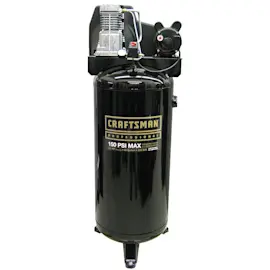
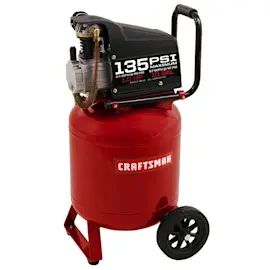
Owner’s manual

What is the average lifespan of an air compressor?
A typical homeowner or light-shop piston air compressor lasts 10 to 15 years with routine maintenance; heavy use and poor moisture control can shorten that. For your Craftsman 919184190 (60-gallon, belt-drive), following the maintenance schedule and staying within the rated duty cycle extends service life. See the owner's manual for the model’s maintenance intervals and operating limits.
Typical lifespan by compressor type
Most lifespans come down to pump design, duty cycle, and maintenance.
| Compressor type | Typical lifespan | Common use case |
|---|---|---|
| Small portable oil-free (pancake, hot dog) | 5 to 10 years | DIY, intermittent tools |
| Belt-drive piston (like many 60-gallon shop units) | 10 to 15 years | Home shop, light commercial |
| Rotary screw (industrial) | 15 to 20+ years | Continuous production air |
What matters most for the 919184190
Your manual calls out two big life-extenders: duty cycle and routine maintenance.
- Stay at or under a 50% duty cycle (maximum about 30 minutes of pumping per hour) to prevent overheating and premature wear.
- Drain the air tank regularly to reduce internal corrosion and water carryover.
- Check oil and change oil on schedule (oil-lubricated pumps last longer when oil stays clean).
- Check the air filter more often in dusty or humid conditions.
- Fix even small air leaks; leaks make the compressor run longer and overwork the pump.
Maintenance checklist that extends lifespan
Use this as a practical baseline; match your exact intervals to the owner's manual.
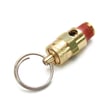
- Before each use: check the safety valve, check oil level
- Daily or after each use: drain the tank
- Every 40 to 100 hours: change oil (as scheduled), check air filter
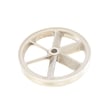
- Every 160 hours: inspect belt condition and pulley/flywheel alignment
- Yearly: have a trained technician check intake and exhaust valves
Why it matters
Most “worn out” compressors fail early because they run too long (undersized air demand), ingest dirt (filter neglected), or accumulate water (tank not drained). Keeping run time down and maintenance up protects the pump, motor, and tank.
Last updated: February 2026
What is the most common cause of air compressor failure?
For the Craftsman 919184190 air compressor, the most common cause of failure is preventable wear from poor maintenance: moisture left in the tank (rust), air leaks that make the pump overwork, and restricted airflow from a dirty intake filter that leads to overheating and premature breakdown. See the maintenance schedule in the owner's manual.
Most common failure drivers (what we see most often)
- Water left in the tank: not draining condensation daily causes internal rust and tank weakening.
- Air leaks at fittings, hoses, or the check valve: minor leaks make the compressor run longer and wear out faster.
- Restricted intake airflow (dirty air filter): reduces performance and increases heat.
- Excessive vibration: can loosen fittings, worsen leaks, and stress components.
- Overuse or undersized compressor for the job: prolonged high demand overheats the pump and motor.
Quick checks that prevent breakdowns
- Drain the tank daily or after each use.
- Check for leaks with soapy water on fittings and connections; bubbles indicate a leak.
- Inspect and clean or replace the intake filter; do not run the compressor with the filter removed.
- Listen for unusual noise and watch for vibration; shim or adjust feet if needed.
- Match tool demand to compressor output; if your tool needs more air than the compressor can supply, the unit will overwork.
Maintenance cadence (simple guide)
| Task | When to do it | What it prevents |
|---|---|---|
| Drain air tank | Daily / after each use | Rust, tank damage, moisture issues |
| Check safety valve | Before each use | Overpressure risk |
| Check for air leaks | Regularly | Overwork, premature breakdown |
| Check air filter | Regularly (more in dusty areas) | Overheating, low output |
Why it matters
Air compressors usually fail after they are forced to run hot and long. Leaks, restricted airflow, and water in the tank all push your Craftsman 919184190 to cycle more often, which accelerates wear on seals, valves, and the pump.
For step-by-step troubleshooting when the unit will not run, use our guide: air compressor won't start.
Last updated: February 2026
What are the 4 types of compressors?
The four main compressor types are reciprocating (piston), rotary screw, centrifugal, and axial. Your Craftsman air compressor model 919184190 is a reciprocating-style unit commonly used for home and light shop tasks; operating and safety details are covered in the owner's manual.
The 4 compressor types (what makes them different)
- Reciprocating (piston): Uses a piston and cylinder to compress air in pulses; common in portable and small shop compressors.
- Rotary screw: Uses two intermeshing screws for continuous compression; common in commercial shops needing steady airflow.
- Centrifugal: Uses a high-speed impeller to accelerate air and convert velocity to pressure; common in large industrial plants.
- Axial: Uses rotating blades (like a turbine) to compress air in stages; common in very high-flow applications.
Quick comparison
| Type | Best for | Typical strengths | Typical tradeoffs |
|---|---|---|---|
| Reciprocating (piston) | DIY, intermittent use | Lower cost, simple design | Louder, more vibration, not ideal for continuous duty |
| Rotary screw | Shop air, frequent use | Smooth continuous air, efficient | Higher upfront cost, more complex |
| Centrifugal | Industrial, high volume | Very high airflow | Large size, specialized maintenance |
| Axial | Specialized high-flow systems | Extremely high flow potential | Complex, not typical for shop compressors |
Why it matters for your Craftsman 919184190
Knowing the compressor type helps you match expectations for duty cycle, noise, and how pressure is controlled. For example, this model uses a pressure switch with cut-in and cut-out operation, and it should be run at no more than a 50% duty cycle (up to about 30 minutes of pumping per hour) to avoid undersizing and overheating.
Related DIY help (common compressor questions)
- If the motor will not run: air compressor won't start
- If it runs but pressure stays low: air compressor won't build tank pressure
- If you are planning a major overhaul: how to rebuild an air compressor pump
Last updated: February 2026
Is it worth it to repair a compressor?
Yes, repairing a Craftsman 919184190 air compressor is worth it when the failure is a serviceable item (leaks, pressure switch, check valve, belt, gauges) and the tank and pump are sound. Replacement makes sense when the tank is damaged or the pump has major internal wear.
Quick decision checklist
- Repair if it builds pressure and the issue is a leak, regulator/control problem, or a worn belt/filter.
- Repair if it starts and stops normally near its rated pressures (about 120 PSI cut-in and 150 PSI cut-out).
- Repair if the fix is limited to fittings, hoses, pressure switch, check valve, safety valve, or gauges.
- Replace if the tank will not hold air or shows heavy corrosion, dents, or damage.
- Replace if the pump knocks loudly, vibrates heavily, or output stays low after leak checks.
What failed matters most
| Symptom | Most likely area | Usual direction |
|---|---|---|
| Air leaks at fittings/lines | Air system leak | Repair |
| Won’t start or trips breaker | Electrical/control | Repair first |
| Won’t build tank pressure | Leak, check valve, valves | Repair first |
| Loud noise, low output, oil issues | Pump wear/internal damage | Rebuild or replace |
If the tank is solid but the pump is worn, rebuilding can be the best value; use how to rebuild an air compressor pump to see the scope of the job.
Steps we recommend before deciding
- Disconnect power and bleed off all air pressure before inspection.
- Soap-test fittings and connections; bubbles indicate leaks.
- Follow the maintenance schedule (drain tank, check oil if applicable, inspect belt and air filter) in the owner's manual.
Why it matters
Even minor leaks can make the compressor overwork, which causes premature breakdown and poor performance. Fixing small issues early often restores full output and protects the pump.
Last updated: February 2026
Do Craftsman air compressors have a lifetime warranty?
No. For Craftsman air compressor model 919184190, the warranty is not lifetime; the owner's manual lists a full one-year warranty for defects in material or workmanship, and 90 days of coverage when used for commercial or rental purposes.
Warranty terms for model 919184190
These are the warranty periods stated in the manual:
- Residential use: 1 year from the purchase date
- Commercial use: 90 days from the purchase date
- Rental use: 90 days from the purchase date
- Coverage applies to defects in material or workmanship
Quick specs that affect setup and performance
The manual also lists key electrical and operating guidance that helps prevent “warranty-like” problems caused by installation or use:
- Power: 240V, single phase
- Minimum branch circuit requirement: 15 amps
- Duty cycle: 50% maximum (up to 30 minutes of pumping time per hour)
| Item | What to use for 919184190 | Why it matters |
|---|---|---|
| Voltage | 240V single phase | Incorrect power can prevent starting or damage components |
| Circuit | 15A minimum branch circuit | Undersized circuits can trip breakers or cause hard starts |
| Duty cycle | 50% max | Overworking the pump shortens component life |
If you are troubleshooting instead of filing a warranty claim
These common symptoms are usually caused by setup, leaks, or normal wear items:
- Won’t start: verify power and controls; use air compressor won't start
- Won’t build pressure: check for leaks and valve issues; use air compressor won't build tank pressure
- Leaks or pressure loss: inspect fittings and connections; use air compressor air leaks
Why it matters
A lifetime warranty expectation can delay the real fix. Knowing the 1-year (or 90-day commercial/rental) coverage for model 919184190 helps you decide whether to focus on warranty documentation or move straight to diagnosis and repair.
Last updated: February 2026