Owner’s manual



Is a 70 pint dehumidifier good?
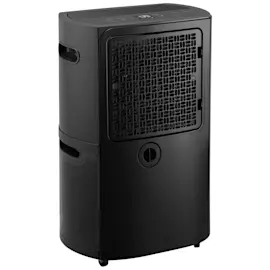
Yes. A 70‑pint dehumidifier is a strong, “whole-basement” size for many homes, and it is often a good choice when you have a damp basement, higher humidity, or larger square footage. For best results with the GE APEL70LWL1, use the placement and temperature guidelines in the APEL70LWL1 owner's manual.
When a 70‑pint unit is the right choice
A 70‑pint dehumidifier is typically a good fit when you have one or more of these conditions:
- A basement or large open area that stays damp or musty
- Visible condensation on windows or pipes
- Humidity that regularly stays above about 50% to 55%
- Higher ceilings or lots of air volume to dry
- Frequent moisture sources (laundry area, shower, cooking nearby)
Setup tips that make a big difference (for APEL70LWL1)
Even the right size dehumidifier will underperform if it is installed poorly. We recommend:
- Place it on a smooth, level floor strong enough to support a full bucket.
- Keep 12 to 18 inches of clearance on all sides for airflow.
- Run it in an enclosed area; close doors and windows to outside openings.
- Keep room temperature above 41°F (5°C) to reduce coil frost and performance loss.
- Plug it into its own grounded 3‑prong outlet; do not use extension cords or surge protectors.
Quick sizing guide (typical home use)
Use this as a practical rule of thumb when comparing sizes.
| Capacity class | Typical best use | What you’ll notice |
|---|---|---|
| 30 pint | Small areas, mild dampness | Helps, but may run constantly in basements |
| 50 pint | Medium areas, moderate dampness | Often OK for smaller basements |
| 70 pint | Larger areas, heavier dampness | Faster pull-down, fewer long run times |
Why it matters
If the unit is undersized, it runs longer, struggles to reach your humidity setpoint, and can ice up more easily in cool basements. A properly sized 70‑pint unit usually removes moisture faster and maintains comfort with less nonstop operation.
Last updated: January 2026
How many square feet will a 70 pint dehumidifier take care of?
A 70-pint dehumidifier is typically sized for large spaces; in real homes it usually handles about 1,000 to 2,500 sq. ft. depending on how damp the area is, how enclosed it is, and airflow. For best results with your GE APEL70LWL1, follow the placement and operating guidance in the APEL70LWL1 owner's manual.
Typical coverage ranges (what to expect)
Coverage depends more on moisture load than on square footage alone.
- Very damp or wet areas (standing moisture, frequent water intrusion): ~1,000 to 1,500 sq. ft.
- Damp basements (musty smell, visible condensation at times): ~1,500 to 2,200 sq. ft.
- Moderately damp areas (seasonal humidity, closed windows): ~2,000 to 2,500 sq. ft.
- Open layouts or multiple rooms: coverage drops unless air can circulate freely
Quick guide
| Space condition | Typical 70-pint coverage | What improves results |
|---|---|---|
| Very damp | 1,000 to 1,500 sq. ft. | Keep doors closed, run continuously at first |
| Damp basement | 1,500 to 2,200 sq. ft. | Central placement, clean filter |
| Moderate humidity | 2,000 to 2,500 sq. ft. | Good airflow, stable room temperature |
Setup tips that directly affect square-foot coverage
The GE APEL70LWL1 works best when it can pull humid air in and push dry air out without restriction.
- Operate it continuously for the first 24 hours when you first start using it.
- Keep the area enclosed; close doors and windows to outside air.
- Allow 12 to 18 inches of clearance on all sides for airflow.
- Use it where temperatures stay above 41°F (5°C) to avoid frost reducing performance.
- Keep the filter clean; a clogged filter reduces airflow and moisture removal (see dehumidifier air filter WK85X21721).
Why it matters
A “70-pint” rating describes moisture removal capacity under test conditions, not guaranteed square footage. Room temperature, air leaks, and airflow determine whether your dehumidifier keeps up or runs constantly without reaching the humidity set point.
Last updated: January 2026
Do air dehumidifiers use a lot of electricity?
GE dehumidifiers like model APEL70LWL1 use a moderate amount of electricity; most portable units typically draw about 300 to 700 watts while running. Your actual cost depends on run time, humidity level, and room conditions, so continuous operation in a damp space costs the most.
What affects electricity use the most
- Run time: longer daily run time equals higher kWh usage.
- Humidity setpoint: lower targets (for example, 35% to 40% RH) make the compressor run more.
- Room temperature: cooler rooms can trigger defrost cycles and reduce moisture removal efficiency.
- Airflow: a dirty filter restricts airflow and can increase run time.
- Drain method: bucket use can stop the unit when full; continuous drain can allow longer run time.
Typical power and cost examples
These are common ranges for portable dehumidifiers; use your unit’s rating label for exact amps/watts.
| Scenario | Typical watts while running | Example monthly cost (8 hrs/day) |
|---|---|---|
| Efficient operation in a moderately damp room | 300 to 500 W | about $9 to $18 |
| Very damp area, frequent compressor run time | 500 to 700 W | about $15 to $25 |
Cost example assumes $0.15/kWh; your local rate may be higher or lower.
Ways to reduce operating cost on APEL70LWL1
- Set humidity to 45% to 55% for comfort and efficiency in most homes.
- Keep the intake filter clean; replace it if it will not clean up well (example: dehumidifier air filter WK85X21721).
- Close doors and windows in the area you are drying.
- Make sure the unit is plugged into a properly grounded outlet and avoid extension cords; follow the electrical guidance in the APEL70LWL1 owner’s manual.
- If you are in a very damp space, run continuously at first; many units are designed to run for an initial 24-hour period to pull down humidity faster.
Why it matters
Electricity use is mainly driven by how long the compressor runs. Improving airflow and choosing a realistic humidity setting reduces run time, lowers energy cost, and helps prevent issues like frost buildup and poor moisture removal.
Last updated: January 2026