Owner’s manual
 Error Codes



What is the most common problem with a GE refrigerator?
The most common GE refrigerator problem we see is a cooling complaint: the refrigerator section is too warm, the freezer is too warm, or temperatures swing. On the GE GSH22JSDDSS, the quickest wins are cleaning airflow paths, confirming control settings, and checking fan operation per the GSH22JSDDSS owner’s manual.
Most common causes (and what to check first)
- Dirty condenser area reducing heat removal
- Door left ajar or a weak door seal letting warm air in
- Blocked vents from overpacked shelves
- Evaporator fan not moving air through the compartments
- Defrost system issues causing frost buildup and restricted airflow
- Temperature sensing/control issues causing incorrect cycling
Quick checks you can do in 10 minutes
- Verify temperature settings and allow time to stabilize after changes.
- Make sure food packages are not holding doors open.
- Confirm vents are not blocked by containers or bags.
- Listen for the evaporator fan when the doors are closed (you may hear it ramp up).
- If you have an ice maker or dispenser issue along with warm temps, check for low water flow or a clogged filter.
Common symptoms and likely parts to inspect
| Symptom | Most likely area | Example compatible part for this model |
|---|---|---|
| Fresh food warm, freezer OK | Airflow from freezer to fridge | Refrigerator air damper assembly WR60X10215 |
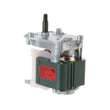
| Both sections warm | Heat removal or control issue | Condenser motor WR60X10209 |
| Warm temps plus slow ice or low water flow | Water filtration/flow | GE refrigerator water filter MWFP |
| Temps swing or seem inaccurate | Temperature sensing | Refrigerator temperature sensor WR55X10025 |
Why it matters
Cooling problems usually get worse over time: restricted airflow can lead to longer run times, poor food preservation, and extra strain on components like the compressor and fans. Catching simple issues early (airflow, settings, filter flow) often prevents bigger repairs.
Last updated: January 2026
Why is my GE side-by-side refrigerator not dispensing ice?
If your GE GSH22JSDDSS makes ice but will not dispense it, the most common causes are a jammed ice chute, clumped ice in the bucket, or a failed dispenser drive (auger motor/coupler). We recommend clearing the bin and chute first, then testing the dispenser switch and drive parts.
Quick checks (no tools)
- Make sure the dispenser is not locked; on many GE models you press and hold Crushed and Cubed for 3 seconds to unlock.
- Remove the ice bucket, dump the ice, and break up any clumps; clumped ice can stop the auger from turning.
- Check the chute for a blockage or a frozen flap; clear it with a wooden spoon (never fingers).
- Try both Cubed and Crushed; a stuck crusher gate can sometimes affect one mode more than the other.
- Reinstall the bucket fully; if it does not seat, rotate the drive mechanism about 1/4 turn and push the bucket back in.
If it still will not dispense: likely parts to inspect
If you hear the dispenser hum but no ice moves, focus on the bucket and auger drive. If you hear nothing when pressing the lever/pad, focus on the switch or control.
- Ice bucket auger stripped, jammed, or damaged: inspect the refrigerator ice dispenser bucket assembly WR17X23191.
- Auger not turning: check the refrigerator auger motor WR60X10258 and the refrigerator auger motor coupler WR02X11941.
- Chute door not opening (ice backs up or frost builds at the chute): inspect the rca refrigerator dispenser ice chute door solenoid WR62X10055 or the refrigerator dispenser ice chute door kit WR17X11653.
- No response at all when dispensing: test the refrigerator dispenser switch WR23X10783.
Symptom-to-cause guide
| What you notice | Most likely cause | What we do next |
|---|---|---|
| Ice in bin, motor sound, no ice comes out | Clumped ice or jammed auger | Empty bin, clear jam, inspect bucket/auger |
| Ice in bin, no motor sound | Switch/control issue | Check dispenser lock, then test switch |
| Frost/ice around chute door | Chute door not sealing/opening | Inspect chute door and solenoid |
| Dispenses crushed but not cubed (or vice versa) | Crusher gate/blade issue in bucket | Inspect bucket components |
Why it matters
A dispenser jam can strip the auger coupler or overload the auger motor. Clearing clumps early helps prevent repeat jams and avoids unnecessary part replacement.
Helpful reference
For control lock, bucket removal, and chute clearing steps, follow the GSH22JSDDSS use & care manual.
Last updated: January 2026
Why is my GE side-by-side freezing up?
When a GE GSH22JSDDSS side-by-side “freezes up,” it’s usually frost buildup from warm, humid air leaking in, blocked airflow, or a defrost system issue. If only the dispenser line or icemaker fill tube freezes, a seeping water inlet valve can also create an ice plug.
Quick checks for GSH22JSDDSS
- Make sure both doors close fully and the gaskets seal all the way around.
- Look for food packages holding a door open.
- Avoid overpacking; keep vents clear so air can circulate.
- Return controls to normal and allow 12 to 24 hours to stabilize.
- Check the back freezer panel; heavy frost there often points to a defrost or airflow problem.
Most common causes and what we do next
Door air leak
Warm air entering the freezer turns moisture into frost.
- Inspect gaskets for gaps, tears, or hardened areas
- Confirm the cabinet is level so doors self-close
- Clean gasket sealing surfaces
Airflow problem
Poor circulation can cause uneven temperatures and frost.
- Listen for the evaporator fan running (door switch pressed)
- Clear blocked vents and keep the rear panel unobstructed
- If the fan is noisy or stops, the motor may be failing
Defrost system problem
If frost isn’t melting during defrost, it can eventually choke airflow.
- Frost gets worse over days, then cooling performance drops
- Use the troubleshooting section in the manual to match symptoms
If only the water line or fill tube is freezing
A water valve that doesn’t fully close can seep small amounts of water that freeze in the tube.
| What’s freezing | More likely cause | What we check |
|---|---|---|
| Whole freezer “ices up” | Door leak, airflow, defrost | Gaskets, vents, frost pattern |
| Dispenser line only | Seeping water valve | Valve seep test, line routing |
| Icemaker fill tube | Seeping valve or too-cold setting | Valve seep test, temp setting |
If the valve is seeping, the model-compatible replacement is the refrigerator water valve WR57X33326.
Why it matters
Frost buildup blocks airflow, makes temperatures swing, and can lead to warm refrigerator temps, weak ice production, and longer compressor run times.
For model-specific control settings and troubleshooting steps, use the GSH22JSDDSS manual.
Last updated: January 2026
How to reset GE side-by-side refrigerator not cooling?
For the GE GSH22JSDDSS, the most effective “reset” for a not-cooling issue is to confirm cooling was not turned off at the controls, then power-cycle the refrigerator for 1 minute. After restoring normal settings, allow time for temperatures to stabilize.
Reset steps for GE GSH22JSDDSS
These steps match how this model’s controls handle “cooling off” and temperature settings in the GSH22JSDDSS owner’s manual.
- Check the temperature display: if both displays are flashing “0”, cooling is turned off.
- Turn cooling back on by increasing the settings from “0” to a normal setting.
- If your controls use numbers, start at “5” for both fresh food and freezer.
- Wait at least 12 hours after changing settings for temperatures to stabilize.
- If it still is not cooling, unplug the refrigerator for 60 seconds, then restore power.
- After power is restored, listen for the evaporator fan and compressor to start within a few minutes.
What to check if it still won’t cool
A reset helps when settings were accidentally changed or after a power interruption. If temperatures stay warm, focus on airflow and temperature sensing.
| Symptom | Most likely area to check | Common next step |
|---|---|---|
| Freezer and fresh food both warm | Condenser airflow or sealed system | Clean condenser area; verify condenser fan runs |
| Freezer cold, fresh food warm | Airflow from freezer to fresh food | Check damper and evaporator fan |
| Temps swing or read incorrectly | Temperature sensing | Check thermistor/sensor |
Model-compatible parts that often relate to “not cooling”
If troubleshooting points to a failed component, these parts are listed for GE GSH22JSDDSS:
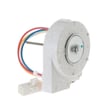
- Rca refrigerator evaporator fan motor WR60X10185 (circulates cold air through the freezer and into the fresh-food section)
- Refrigerator temperature sensor WR55X10025 (reports compartment temperature to the control)
- Condenser motor WR60X10209 (moves air across the condenser coils to remove heat)
Why it matters
On the GE GSH22JSDDSS, turning cooling off at the controls stops the cooling system but does not shut off electrical power. Restoring the settings and power-cycling helps separate a control-state issue from an airflow or sensor problem.
Last updated: January 2026