 Installation guide
 Owner’s manual
 Error Codes



Is GE profile considered high end?
Yes. GE Profile is generally considered GE’s higher-end appliance line, with more premium features and styling than standard GE models. For your GE dishwasher model GSD3360R20SS, the exact “Profile” designation is best confirmed in the GSD3360R20SS owner’s manual.
GE Profile typically sits above standard GE in features and finish options. In dishwashers, that often shows up as quieter operation, more wash options, and upgraded racks or controls.
Common “premium” traits include:
- Quieter sound levels and better insulation
- More cycle and option selections (heavy, sanitize, delay start, etc.)
- Enhanced drying performance features
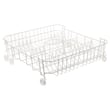
- Upgraded rack adjustability and loading flexibility
- More advanced controls (electronic controls on many models)
The most reliable way is to match the model number and branding on the unit to the documentation.
Check these spots:
- The model and serial label on the tub frame (inside the door)
- The control panel badge (may say “Profile”)
- The model listing and feature section in the GSD3360R20SS owner’s manual
| GE line | Typical positioning | What you usually get |
|---|---|---|
| GE (standard) | Mainstream | Core cycles and features |
| GE Profile | Higher-end | More features, quieter designs, upgraded styling |
| GE Cafe (when applicable) | Premium design-focused | Pro-style aesthetics and premium feature sets |
Knowing whether your dishwasher is GE Profile helps set expectations for features, noise level, and warranty coverage. For example, some GE warranty terms can vary by series, so confirming the exact series in your documentation is important.
Last updated: January 2026
What is the most common problem with GE dishwashers?
Drain and water-flow problems are the most common issues we see with GE dishwashers like model GSD3360R20SS. Typical symptoms include standing water, poor cleaning, or the dishwasher seeming to run but not moving water well; these often trace back to a clogged drain path, a restricted hose, or a failing pump component.
- Not draining: water left in the bottom, gurgling at the sink, or a cycle that ends with standing water
- Not starting or stopping mid-cycle: door not fully latched, door switch issues, or timer/control problems
- Not cleaning well: spray arm blockage, low water flow, or pump/circulation issues
- Leaks: door seal wear, door not closing squarely, or tub corner baffle leaks
- Too many suds: wrong detergent type or too much detergent
Before replacing parts, we recommend these basic checks (they solve a lot of “common problem” complaints):
- Confirm the door is fully closed and latched; a mis-latched door can prevent filling or running.
- Use automatic dishwasher detergent only; hand soap causes heavy suds and poor washing.
- Check for dishes blocking the detergent cup so it can open during the wash.
- Inspect the drain path for restrictions (sink/disposal connection, air gap if you have one).
- If the unit will not drain, inspect the drain hose routing for kinks and high-loop issues.
| Symptom | Most likely area | Example part for this model |
|---|---|---|
| Water won’t drain | Drain hose or drain system | Dishwasher drain hose WD24X10014 |
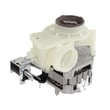
| Hums but weak wash action | Circulation pump or motor | GE dishwasher pump and motor assembly WD26X10051 |
| Won’t run unless door is pressed | Door switch/latch circuit | Dishwasher door switch WD21X10261 |
Drain and circulation issues do more than leave dirty dishes; they can also cause odors, suds problems, and repeat cycle failures. Catching a restriction early helps prevent pump strain and reduces the chance of leaks.
- Use the GSD3360R20SS owner’s manual for operating tips, detergent guidance, and the “before you call for service” troubleshooting chart.
- Use the GSD3360R20SS installation guide to confirm correct drain hose routing, electrical grounding, and installation basics that affect draining and leaks.
Last updated: January 2026
What is the average lifespan of a GE dishwasher?
A GE dishwasher typically lasts 10 to 12 years. For the GE GSD3360R20SS, you can often reach the high end of that range with consistent cleaning, correct detergent use, and quick repairs when draining or washing performance starts to slip (details in the GSD3360R20SS owner’s manual).
Most GE dishwashers land in this range:
| Usage and care level | Typical lifespan | What usually ends it |
|---|---|---|
| Light use, good maintenance | 12 to 15 years | Rack rust, seals, minor leaks |
| Average family use | 10 to 12 years | Drain or wash motor wear, timer issues |
| Heavy daily use, limited maintenance | 8 to 10 years | Pump/motor, leaks, poor cleaning |
We recommend these habits for the GSD3360R20SS:
- Run hot water at the sink before starting a cycle so the dishwasher fills with hotter water.
- Use dishwasher detergent and rinse aid as directed; avoid overfilling the detergent cup.
- Load so spray arms can spin freely; keep tall items from blocking water flow.
- Wipe the door sealing surfaces and check for debris that can cause leaks.
- Address slow draining quickly; standing water strains the pump and can lead to odors.
If the dishwasher is otherwise in good shape, replacing a few wear parts can restore performance and extend service life:
- Not draining: check the dishwasher drain hose WD24X10014 and the drain path.
- Weak cleaning or noisy wash: the wash system may need attention; the GE dishwasher pump and motor assembly WD26X10051 is a common fix when the motor is failing.
- Leaks at the door: inspect the dishwasher door seal WD08X10057 for tears, flattening, or buildup.
Knowing the typical lifespan helps you decide whether to repair or replace. If your GSD3360R20SS is under about 10 years old and the tub is sound, fixing a drain, seal, or pump issue is often the most cost-effective path.
Last updated: January 2026
Can a clogged drain cause an FTD error?
Yes. On the GE GSD3360R20SS dishwasher, a clogged drain path is a common reason for an FTD (fail to drain) condition because the unit cannot pump water out within the expected time. Clearing the blockage usually restores normal draining.
- Cancel the cycle and let the dishwasher attempt to drain; many GE models drain for about 90 seconds during a cancel.
- If your dishwasher drains into a garbage disposer, run the disposer to clear it.
- If the disposer was recently installed, confirm the drain plug knockout was removed.
- If you have an air gap, clean it; a clogged air gap can stop draining.
- Check that the kitchen sink drains normally; a slow sink often points to a plumbing restriction.
The drain hose routing matters. The installation instructions call out that total drain hose length must not exceed 10 feet for proper drain operation, and the hose should be secured correctly (air gap or high drain loop). See the GSD3360R20SS installation guide for the approved routing methods.
| Drain connection method | What can clog | Quick symptom |
|---|---|---|
| Air gap to waste tee/disposer | Air gap cap or passage | Dishwasher leaves water, sink may drain fine |
| High drain loop to waste tee/disposer | Hose kink or disposer inlet | Slow drain, gurgling, water backing up |
If the hose and air gap are clear but the dishwasher still will not drain, a drain component may be sticking or blocked.
Common drain-related parts to inspect on this model include:
- Dishwasher drain hose WD24X10014 (kinked, clogged, or restricted)
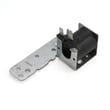
- GE dishwasher drain solenoid assembly WD21X10268 (can stick and prevent proper draining)
A true fail-to-drain condition can leave dirty water in the tub, cause odors, and interrupt the wash cycle. Fixing the drain restriction also helps protect the pump and motor from strain.
For model-specific operating and troubleshooting tips (including drain and air gap guidance), use the GSD3360R20SS owner's manual.
Last updated: January 2026





