Owner’s manual
 View engine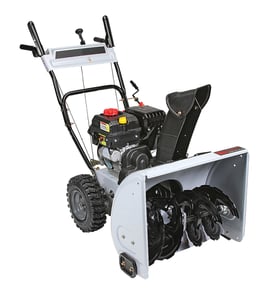




What is the typical lifespan of a gas snowblower?
For the Craftsman snow thrower model 247887821, the typical lifespan is about 7 years or 60 hours of operation as an average useful life guideline. With consistent maintenance (oil changes, lubrication, and proper storage), many owners get additional seasons of reliable use.
The manual describes an average useful life and recommends annual inspections after that point to keep mechanical and safety systems working properly. For model-specific care and storage steps, use the 247887821 operator's manual.
| Measure | Typical guideline for 247887821 | What it means in real use |
|---|---|---|
| Years | 7 years | Average useful life under normal conditions |
| Run time | 60 hours | Total engine operating time across seasons |
| After that point | Annual inspection | Helps catch worn belts, auger issues, and fuel leaks early |
We see the biggest lifespan gains when owners stay ahead of fuel, oil, and wear items.
- Change engine oil on schedule and before off-season storage
- Lubricate pivot points and control cable spring points once per season
- Clear snow from the machine before storing to help prevent freeze-up
- Store in a clean, dry, well-ventilated area away from ignition sources
- Check the fuel line, tank, cap, and fittings for cracks or leaks and replace worn parts
A gas snowblower often “fails early” from preventable issues like stale fuel gumming the carburetor, corrosion from humid storage, or running with loose/damaged auger components. Following the storage and lubrication guidance reduces hard-start problems, surging, and excessive vibration.
If you want a simple annual routine, follow how to make your snowblower last longer along with the model’s maintenance schedule.
Last updated: January 2026
What is the most common problem with snow blowers?
The most common problem we see with snow blowers, including the Craftsman 247887821 snow thrower, is a no-start condition. In most cases it comes down to fuel issues (empty tank or stale gas), ignition issues (spark plug or wire), or starting setup (key not fully inserted, not primed, or flooded from over-priming). See the Craftsman 247887821 owner's manual for the model-specific starting and troubleshooting chart.
- Make sure the fuel tank has clean, fresh gasoline (stale fuel is a top cause of no-starts).
- Insert the ignition key fully.
- Confirm the spark plug wire is firmly connected.
- Prime correctly; the manual calls for five to seven primer pushes.
- If you over-primed and flooded it, wait at least 10 minutes before trying again.
- If it starts but runs rough (surging), move the choke to RUN once it warms up.
| Symptom | Most likely cause | What to do next |
|---|---|---|
| Won’t start at all | Empty tank, stale fuel, key not fully in | Refill with fresh gas; fully insert key |
| Won’t start after repeated priming | Flooded engine | Wait 10 minutes; try again with less priming |
| Starts then surges or hunts | Choke left on, fuel contamination | Move choke to RUN; replace old fuel |
| Starts then dies under load | Spark plug/wire issue, fuel cap vent plugged | Re-seat plug wire; check cap vent |
A no-start snowblower is usually a simple fix, but repeated starting attempts with stale fuel or excessive priming can quickly foul the spark plug and make the problem seem bigger than it is. Following the correct prime, choke, and key steps prevents most cold-weather starting complaints.
Last updated: January 2026
How to get rid of an old snowblower?
For a Craftsman snow thrower like model 247887821, the best way to get rid of an old snowblower is to drain the fuel, make it safe to transport, then recycle or donate it whenever possible since most of the machine is recyclable metal. Use the 247887821 owner's manual for fuel-handling and storage safety steps.
- Donate if it still runs or is repairable (local charity, community tool library, or small-engine program).
- Recycle as scrap metal through a local scrap yard or municipal recycling program.
- Use bulky-item pickup if your city or waste hauler offers seasonal large-item collection.
- Drop off at a transfer station that accepts metal equipment.
- Sell or give away for parts if the auger housing, engine, or controls are still usable.
The manual guidance for storage and fuel safety applies here too.
- Run the engine until the fuel tank is empty.
- Let the engine cool completely.
- Keep the unit upright during transport to reduce fuel or oil leakage.
- Wipe off snow, salt, and debris so it is easier to handle.
- Store and transport away from ignition sources (open flame, pilot light, sparks).
| Item | What we recommend | Why |
|---|---|---|
| Gasoline | Run it out, then dispose of leftovers at a local hazardous waste site | Fuel vapors are a fire risk |
| Engine oil | Drain into a sealed container and recycle with used oil | Keeps oil out of soil and water |
| Battery (if equipped) | Recycle separately | Batteries require special handling |
Snowblowers are largely steel and aluminum, so recycling or donating keeps valuable material out of landfills and reduces fire risk from leftover gasoline.
Last updated: January 2026
How to find Craftsman snowblower model number?
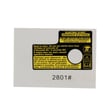
For a Craftsman snow thrower, we find the model number on the machine’s ID label, usually on the rear of the housing, near the engine, or around the handle/frame area. For your unit, the model number is 247887821; confirm it against the label and the 247887821 operator’s manual.
Check these common spots first (wipe off snow, salt, and grime so the label is readable):
- Rear of the auger housing or main body panel
- Left or right side of the frame near the wheels
- Handle support area (uprights or crossbar)
- Near the engine mounting area or recoil starter side
- Under or near the belt cover area (if accessible)
Your snowblower model number identifies the chassis and snow-throwing components; the engine model number identifies engine-specific parts.
| What you’re looking up | Number to use | Why it matters |
|---|---|---|
| Snowblower partss parts (auger, chute, belts, skid shoes) | 247887821 | Matches the correct Craftsman/MTD parts breakdown |
| Engine parts (carburetor, ignition, starter, gaskets) | Engine model number | Ensures correct engine-specific parts |
- Copy the full number exactly, including any dashes or suffixes.
- Take a clear photo of the label before ordering parts.
- If the label is damaged, compare the parts diagram and parts list in the 247887821 operator’s manual to what you see on the machine.
Using the correct model number prevents ordering the wrong auger parts, belts, fasteners, or chute components, and it speeds up troubleshooting and repairs.
Last updated: January 2026