Installation guide
 Owner’s manual
 Error Codes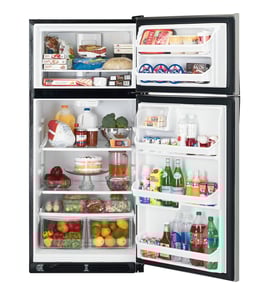
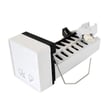


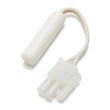
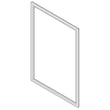

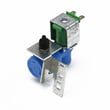
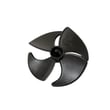
Is it worth replacing the ice maker on a refrigerator?
Yes, replacing the ice maker is usually worth it on Kenmore model 25370642611 when the refrigerator is otherwise cooling normally and you want built-in ice. An ice maker replacement is typically far less expensive than replacing the entire top-mount refrigerator.
Quick way to decide
Replace the ice maker when:
- The refrigerator and freezer temperatures are stable and food stays cold
- You use ice regularly and want the convenience of automatic ice
- The ice maker is the only failed component (no widespread electrical or sealed-system issues)
- You can confirm the water supply is correct (30 to 100 psi) and connections do not leak
Consider skipping the repair when:
- The refrigerator has multiple major problems (cooling, defrosting, or control issues)
- You see repeated water leaks you cannot stop at the supply connections
- You rarely use ice and a countertop ice maker fits your needs better
What to check before buying an ice maker
Many “bad ice maker” symptoms are actually water supply or setup problems. Use these checks first:
- Confirm the household shut-off valve is fully open
- Verify water pressure is in the 30 to 100 psi range
- Look for kinks or vibration wear in the 1/4-inch copper water line behind the refrigerator
- Inspect all compression nut and ferrule connections for drips; recheck for leaks again after 24 hours
- If the refrigerator is not connected to water, keep the ice maker power switch OFF
For model-specific setup details, follow the installation guide.
Common symptoms and the most likely cause
| Symptom | Most likely cause | What to do first |
|---|---|---|
| No ice at all | Ice maker OFF or no water supply | Turn ice maker ON; confirm shut-off valve open |
| Small or hollow cubes | Low water flow/pressure | Check for kinked line; confirm 30 to 100 psi |
| Water leaking behind fridge | Loose compression fitting | Tighten carefully; do not over-tighten; recheck in 24 hours |
| Ice maker noisy during fill | Water supply shut off | Restore water supply to prevent noisy fill valve operation |
Parts that match this model
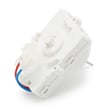
If the ice maker itself has failed, the correct replacement is the refrigerator ice maker 241798231.
Why it matters
A working ice maker depends on correct water pressure, leak-free fittings, and proper leveling. Fixing the root cause first prevents repeat failures and helps protect flooring and cabinets.
Last updated: January 2026
What are the common problems with Kenmore Elite refrigerators?
Kenmore Elite refrigerators most often have cooling problems, frost buildup, water leaks, or unusual noises. On Kenmore model 25370642611 (top-mount), many “problem” symptoms trace back to airflow, door sealing, or installation conditions; we use the 25370642611 installation guide to confirm clearances, leveling, and airflow basics.
Most common symptoms and what they usually mean
- Not cooling or warm temperatures: restricted airflow (blocked toe grille), dirty condenser area, or a failed fan.
- Freezer frost or ice buildup: door not sealing, door alignment off, or a defrost system issue.
- Buzzing/clicking or intermittent start: compressor start components or compressor strain.
- Water on the floor: drain or water supply connection leak (especially after moving the unit).
- Ice maker not working: ice maker switched off, no water supply, or low water pressure.
Quick checks we recommend first (model-friendly)
These checks match common top-mount refrigerator troubleshooting and align with the installation requirements for this style.
- Confirm the refrigerator is plugged into a grounded outlet (no extension cord or adapter plug).
- Verify airflow is not blocked; do not block the toe grille.
- Check installation clearances: about 3/8 inch at the sides and top, and 1 inch at the rear.
- Make sure the cabinet is level and tilted about 1/4 inch front-to-back so doors close and seal.
- If connected to water, confirm 30 to 100 psi supply pressure and recheck fittings for leaks after 24 hours.
Parts that commonly solve the symptom
| Symptom | Common part involved | Example part for 25370642611 |
|---|---|---|
| Warm fridge/freezer, poor airflow | Evaporator fan system | Refrigerator evaporator fan motor 242077705 |
| Clicking, won’t start | Start device | Electrolux refrigerator compressor start relay 241941005 |
| Ice maker not producing | Ice maker assembly | Refrigerator ice maker 241798231 |
Why it matters
Cooling and frost complaints are often caused by air circulation and door sealing, not just “bad refrigeration.” Correct clearances, a level cabinet, and an unblocked toe grille help the sealed system run efficiently and keep temperatures stable.
Last updated: January 2026
What size is Kenmore refrigerator model 25370642611?
Kenmore refrigerator model 25370642611 is a full-size top-mount (top-freezer) refrigerator; most units in this class are about 18 to 21 cu. ft. and measure roughly 30 to 33 inches wide. For the exact capacity and exterior dimensions for your specific unit, use the 25370642611 owner's manual.
How to confirm the exact size (capacity and dimensions)
We recommend verifying both the interior capacity (cu. ft.) and the cabinet size (width, height, depth) using one of these methods:
- Check the specifications section in the 25370642611 owner's manual
- Look for the model and serial tag inside the fresh food compartment; it often lists key specs or a reference code
- Measure the cabinet:
- Width: left to right across the front
- Height: floor to top of cabinet (not including hinge caps unless noted)
- Depth: front of cabinet to back (note if you include handles)
- If you are fitting it into a cutout, plan for airflow clearances from the 25370642611 installation guide
Typical size ranges for a Kenmore top-mount refrigerator
If you are planning cabinetry, delivery, or a replacement, these common ranges help you estimate before you confirm the exact spec.
| Spec | Typical range for top-mount refrigerators | What to measure/confirm |
|---|---|---|
| Capacity | 18 to 21 cu. ft. | Total interior volume |
| Width | 30 to 33 in. | Cabinet width (doors closed) |
| Height | 65 to 69 in. | Floor to top of cabinet |
| Depth | 30 to 34 in. | With or without handles |
Installation clearances to plan for
Your installation instructions call out minimum clearances for proper air circulation:
- Sides and top: 3/8 inch
- Rear: 1 inch
- Keep the refrigerator on a level floor that can support a fully loaded unit
Why it matters
“Size” can mean capacity, cabinet dimensions, or required clearances. Confirming all three prevents fit problems, helps maintain proper cooling performance, and avoids door-swing and airflow issues.
Last updated: January 2026