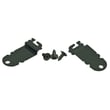
Installation guide
 Owner’s manual


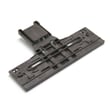
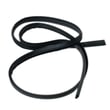
Can I replace dishwasher parts myself?
Yes, for KitchenAid dishwasher model KDTE334DSS0, we can replace many common parts ourselves if we shut off power and water first and follow the correct steps. Rack hardware and some hoses are typically DIY-friendly; electrical, leak, and door-balance repairs take more care and the right tools.
Here’s a practical way to decide whether a repair is a good DIY project.
- DIY-friendly: rack rollers, rack adjusters, spray arm cleaning, basic cleaning and filter checks
- Moderate: drain hose replacement, drain pump replacement, water inlet valve replacement
- Advanced: door balance and spring tension adjustments, circulation pump or motor work, wiring-related issues
| Repair type | Typical difficulty | Common signs |
|---|---|---|
| Rack hardware | Easy | Rack won’t roll smoothly, wheels pop off |
| Drain issues | Moderate | Standing water, slow drain |
| Fill issues | Moderate | No water entering, weak fill |
| Door balance/tension | Advanced | Door drops open or won’t stay down |
- Turn off power at the breaker (dishwashers are hard-wired or corded)
- Shut off the water supply valve under the sink
- Protect the floor and pull the dishwasher out slowly (avoid kinking hoses)
- Keep screws out of the sump area (use a towel inside the tub when needed)
- Take photos of wire and hose routing before disconnecting anything
For model-specific procedures, use the KDTE334DSS0 installation guide and the KDTE334DSS0 owner’s manual.
If your issue matches one of these symptoms, these parts are often involved:
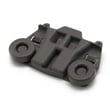
- Rack won’t roll: dishwasher dishrack roller assembly, lower WPW10195417
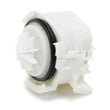
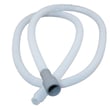
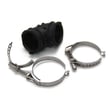
- Dishwasher won’t drain: dishwasher drain pump WPW10531320 or a drain hose
- Dishwasher won’t fill: dishwasher water inlet valve W11175771
- Not drying well: heating circuit checks may point to the heater (use the manual’s diagnostics and safety guidance)
DIY repairs can save time and money, but dishwashers combine water, heat, and electricity. Following the correct install and service steps helps prevent leaks, door alignment problems, and damage from pinched hoses or dropped screws.
Last updated: February 2026
How to fix rubber seal on KitchenAid dishwasher?
On the KitchenAid KDTE334DSS0 dishwasher, a loose rubber door seal (gasket) is fixed by pressing it fully into the door channel evenly all the way around, then closing and latching the door so the seal seats flat and stays in place. Use the KDTE334DSS0 owner’s manual for loading tips that prevent seal damage.
- Turn off power at the breaker; let the tub and heater cool.
- Open the door and inspect the gasket for twists, gaps, or hardened sections.
- Starting at the top center, press the gasket bead into the channel using your fingers.
- Work down both sides evenly; do not stretch the gasket.
- Close and latch the door for several hours (overnight works well) to help it conform.
- Run a short cycle and check for drips along the bottom corners.
Most leaks that look like a “bad seal” are caused by alignment, loading, or door closure issues.
- Check door closure: Make sure the door pulls in firmly and stays latched. If it feels loose or pops open, inspect the dishwasher door latch WPW10653840.
- Check leveling and centering: If the dishwasher is tilted or shifted in the cabinet, the door can compress the gasket unevenly. Use the KDTE334DSS0 installation guide steps for leveling and centering.
- Check for seal damage: Cuts, tears, or permanently flattened areas mean the gasket needs replacement.
| What you notice | Likely cause | What we recommend |
|---|---|---|
| Leak at bottom corners | Door not closing squarely | Level and re-center; verify latch engagement |
| Leak only with tall items | Items hitting door or blocking closure | Reload so nothing protrudes past racks |
| Seal looks wavy or bunched | Gasket twisted or stretched | Remove and reinstall evenly, top-center first |
| Seal gets nicked repeatedly | Sharp items contacting the seal | Load knives and sharp tools to avoid the door seal |
A properly seated gasket keeps wash water inside the tub, protects the door insulation and panels, and prevents moisture from reaching the floor. Good loading habits also reduce repeated damage to the door seal.
Last updated: February 2026
How to get KitchenAid replacement parts?
For your KitchenAid KDTE334DSS0 dishwasher, we recommend ordering replacement parts by matching your model number first, then selecting the exact part by part ID and part number to ensure fit and function. Your KDTE334DSS0 owner's manual also helps confirm the correct component and where it installs.
- Confirm the full model number on the dishwasher’s rating label (use KDTE334DSS0, not a partial).
- Identify the failed symptom (not draining, not filling, door won’t latch, rack won’t roll).
- Look up the part by part ID when possible (most precise match).
- Compare the part name to what you see on the dishwasher (example: “drain pump” vs “circulation pump”).
- If you are unsure between similar items, use the diagrams and notes in the KDTE334DSS0 installation guide to understand access and mounting.
These are frequent wear items and problem-solvers for this model:
| Symptom | Likely part to check | Example part for KDTE334DSS0 |
|---|---|---|
| Lower rack won’t roll smoothly | Lower rack wheel/roller | Dishwasher dishrack roller assembly, lower WPW10195417 |
| Dishwasher won’t drain | Drain pump or drain hose | Dishwasher drain pump (WPW10531320) or drain hose (8269144A / WPW10545278) |
| Dishwasher won’t fill | Water inlet valve | Water inlet valve (W11175771) |
| Door won’t close or start | Door latch | Door latch (WPW10653840) |
Dishwashers often have similar-looking parts across KitchenAid and Whirlpool-built platforms, but small design changes can affect fit. Using the KDTE334DSS0 model number plus the exact part ID prevents ordering the wrong rack hardware, pump, or valve.
Last updated: February 2026
What are the commonly replaced parts in a dishwasher?
In the KitchenAid KDTE334DSS0 dishwasher, the most commonly replaced parts are the ones that move water, heat water, seal the door, or support the racks. When cleaning performance drops, the unit won’t fill or drain, or racks stop rolling smoothly, these parts are the first places we check (see the KDTE334DSS0 owner’s manual for maintenance and troubleshooting basics).
- Water fill parts: a failing inlet valve can cause no fill, slow fill, or poor wash pressure.
- Drain parts: a weak drain pump or restricted drain hose can leave standing water.
- Wash system parts: circulation pump, diverter motor, and spray components affect cleaning and coverage.
- Heating and drying parts: the heater affects water temperature and drying.
- Door and safety parts: latch issues can prevent starting or cause mid-cycle stops.
- Rack hardware: rollers and adjusters wear, crack, or pop off from daily loading.
Here are several parts we often see replaced on this model family:
| Symptom | Likely part area | Example part for this model |
|---|---|---|
| Lower rack won’t roll smoothly | Rack rollers | Dishwasher dishrack roller assembly, lower WPW10195417 |
| Dishwasher won’t fill or fills slowly | Water inlet | Dishwasher water inlet valve W11175771 |
| Not draining well | Drain system | Dishwasher drain pump WPW10531320 |
| Poor drying or water not heating | Heater | Element assembly W10703867 |
| Door won’t latch or won’t start | Door latch | Dishwasher door latch WPW10653840 |
These components do the most work and see the most wear from heat, detergent, hard water, and food soil:
- Valves and pumps wear mechanically over time
- Hoses and grommets can seep or loosen and cause leaks
- Heating circuits run hot and can fail open
- Rack wheels and adjusters take constant load and impact
- Filters and spray paths clog, which strains the wash system
Your KDTE334DSS0 uses a multi-part filtration system that needs periodic cleaning to keep performance up.
- Clean the upper and lower filters when soils are visible
- Reinstall filters fully; the upper filter should lock in place
- Rinse heavy food off dishes to reduce filter loading
- Keep spray paths clear so wash pressure stays strong
Last updated: February 2026
What is the average lifespan of a KitchenAid dishwasher?
A KitchenAid dishwasher typically lasts 10 to 14 years with normal household use. For your KitchenAid KDTE334DSS0, lifespan depends most on water quality, how often you run cycles, and routine care outlined in the KDTE334DSS0 owner’s manual.
- Hard water and mineral buildup (can reduce cleaning and strain components)
- How often you run it (daily use wears pumps, seals, and racks faster)
- Drying method and rinse aid use (helps reduce spotting and buildup)
- Keeping the wash system clean (filters, sump area, spray arms)
- Fixing small issues early (leaks, poor draining, door not latching)
| Use pattern | Typical lifespan | What to watch for |
|---|---|---|
| Light (2 to 3 loads/week) | 12 to 15 years | Rack wear, door seals drying out |
| Average (4 to 7 loads/week) | 10 to 14 years | Drain issues, wash performance decline |
| Heavy (1 to 2 loads/day) | 7 to 11 years | Pump wear, heating and drying performance |
We recommend these habits because they reduce buildup and keep wash times and drying performance consistent:
- Use rinse aid regularly for better drying and to help control hard-water deposits
- Run hot water at the sink before starting a cycle (helps the dishwasher heat less)
- Clean the interior periodically using the cleaning guidance in the KDTE334DSS0 owner’s manual
- Avoid blocking spray arms with tall items; confirm arms spin freely
- Address draining problems quickly; a weak or noisy drain can point to the dishwasher drain pump WPW10531320
A dishwasher that is maintained and draining correctly runs more efficiently, cleans better, and avoids extra strain on the motor, pump, and heating system. That directly impacts how long your KDTE334DSS0 lasts.
Last updated: February 2026
What is the most common problem with a KitchenAid dishwasher?
The most common issue we see with KitchenAid dishwashers like model KDTE334DSS0 is poor cleaning or poor results caused by restricted water flow (dirty filters, blocked spray arms, or loading that stops spray-arm rotation). Drain problems and “won’t run” symptoms are also frequent.
- Dishes still dirty: filters need cleaning, spray arms are blocked, or items are loaded in a way that blocks rotation.
- Detergent left in the dispenser: the dispenser door may be blocked by dishes, or water circulation is weak.
- Water remains in the tub: a drain restriction (hose, disposer connection, or drain pump) is likely.
- Dishwasher pauses a lot: repeated pauses can be normal during a cycle.
- Start/Resume light blinking: the door is not fully closed and latched.
Use these steps before replacing parts; they match common causes called out in the KDTE334DSS0 user manual.
- Spin the spray arms by hand; nothing should hit or stop them (utensil basket items can interfere).
- Clean the upper and lower filters at least monthly, especially with hard water.
- Confirm the door closes and latches; re-load tall items that can prevent latching.
- If the Start/Resume light blinks, close the door and press START/RESUME.
- If water will not drain, check for food obstructions in the drain path or disposer.
| Symptom | Common part area | Example part for KDTE334DSS0 |
|---|---|---|
| Won’t fill or fills slowly | Water inlet | Dishwasher water inlet valve W11175771 |
| Not draining, standing water | Drain system | Dishwasher drain pump WPW10531320 |
| Not drying well | Heating circuit | Element assembly W10703867 |
| Door won’t latch or won’t start | Door latch | Dishwasher door latch WPW10653840 |
Restricted wash or drain flow can leave detergent undissolved, extend cycle time, and reduce cleaning performance. Keeping filters clean and spray arms unobstructed prevents many repeat service issues and helps the dishwasher run as designed.
Last updated: February 2026
Where are KitchenAid dishwasher parts made?
KitchenAid KDTE334DSS0 dishwasher parts are made in multiple locations, depending on the specific component and supplier. For the most accurate origin details, we use the part’s packaging label and the model documentation as the reference points, not the brand name alone.
- Look for a “Made in …” statement on the part box or sealed bag.
- Check the part itself for a molded, stamped, or printed country mark.
- Match the part ID and part number to the label to avoid mix-ups.
- Keep a photo of the label for warranty and service records.
- Use the model and serial tag inside the tub (near the door) to ensure you are ordering for KDTE334DSS0.
Dishwasher assemblies often come from different suppliers, so origin can differ even within the same dishwasher.
| Part type | Typical sourcing pattern | What to look for |
|---|---|---|
| Plastic rack and wheel parts | Often supplier-made, varies by run | Country mark on plastic, bag label |
| Electrical parts (controls, sensors) | Often multi-country supply chain | Box label, barcode sticker |
| Pumps, valves, motors | Frequently sourced by component supplier | Data plate or sticker on assembly |
| Hoses and seals | Often supplier-made | Printing on hose, bag label |
Using the correct part ID for your KitchenAid KDTE334DSS0 matters more than where it was made because fit and connector style can change by revision.
- For lower rack wheel issues, match the exact assembly such as the dishwasher dishrack roller assembly, lower WPW10195417.
- For fill problems, confirm the correct inlet valve such as the dishwasher water inlet valve W11175771.
Country of origin does not reliably indicate compatibility. The model number (KDTE334DSS0), part ID, and revision are what ensure the replacement part fits, seals correctly, and performs as designed.
For model-specific identification and service details, use the KDTE334DSS0 owner’s manual.
Last updated: February 2026