 Installation guide
 Owner’s manual
 Error Codes




What is the average lifespan of a whirlpool dishwasher?
A Whirlpool dishwasher typically lasts 9 to 12 years in normal household use. For your Whirlpool DU810SWKU0, regular cleaning, correct detergent use, and fixing small issues early (like draining or door-latch problems) are what most often determine whether it reaches the high end of that range.
What affects lifespan the most
- How often you run it (daily use wears pumps, seals, and racks faster)
- Water quality (hard water speeds up mineral buildup on the heating system)
- Cleaning and maintenance (filter screen and tub cleaning reduce strain)
- Loading habits (overloading blocks spray and increases motor load)
- Small repairs done early (leaks and poor draining can cause bigger failures)
For model-specific care steps and cleaning intervals, follow the owner's manual.
Quick maintenance checklist (best ROI)
- Clean the filter screen and remove debris from the sump area.
- Run hot water at the sink before starting a cycle (helps wash performance).
- Use the right amount of detergent; too much can leave residue.
- Keep the door seal area wiped clean to prevent leaks.
- Check the drain path if you notice standing water.
Common “wear items” and what they usually mean
| Symptom | Most common cause | Typical fix type |
|---|---|---|
| Won’t start or stops mid-cycle | Door not latching | Latch adjustment or replace latch |
| Water left in bottom | Drain restriction or hose issue | Clean blockage, inspect drain hose |
| Poor drying | Heating system issue or low rinse aid use | Check heater circuit, improve settings |
| Leaks | Loose clamp, worn seal, or hose issue | Tighten/replace clamp or hose |
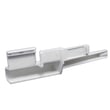
If the door won’t reliably close, a failed dishwasher door latch WP3380854 is a common repair that can extend service life.
Why it matters
Once a dishwasher gets past about a decade, maintenance becomes the difference between “still dependable” and repeated problems. Keeping the wash system clean and addressing early symptoms helps protect major components like the motor, heater, and tub.
Last updated: February 2026
How to clear F8 error on whirlpool dishwasher?
On a Whirlpool dishwasher like model DU810SWKU0, an F8-related error is most often tied to a water or fill issue. We clear it by resetting the control, then checking for standing water, leaks, and anything that can falsely trigger an overfill condition (float movement, suds, or a slow drain). See the owner's manual for your model’s exact control and cycle steps.
Quick steps to clear the error
- Cancel the cycle and let the dishwasher stop spraying before opening the door.
- If water is present in the bottom, run a drain (or advance the cycle to a drain portion) and let it fully empty.
- Check the float inside the tub; it must move freely up and down and click the float switch.
- Eliminate excessive suds (usually from wrong soap); drain, then run a rinse cycle with no detergent.
- Inspect for leaks under and around the unit; correct the source before running another full cycle.
- If the dishwasher is not filling, verify the water supply is on and the inlet valve is not restricted.
What to check first (most common causes)
| What you see | What it usually means | What we do next |
|---|---|---|
| Water in the tub after a cycle | Drain problem | Check drain path and hose routing; confirm it fully drains |
| Error appears soon after starting | Fill problem | Confirm hot water supply, then check the inlet valve |
| Lots of foam | Oversudsing | Drain and rinse; switch to dishwasher detergent |
| Intermittent error | Float sticking or minor leak | Free the float; inspect corners, door area, and hoses |
Parts that commonly relate to fill or drain symptoms
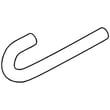
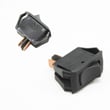
If you confirm a fill problem (no or low water entering), the inlet valve is a common fix on this model: valve-inlt W10844024. If you find a drain restriction or damaged hose, check the dishwasher drain hose WP3374077.
Why it matters
An F8-style water/fill error can stop the cycle to prevent overflow or protect the pump and heater. Clearing the code without fixing the underlying fill, drain, or suds issue usually brings the error back.
Last updated: February 2026
What is the most common problem with a whirlpool dishwasher?
The most common problem we see with Whirlpool dishwashers like model DU810SWKU0 is drainage trouble (water left in the tub), followed closely by poor cleaning and leaks. Most of the time, the root cause is a clog, a restricted hose, or a water-fill issue.
Quick checks that fix the most issues
Start with the simple items first; they solve a large share of “not draining” and “not cleaning” complaints.
- Cancel the cycle and run a drain (if your model has a Cancel/Drain function).
- Check the sink/disposer connection for a blockage.
- Inspect the drain path for kinks or crushing.
- Clean out any debris you can reach in the tub sump area.
- Confirm the water supply valve is fully open.
- Reduce detergent if you see heavy suds (suds can mimic a drain problem).
For cycle and operating steps specific to your dishwasher, use the owner's manual.
Common symptoms and the most likely causes
| Symptom | Most common cause | What to check first |
|---|---|---|
| Water left in bottom | Clog or restricted drain path | Drain hose routing and sink connection |
| Dishes still dirty | Spray restriction or loading issue | Spray arm holes, proper loading, water temperature |
| Leaking | Door not sealing or loose connection | Door latch engagement, hose clamps, inlet/drain connections |
| Won’t start | Door not latching or control not set | Door closes firmly, cycle selection, power reset |
Parts that often solve these problems on DU810SWKU0
If troubleshooting points to a failed component, these are common replacements for this model:
- Drain restriction or damage: dishwasher drain hose WP3374077
- Door won’t latch or starts then stops: dishwasher door latch WP3380854
- Not filling or fills slowly: valve-inlt W10844024
- Small leaks at hose connections: clamp WP596669
Why it matters
Drainage, cleaning, and leak issues usually get worse over time. Fixing the cause early helps prevent odor, standing water, and repeat wash cycles that waste water and energy.
If your dishwasher is showing a fault pattern, we use error-code charts to narrow the cause quickly; see Whirlpool dishwasher error codes.
Last updated: February 2026
What are the dimensions of the Whirlpool DU810SWKU0?
Most Whirlpool built-in dishwashers like model DU810SWKU0 fit a standard 24-inch-wide opening and adjust to a typical undercounter height range; confirm the exact cutout and leveling range for your installation in the DU810SWKU0 installation guide.
Typical size you should plan for
For a built-in dishwasher, the cabinet opening matters more than the exact outer shell size. In most kitchens, you can plan around these common ranges:
- Width: about 24 inches (often 23 7/8 inches overall)
- Height: adjustable roughly 33 7/8 to 34 1/2 inches (leveling legs)
- Depth: about 24 to 25 inches to the front of the door/control area
- Toe-kick depth clearance: commonly around 21 inches
How to measure your space (quick checklist)
Use a tape measure and check the opening in three places (front, middle, back) because cabinets can be out of square.
- Measure opening width between cabinets
- Measure countertop-to-floor height at the front and back
- Measure depth from the back wall to the cabinet face (and note any baseboard)
- Confirm water line, drain hose, and power routing won’t pinch when sliding the unit in
- Verify the dishwasher can be leveled once installed
What to verify in the installation guide
Here’s what we recommend matching to your kitchen before you install or replace a dishwasher.
| What you’re checking | Why it matters | Where to confirm |
|---|---|---|
| Minimum opening width | Prevents binding and vibration | DU810SWKU0 installation guide |
| Min/max adjustable height | Ensures the unit fits under the counter | DU810SWKU0 installation guide |
| Depth and door clearance | Ensures the door opens without hitting trim | DU810SWKU0 installation guide |
| Utility connections | Prevents leaks and kinks | DU810SWKU0 installation guide |
Why it matters
Dishwashers are designed around a standard 24-inch cabinet opening, but small differences in countertop height, flooring thickness, and toe-kick trim can decide whether DU810SWKU0 slides in cleanly and levels correctly.
Last updated: February 2026







