Error Codes


How do I find the cubic feet of my Whirlpool refrigerator?
For your Whirlpool 3ED22DWXTW01 side-by-side refrigerator, the most accurate way to find cubic feet is to look up the model’s published capacity; if you just need an estimate, measure the usable interior space and convert cubic inches to cubic feet.
Fast ways to get the capacity
- Check the model/serial tag inside the fresh food section and confirm the model is 3ED22DWXTW01.
- Use the model number to look up the listed capacity in product specs (best for an exact number).
- If you are comparing storage after a repair, measure the usable interior space (shelves and bins reduce usable volume).
How to estimate cubic feet by measuring
- Empty the compartment you are measuring (refrigerator side, freezer side, or both).
- Measure height x width x depth in inches of the usable interior.
- Multiply to get cubic inches.
- Divide by 1,728 to convert to cubic feet.
Conversion table
| What you have | What to do | Result |
|---|---|---|
| Inches (H x W x D) | Multiply | Cubic inches |
| Cubic inches | Divide by 1,728 | Cubic feet |
Typical capacity range (for context)
Most Whirlpool side-by-side refrigerators are commonly in the 20 to 26 cu. ft. range, depending on cabinet size and how the interior is configured.
Why it matters
Knowing cubic feet helps when you are matching a replacement refrigerator, comparing storage between styles, or deciding whether issues like poor cooling are caused by airflow restrictions (overpacking) versus a part problem.
If you are troubleshooting cooling or temperature swings while you are checking capacity, our Whirlpool refrigerator error codes guide can help you narrow down what the refrigerator is reporting.
Last updated: February 2026
What's the average lifespan of a Whirlpool refrigerator?
Most Whirlpool refrigerators, including side-by-side models like 3ED22DWXTW01, last 10 to 18 years. Hitting the high end usually comes down to steady temperatures, clean condenser airflow, and fixing small issues early (like door sealing or ice maker leaks).
Typical lifespan ranges (what to expect)
Refrigerator life varies most by how hard the sealed system and fans have to work.
- Average range: 10 to 18 years
- Often replaced around: 12 to 15 years (performance or efficiency drop)
- Can reach: 18+ years with good airflow and tight door seals
- Shortened lifespan drivers: dirty condenser area, warm kitchen location, frequent door opening, poor door gasket seal
| Condition | What you’ll notice | What to do |
|---|---|---|
| Good maintenance | Stable temps, quieter running | Keep condenser area clean, allow ventilation |
| Airflow restricted | Hot cabinet sides, longer run times | Clean condenser area, confirm fan operation |
| Door seal leaking | Frost, sweating, temp swings | Inspect and correct gasket sealing |
| Ice maker or water issues | Leaks, clumping ice, slow fill | Address water supply and ice maker problems |
Maintenance that extends refrigerator life
These steps reduce compressor run time and prevent moisture and temperature problems.
- Vacuum dust from the condenser area and grille regularly
- Keep doors closing fully; avoid overloading door bins
- Set steady temps (avoid the coldest setting unless needed)
- Replace failed lights and switches promptly (door left ajar issues)
- Fix water and ice issues early to prevent leaks and icing
Parts that commonly affect longevity on this model
When these parts fail, the refrigerator often runs longer, warms up, or develops leaks.
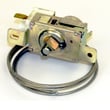
- Refrigerator thermostat WP2198202 (temperature control issues)
- Refrigerator diffuser WPW10151374 (poor airflow between sections)
- Refrigerator door gasket 2188404A or refrigerator door gasket 2188405A (warm air leaks, frost)
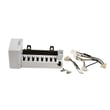
- Refrigerator ice maker 4317943 (ice production and leak-related problems)
Why it matters
A refrigerator that runs longer than normal uses more energy and wears the compressor, fans, and controls faster. Simple airflow and sealing fixes often add years of reliable cooling.
Last updated: February 2026
What is the most common problem with Whirlpool refrigerators?
The most common Whirlpool refrigerator problem is poor cooling (warm fridge or freezer), usually caused by restricted airflow or heat not being removed efficiently. On a Whirlpool side-by-side like 3ED22DWXTW01, we most often trace this to dirty condenser coils, a fan issue, or a temperature control problem such as a failing thermostat.
Most common symptoms and what they usually point to
- Fridge warm, freezer OK: airflow/damper issue (check the diffuser)
- Both sections warm: condenser airflow problem, sealed system issue, or control problem
- Ice maker not making ice: ice maker or water supply issue
- Water under the fridge: defrost drain or water line leak
- Lights not working or door alarm behavior: door switch or light switch issue
Quick checks we recommend first (no parts needed)
- Clean the condenser coils (dust buildup is a top cause of weak cooling).
- Confirm the condenser fan is running when the compressor runs.
- Check door sealing (gaps cause long run times and temperature swings).
- Verify airflow: do not block vents; keep items from touching the back wall.
- Set temperatures correctly and give the unit 24 hours to stabilize after changes.
Parts that commonly fix these problems on 3ED22DWXTW01
If basic checks do not restore normal temps, these model-matched parts are common fixes:
| Problem area | What fails | Model-matched part to consider |
|---|---|---|
| Temperature control | Thermostat not cycling correctly | Refrigerator thermostat WP2198202 |
| Airflow to fresh food | Damper/diffuser stuck or broken | Refrigerator diffuser WPW10151374 |
| Ice production | Ice maker stops cycling or won’t harvest | Refrigerator ice maker 4317943 |
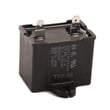
| Heat removal | Fan motor not moving air across condenser | Condenser motor 833697 |
Why it matters
Cooling problems are the root cause behind many other complaints (soft ice, spoiled food, excess frost, and long run times). Fixing airflow and heat removal first prevents repeat failures and helps your Whirlpool side-by-side run efficiently.
Helpful DIY guidance
- Use our Whirlpool refrigerator error codes reference if your unit displays a fault.
- For dispenser and ice issues, follow how to prevent water dispenser and ice maker problems to reduce clogs, air in the line, and freeze-ups.
Last updated: February 2026