 Owner’s manual
What is the common problem with an LG washer?
For the LG WM2701HV washer, the most common problems we see are draining issues, leaks, excessive vibration/unbalanced loads, and door-lock related no-start symptoms. Many of these trace back to routine maintenance items (like a clogged drain pump filter) or a failing component.
Most common issues (and what they usually point to)
- Won’t drain or drains slowly: clogged drain pump filter, kinked drain hose, or a failing drain pump
- Leaks: loose fill hoses, a worn door boot, or a cracked/loose internal hose clamp
- Loud noise or heavy vibration in spin: load out of balance, shipping bolts left in after install, or leveling feet not set correctly
- Won’t start or won’t spin: door not fully closed, door lock not latching, or a control-related fault
- Musty odor: detergent residue buildup; needs regular tub cleaning and door seal wipe-down
For model-specific operating and maintenance steps (including cleaning and troubleshooting), use the WM2701HV manual.
Quick checks you can do first (WM2701HV)
- Verify you are using HE detergent and not over-dosing (oversudsing can cause drain and performance issues).
- Check the drain pump filter access area and clean the filter if draining is slow.
- Confirm the drain hose is not kinked and the standpipe height is within typical limits.
- Re-level the washer and confirm all feet are firmly on the floor.
- If the washer is newly installed, confirm the shipping bolts were removed.
Parts that commonly solve these symptoms
If troubleshooting points to a failed part, these are common on the WM2701HV:
| Symptom | Common part to inspect/replace | Example part for this model |
|---|---|---|
| Not draining / OE-type drain symptoms | Drain pump | Washer drain pump assembly 4681EA2001T |
| Slow fill / fill errors | Water inlet valve | Washer water inlet valve 5221ER1003A |
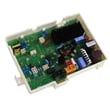
| Won’t start / door won’t lock | Door lock | LG washer door lock assembly EBF49827801 |
Why it matters
Catching these problems early helps prevent secondary damage (like water leaks into the cabinet, repeated out-of-balance spinning, or pump strain). On front-load LG washers like the WM2701HV, regular filter and seal cleaning also helps prevent odors and drain problems.
Last updated: January 2026
How many years does a LG washing machine last?
LG washing machines typically last 10 to 15 years. For your LG WM2701HV, you’ll usually see the longest life when you use HE detergent, keep the tub and door seal clean, and address draining or filling problems early (see the care and cleaning section in the WM2701HV manual).
What affects washer lifespan the most
A washer’s “years” is really about wear on the motor, bearings, pump, and seals. These factors make the biggest difference:
- Load size and balance: frequent overloading or unbalanced loads increases vibration and bearing wear
- Detergent choice: using HE (High-Efficiency) detergent helps prevent oversudsing and residue buildup
- Moisture control: leaving the door closed after cycles can lead to odor and gasket issues
- Water quality: hard water can cause scale buildup in valves and internal passages
- Drain system health: a clogged filter or weak pump can shorten life by stressing components
Simple maintenance schedule (easy, high impact)
Use this as a practical routine for WM2701HV-STYLE front-load washers:
| Task | How often | Why it helps |
|---|---|---|
| Run Tub Clean cycle | Monthly | Reduces detergent residue and odor buildup |
| Wipe door glass and door seal | Weekly | Prevents mildew and protects the door boot |
| Clean drain pump filter area | Every 1 to 3 months | Helps prevent slow draining and pump strain |
| Check fill hoses for bulges/cracks | Twice per year | Prevents leaks and water damage |
Signs your washer is nearing end of life
If you’re seeing these repeatedly, it often points to higher-cost wear items (bearings, tub, motor, or control issues):
- Loud rumbling or grinding during spin
- Frequent out-of-balance shutdowns even with normal loads
- Water leaks from the front (door boot area) or underneath
- Slow drain problems that return soon after cleaning
- Error codes that keep coming back after basic troubleshooting
When a part replacement can extend life
Many common failures are repairable and can add years of service, especially when caught early. For example, if the washer won’t drain or drains slowly, inspecting the filter and drain path is step one; if the pump is failing, replacing the washer drain pump assembly 4681EA2001T is often the correct repair.
Why it matters
A front-load washer like the LG WM2701HV can deliver a full 10 to 15 years when it stays clean internally and drains correctly. Preventive cleaning reduces odor, protects seals, and lowers stress on the drain pump and motor.
Last updated: January 2026
What is the capacity of the LG wm2701hv?
The LG WM2701HV washer has a 4.5 cu. ft. capacity, which is considered an ultra-capacity size for a front-load washer and is designed to handle larger loads (like bulky towels or multiple outfits) in fewer cycles. For model-specific specs, see the WM2701HV manual.
What that capacity means in everyday use
A 4.5 cu. ft. front-load washer like the WM2701HV is built for larger loads while still using HE (high-efficiency) wash action.
- Wash more items per cycle to reduce total weekly loads
- Better fit for bulky items (comforters, blankets, heavy towels)
- Helps reduce water and energy use compared to older, smaller-capacity designs
- Works best when you avoid packing the drum tightly
Loading tips for best performance
To get the most out of the WM2701HV capacity (and avoid out-of-balance spinning):
- Load large items first, then fill in with smaller items
- Keep the drum from being tightly packed; the door should close easily
- Avoid washing a single heavy item by itself (add 1-2 similar items)
- Use only HE detergent to prevent oversudsing
Quick reference
| Spec | Value |
|---|---|
| Washer model | LG WM2701HV |
| Capacity | 4.5 cu. ft. |
| Washer type | Front-load |
Why it matters
Capacity affects how many loads you run, how well bulky items wash and rinse, and how likely the washer is to go out of balance during high-speed spin. Using the right loading habits helps protect parts like the drain system and door lock.
Last updated: January 2026
Do LG washers have a filter that needs to be cleaned?
Yes. Your LG WM2701HV washer (a front-load model) has a drain pump filter that should be cleaned periodically to remove lint, coins, and other debris that can cause slow draining or drain errors; the filter is accessed behind the small lower front access panel.
Where the filter is on WM2701HV
On this model, the filter is part of the drain pump system behind the lower front access panel (sometimes called the drain access panel). The step-by-step procedure is shown in the WM2701HV manual.
How we recommend cleaning it
- Unplug the washer before servicing.
- Place a shallow pan and towels under the access area.
- Drain water from the small drain hose first (if equipped) before removing the filter.
- Turn the filter cap counterclockwise, remove it, and clear debris.
- Reinstall the filter snugly and confirm the cap and hose plug are seated to prevent leaks.
How often to clean the drain pump filter
For most households, cleaning every 2 to 3 months is a good baseline. Clean it sooner if you wash items that shed heavily (pet bedding, rugs) or if you notice draining symptoms.
| Usage pattern | Suggested interval |
|---|---|
| Typical family laundry | Every 2 to 3 months |
| Heavy lint or pet hair loads | Monthly |
| After a “won’t drain/slow drain” event | Immediately after the issue |
Parts that may be involved if draining problems continue
If cleaning the filter does not restore normal draining, these model-compatible parts are commonly involved:
- Washer drain pump filter 383EER2001A (the removable filter itself)
- Washer drain pump assembly 4681EA2001T (the pump motor/assembly that moves water out)
- Washer drain pump filter drain hose plug 5006EN3015A (helps seal the drain hose after draining)
Why it matters
A clogged drain pump filter can restrict water flow, leading to longer cycle times, poor spinning, standing water, and leaks at the access area if the cap is not sealing correctly.
Last updated: January 2026


