Owner’s manual
 Error Codes



Is it better to have a freezer on top or bottom of the refrigerator?
For most households, a bottom-freezer refrigerator like the Jenn-Air JFI2089AEP13 is the better everyday layout because the fresh-food section sits at eye level, so you bend less and access the most-used items faster. Top-freezer models can be more efficient and lower cost, but they are less convenient day to day.
Quick comparison
| Layout | Best for | Typical tradeoffs |
|---|---|---|
| Bottom freezer (like JFI2089AEP13) | Frequent fresh-food access, ergonomics | Freezer items are lower; often higher purchase price |
| Top freezer | Budget-focused, simple storage | Fresh-food items are lower; more bending |
| Side-by-side | Narrow door swing, equal access | Narrower shelves; less room for wide items |
How to choose for your kitchen
- If you use the refrigerator section more than the freezer, bottom-freezer wins for convenience.
- If you want the simplest, often lowest-cost design, top-freezer is a strong choice.
- If your kitchen has tight clearance, side-by-side can reduce door-swing issues.
- If you store lots of frozen foods, consider whether bending for freezer drawers will bother you.
- If you want steadier temperatures for fresh foods, prioritize good airflow and door sealing over layout.
Why it matters
The “best” freezer position is mostly about how you live. Most people open the fresh-food doors far more often than the freezer, so putting the refrigerator compartment higher reduces strain and speeds up daily use. Energy use depends more on insulation, door gaskets, and how often doors are opened than on freezer position alone.
Model-specific tip for JFI2089AEP13 owners
For layout details, shelf positions, and recommended loading practices that help airflow, follow the JFI2089AEP13 owner's manual.
Last updated: January 2026
What's the lifespan of a bottom freezer fridge?
A bottom-freezer (bottom-mount) refrigerator typically lasts 13 years. For your JENN-AIR JFI2089AEP13, real-world lifespan depends most on compressor run time, door-seal condition, condenser cleanliness, and how well the unit maintains stable temperatures (37°F fresh food, 0°F freezer). See the JFI2089AEP13 owner's manual for model-specific care and operating guidance.
Typical lifespan and what changes it
Most bottom-freezer fridges land in the same general range, but a few factors move the needle:
- Maintenance: keeping condenser coils clean reduces compressor strain
- Door gaskets: air leaks force longer run times and shorten component life
- Temperature stability: frequent warm-ups increase frost and workload
- Usage patterns: frequent door openings and overpacking restrict airflow
- Water and ice system health: leaks can cause corrosion and fan or control issues
Quick checklist to help your fridge reach its full lifespan
We recommend these practical habits for a bottom-mount refrigerator like the JFI2089AEP13:
- Clean condenser coils on a regular schedule (more often with pets)
- Confirm doors close and seal fully; replace worn gaskets when needed
- Keep vents clear inside both compartments for proper airflow
- Set temperatures to 37°F (refrigerator) and 0°F (freezer)
- Address water leaks quickly (tubing, reservoir, ice maker connections)
Common “end-of-life” symptoms vs. fixable issues
| Symptom | Often fixable? | Common areas to check |
|---|---|---|
| Warm fridge or freezer | Yes | airflow, defrost system, thermistor, control board |
| Loud humming or clicking | Sometimes | condenser fan area, compressor start components |
| Frost buildup on back wall | Yes | defrost components, door seal, air baffle |
| Water under crisper or freezer | Yes | drain tube, water tubing, reservoir |
If you are chasing temperature swings, a failed sensor can be a root cause; the refrigerator thermistor 12002355 is one example of a temperature-sensing part used on this model.
Why it matters
A bottom-freezer refrigerator that runs longer than it should uses more electricity and wears out high-cost components (especially the compressor). Simple airflow and sealing checks often prevent the most expensive failures.
Last updated: January 2026
What are common problems with JennAir refrigerators?
Common problems we see on the Jenn-Air JFI2089AEP13 bottom-mount refrigerator include weak or uneven cooling (freezer cold but fresh food warm), ice maker or dispenser issues, water leaks, and unusual noises. These symptoms are often tied to airflow restrictions, dirty condenser coils, or failed components such as sensors, switches, or sealed-system parts; use the JFI2089AEP13 owner's manual for model-specific checks.
Most common symptoms and what they usually point to
- Fresh food warm, freezer OK: restricted airflow, air baffle not opening, evaporator frost buildup
- Not making ice: water supply issue, ice maker fault, temperature too warm, door not sealing
- Water under the refrigerator: clogged/iced drain, leaking water tube or reservoir
- Lights not working: door/light switch problem
- Buzzing, rattling, or loud fan noise: fan blade interference, ice buildup, or vibration
Quick checks we recommend before replacing parts
- Confirm temperature settings and allow 24 hours after changes.
- Make sure air vents inside the refrigerator are not blocked by food containers.
- Clean condenser coils (dirty coils commonly cause poor cooling and longer run times).
- Check door gaskets for gaps, tears, or areas not sealing.
- Look for frost buildup on the freezer back panel (often indicates a defrost or airflow problem).
Parts that commonly relate to these problems (for JFI2089AEP13)
If your symptom matches, these model-listed parts are often involved:
| Symptom | Common related part | What it affects |
|---|---|---|
| Water leaking or icing in bottom area | Refrigerator drain tube kit W10619951 | Defrost water routing and drain flow |
| Fresh food temperature swings | Refrigerator thermistor 12002355 | Temperature sensing and control decisions |
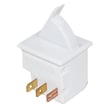
| Lights stay off or stay on | Refrigerator light switch W11396033 | Door-activated lighting circuit |
| No cooling or weak cooling (serious) | Refrigerator compressor W10233960 | Sealed-system cooling (compressor operation) |
Why it matters
Catching airflow, gasket, and drain issues early helps prevent food spoilage, ice buildup, and compressor overwork. Many “not cooling” complaints start with simple restrictions (blocked vents, dirty coils) before they become expensive repairs.
Last updated: January 2026
Why is my JennAir refrigerator leaking water from the bottom?
Water leaking from the bottom of your Jenn-Air JFI2089AEP13 refrigerator is usually caused by a clogged or frozen defrost drain, a cracked or misrouted water tube, or warm air leaks that create excess condensation. Fixing the drain path and checking the water supply routing typically stops the leak.
Most common causes (and what to check first)
- Defrost drain clogged or iced over: Meltwater cannot flow to the drain pan, so it spills into the fresh food section or down to the floor.
- Drain tube issue: A split, loose, or blocked drain tube can dump water under the cabinet.
- Water dispenser or ice maker supply leak: A pinhole leak or loose connection can drip and run to the bottom.
- Door gasket not sealing: Humid air enters, creating heavy condensation that can look like a leak.
- Drain pan shifted or cracked: Water reaches the pan but does not stay contained.
Quick troubleshooting steps (safe, no-special-tools checks)
- Locate the water: Is it under the freezer drawer, under the fresh food doors, or near the back by the water line?
- Check for ice buildup: Frost or a sheet of ice on the freezer floor strongly points to a defrost drain problem.
- Inspect the water line path: Look for wet tubing, mineral tracks, or drips at fittings.
- Check door sealing: Close a dollar bill in the gasket; it should resist pulling out around the perimeter.
- Confirm drain pan position: Make sure it is seated correctly and not overflowing.
Parts that commonly solve bottom-leak problems on this model
| Symptom you see | Likely area | Example part to consider |
|---|---|---|
| Water after defrost cycle, ice on freezer floor | Defrost drain path | Refrigerator drain tube kit W10619951 |
| Drips near back wall or under hinge area | Water supply tubing | Refrigerator water tube W11415785 |
| Heavy condensation, water near door edges | Door seal | Refrigerator door gasket, right (black) W11378944 |
Why it matters
A bottom leak can lead to floor damage, recurring ice buildup, and temperature swings that stress the compressor and increase food spoilage risk. Addressing the drain and water tubing early prevents repeat leaks.
For model-specific access points and panel removal guidance, follow the JFI2089AEP13 owner's manual.
Last updated: January 2026