 Error Codes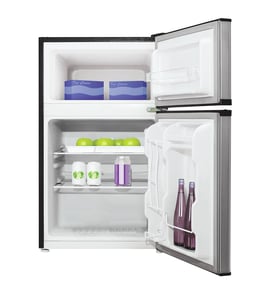

Can I replace fridge parts myself?
Yes. For the Magic Chef MCBR1010GS compact refrigerator, we recommend DIY replacement for simple, non-sealed-system items like shelves, bins, and door gaskets; anything involving refrigerant lines, the compressor, or complex wiring is best handled by a service technician.
Good DIY repairs vs. repairs to leave to a pro
Many refrigerator problems are caused by airflow restrictions, dirty components, or a poor door seal, which are typically DIY-friendly.
Usually DIY-friendly
- Cleaning condenser coils and clearing ventilation space
- Fixing a warm fridge caused by blocked air vents or overpacking
- Adjusting/cleaning a door gasket so the door seals tightly
- Replacing easy-access items (shelves, door bins, light cover) when applicable
Usually not DIY-friendly
- Sealed-system work (compressor, evaporator, condenser, refrigerant leaks)
- Any repair that requires opening refrigerant tubing
- Control board diagnosis when symptoms are intermittent and require live testing
Quick safety checklist before you start
- Unplug the refrigerator before removing panels or touching wiring
- Wear cut-resistant gloves; sheet metal edges can be sharp
- Use a cooler for food if the door will be open more than 30 minutes
- Keep screws organized by step so panels reinstall correctly
- If you smell a strong chemical odor or hear hissing from tubing, stop and schedule service
What to check first (fast troubleshooting)
These steps solve many “not cold enough” and “runs all the time” complaints on compact refrigerators.
| Symptom | Most common DIY checks | Typical next step |
|---|---|---|
| Not cold enough | Door seal, airflow blocked, coils dusty | Clean coils; improve airflow |
| Frost buildup | Door not sealing, frequent openings | Fix gasket seal; reduce humidity |
| Water inside | Drain path blocked, door left ajar | Clear drain; confirm level |
| Noisy | Unit not level, fan hitting ice | Level unit; defrost if needed |
Why it matters
DIY repairs can restore proper temperatures (fresh food around 37°F and freezer around 0°F) and reduce compressor run time. That helps protect food, lowers energy use, and prevents avoidable wear on the cooling system.
Helpful DIY guides we recommend
For model-specific parts lookup and ordering, use the parts list for Magic Chef MCBR1010GS, or search by model on Sears PartsDirect.
Last updated: February 2026
Is 1 or 7 colder on a Magic Chef mini fridge?
On the Magic Chef MCBR1010GS mini fridge, 7 is colder than 1. On most 1 to 7 temperature dials, 1 is the warmest and 7 is the coldest, so turning the dial higher increases cooling.
How to choose the right dial setting
Most mini fridges cool best when you start in the middle and adjust after temperatures stabilize.
- Start at 3 or 4 for everyday use
- Wait 24 hours after changing the dial before judging results
- Turn toward 7 if drinks are not cold enough or the fridge is above 40°F
- Turn toward 1 if items are freezing in the fresh-food section
- Keep the door closed as much as possible while it stabilizes
What the numbers usually mean
The dial is typically a thermostat control; higher numbers usually mean the compressor runs longer to pull the cabinet temperature down.
| Dial setting | Typical meaning | When to use it |
|---|---|---|
| 1 to 2 | Warmest cooling | Cold rooms, light use, preventing freezing |
| 3 to 5 | Normal range | Most kitchens and daily use |
| 6 to 7 | Coldest cooling | Hot rooms, heavy use, faster pull-down |
Quick checks if it still is not cooling right
These basics solve a lot of mini fridge temperature complaints.
- Make sure the fridge has airflow around it (do not block the back or sides)
- Confirm the door gasket seals all the way around
- Do not overpack; leave space for air circulation
- Clean dust from the condenser area if accessible
- If you hear a fan noise change or no airflow inside, use how to fix your evaporator cooling fan for troubleshooting steps
Why it matters
Keeping the fresh-food section at 40°F or below helps food stay safe and reduces spoilage; running at the coldest setting all the time can also increase frost buildup and energy use.
If you need replacement parts for the Magic Chef MCBR1010GS, we list compatible parts by model on Sears PartsDirect.
Last updated: February 2026
What are the common problems with Magic Chef mini fridges?
Common problems we see with Magic Chef mini fridges like model MCBR1010GS are weak or uneven cooling, excess frost, water puddles inside or under the cabinet, and door sealing issues. Most of these symptoms trace back to airflow restrictions, dirty condenser coils, a fan problem, or a defrost and drain issue.
Most common symptoms and what they usually mean
- Not cold enough or warm fridge: dirty condenser coils, blocked vents, thermostat/control issue, or sealed-system/compressor weakness
- Freezer works but fridge is warm: airflow problem (evaporator fan area iced up, blocked air passages)
- Heavy frost or ice buildup: door gasket leak, frequent door openings, or defrost/drain restriction
- Water pooling: clogged/iced drain path, unit not level, or condensation from humid air
- Noisy operation: fan blade hitting ice, worn fan motor, or the unit touching a wall/cabinet and vibrating
Quick checks we recommend first (10 to 20 minutes)
- Confirm temperature settings: set to a mid-range setting and give it 24 hours to stabilize.
- Check airflow: do not pack items against interior vents; leave space around the back and sides.
- Clean the condenser area: dust buildup can cause long run times and poor cooling.
- Inspect the door seal: look for gaps, tears, or areas that do not grip paper when the door is closed.
- Listen for fan noise: a ticking or scraping sound often points to ice contacting a fan blade.
Problem-to-fix guide
| Problem you notice | Most likely cause | What to do next |
|---|---|---|
| Warm temps, compressor runs a lot | Dirty condenser, poor ventilation | Clean coils; improve clearance; recheck temps in 24 hours |
| Frost on back wall or evaporator cover | Door leak or defrost/drain issue | Check gasket; defrost fully; verify drain is clear |
| Puddle under unit | Drain/condensation, leveling | Level the cabinet; clear drain path; reduce humidity exposure |
| Rattling/buzzing | Vibration or fan issue | Pull unit away from wall; check for ice contact; inspect fan area |
Why it matters
Mini fridges have compact airflow paths; a little dust on the condenser, a small ice blockage, or a minor door-gasket gap can quickly reduce cooling performance and increase compressor run time.
DIY help we trust
- For cooling-fan related symptoms, use how to fix your evaporator cooling fan.
If you need replacement parts for Magic Chef MCBR1010GS, start with the parts list for this model, or search by model number on Sears PartsDirect.
Last updated: February 2026
What's the best mini fridge to buy?
The best mini fridge to buy depends on where you will use it and what you need it to do (true freezer space, quiet operation, or maximum capacity). If you are already shopping parts for the Magic Chef MCBR1010GS compact refrigerator, the “best” choice is usually the one that fits your space, holds temperature steadily, and has easy-to-service basics like door gaskets and shelves; you can also search by size and features on Sears PartsDirect.
How to choose the right mini fridge (what matters most)
- Capacity (cu. ft.): For dorms and offices, 3.0 to 4.5 cu. ft. is the sweet spot for usable storage.
- Freezer expectations: Many mini fridges have a small “chiller” compartment, not a true freezer; if you need frozen food, prioritize a true freezer section.
- Noise level: Look for a modern compressor design and solid leveling feet; vibration is a common cause of “loud” complaints.
- Temperature control: A simple dial is common; consistent cooling matters more than extra settings.
- Door seal quality: A tight gasket prevents warm air leaks, frost, and long run times.
- Layout: Adjustable shelves and door bins often matter more than a slightly larger stated capacity.
Quick comparison: which type is best for your use?
| Best for | What to buy | Why it works |
|---|---|---|
| Dorm room | 3.1 to 3.5 cu. ft. with a small freezer | Good balance of footprint, storage, and convenience |
| Bedroom or studio | Quiet-focused compact fridge, 3.0 to 4.5 cu. ft. | Less cycling noise and fewer vibration issues |
| Office drinks only | 2.0 to 3.0 cu. ft. | Simple, efficient, easy to place under a counter |
| Skincare or travel | 4L thermoelectric mini cooler | Ultra-portable, but not for food-safe temps |
Features we recommend prioritizing
- Reversible door (helps with tight spaces)
- Leveling legs (reduces compressor vibration)
- Manual defrost access (easier frost management)
- Simple interior controls (fewer failure points)
Why it matters
A mini fridge that seals well and cools consistently protects food safety, reduces frost buildup, and keeps the compressor from running constantly. That typically means fewer odor issues, fewer puddles from defrost water, and lower energy use over time.
Last updated: February 2026





