Owner’s manual
 Error Codes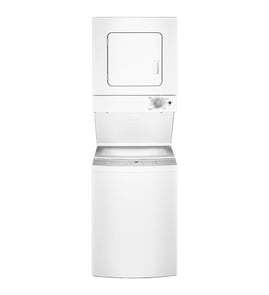

Do washer dryer combos really work?
Yes, washer dryer combos really work, and the Edgestar CWD1510W is designed to wash and dry in one unit for indoor household use. The main tradeoff versus separate machines is drying performance: combo units typically take longer to dry and often dry best with smaller loads.
Combo units are a practical solution when space is limited, but they behave differently than a traditional washer plus vented dryer.
- Washing performance is usually comparable to compact washers when loads are sized correctly.
- Drying usually takes longer than a full-size vented dryer.
- Best results come from smaller loads and higher spin speeds before drying.
- Overloading is the most common reason clothes come out damp.
- Regular maintenance (especially cleaning the coin trap and keeping the unit level) helps performance.
| Feature | Combo washer/dryer (like CWD1510W) | Separate washer + dryer |
|---|---|---|
| Space needed | Lowest | Higher |
| Dry time | Longer | Faster |
| Load flexibility | Often smaller loads for best drying | Full loads more practical |
| Convenience | One appliance, fewer hookups | Two appliances, more capacity |
We see the same few setup and usage issues cause most “it doesn’t dry” complaints.
- Use smaller wash loads when you plan to dry immediately after washing.
- Choose a higher spin option when available; less water in the drum means faster drying.
- Level the unit so it can spin properly; poor leveling can reduce water extraction.
- Clean lint and follow the coin trap cleaning routine in the CWD1510W owner's manual.
- If clothes are still damp, follow the checks in laundry center clothes still damp.
Combo washer/dryers are all about balancing space and convenience against cycle time and load size. When the unit is level, properly powered (dedicated circuit recommended), and not overloaded, you get much more consistent wash and dry results.
Last updated: February 2026
Why are washer dryer combos not popular?
Washer-dryer combos (including the Edgestar CWD1510W) are less popular because they trade speed and capacity for convenience: drying usually takes longer, loads must be smaller to dry well, and you cannot wash one load while drying another.
- Longer total cycle time: wash plus dry can take much longer than using separate machines.
- Smaller effective drying loads: many combos can wash more than they can dry, so you often have to dry less than a full wash load.
- Clothes can stay damp: especially with heavy fabrics, mixed loads, or overloading.
- No parallel laundry: you cannot run a wash load while a different load dries.
- More sensitivity to loading and venting conditions: performance depends heavily on correct load size, fabric mix, and airflow.
The Edgestar CWD1510W manual emphasizes that overloading reduces washing results and provides separate wash and dry capacity guidance by fabric type. It also warns not to wash a single large item because it can damage the unit. For best real-world results, we follow the loading guidance in the CWD1510W owner's manual.
| Fabric type | Max wash load | Max dry load |
|---|---|---|
| Cotton | 15 lb | 7 1/2 lb |
| Artificial fibers | 8 lb | 4 lb |
| Wool | 5 1/2 lb | 2 3/4 lb |
- Load the drum about 1/2 to 2/3 full (typical guidance for combos).
- Sort by fabric weight (towels and jeans dry differently than synthetics).
- Avoid single bulky items (comforters, heavy bath mats, large blankets).
- Use the right cycle and spin speed; higher spin removes more water before drying.
- Keep up with maintenance (cleaning and periodic care) so the unit runs efficiently.
Most complaints about combo units come from using them like a full-size washer and a full-size dryer in one box. When we match load size to the unit’s drying capacity, combos make sense for apartments, RVs, and tight laundry spaces.
Related help: Edgestar error codes, laundry center clothes still damp.
Last updated: February 2026
What is the downside to a washer/dryer combo?
The biggest downside to a washer/dryer combo like the Edgestar CWD1510W is throughput: you wash and dry in the same drum, so you cannot run a wash load while drying another. That usually means longer total laundry time, smaller effective drying loads, and more “still damp” results if the drum is packed.
- Longer cycle times: wash plus dry runs back-to-back in one machine.
- Smaller drying capacity than washing capacity: you often need to remove some items before drying.
- Clothes can finish damp or wrinkled: especially with heavy fabrics or overloading.
- More lint and moisture management: combos rely on good airflow and routine cleaning to dry well.
- Repairs can feel more complex: one appliance contains both washer and dryer systems.
- Dry smaller loads than you wash (a common rule is to dry about half to two-thirds of a full wash load).
- Use higher spin when appropriate to remove more water before drying.
- Avoid overloading; tight packing blocks tumbling and slows drying.
- Let the program finish; the manual recommends allowing the unit to complete the cool-down portion to help performance and longevity.
- Follow routine maintenance (unplug and shut off water before cleaning or maintenance, as noted in the manual).
| Feature | Washer/dryer combo (CWD1510W style) | Separate washer + dryer |
|---|---|---|
| Wash and dry at the same time | No | Yes |
| Total time for multiple loads | Longer | Shorter |
| Drying results when overloaded | More likely damp/wrinkled | Typically better |
| Space required | Less | More |
If you do multiple loads back-to-back, the “one drum does everything” design is the main limiter. If you do smaller loads and want a space-saving setup, a combo can be a practical fit.
For cycle options, loading guidance, and care steps specific to your unit, follow the CWD1510W owner's manual.
Last updated: February 2026
How does a 2 in 1 washer/dryer combo work?
A 2-in-1 washer/dryer combo like the Edgestar CWD1510W washes and then dries in the same drum; it runs a normal wash cycle, drains and spins out water, then switches to a timed drying program so you can go from dirty to dry without moving the load.
Most combo units follow this basic sequence:
- Fill and wash: Hot and cold water enter through separate inlet valves; the unit washes in the stainless-steel drum.
- Drain: The drain hose carries used water out after the wash and rinse steps.
- Spin: The unit spins to remove as much water as possible before drying.
- Dry program: You select a drying mode and time; the machine heats and tumbles to evaporate moisture.
- Cool down: Let the program finish; the cool-down portion helps protect fabrics and the appliance.
For cycle details, drying mode options, and control panel behavior, use the CWD1510W owner's manual.
Because washing and drying share one drum, performance depends heavily on load size and airflow management.
| Topic | What to expect in a combo | Why it matters |
|---|---|---|
| Load size | Smaller dry loads than wash loads are common | Overloading leaves clothes damp and extends dry time |
| Total time | Wash + dry can take longer than separate units | Plan for longer end-to-end cycles |
| Moisture removal | Spin speed and drain performance affect drying | More water left in fabric means longer drying |
| Convenience | No transfer between washer and dryer | Saves space and reduces handling |
- Do not overload the drum; combos dry best with moderate loads.
- Use the correct dry program and time for fabric type.
- Keep pockets empty; small items can end up in the coin trap.
- Make sure the drain hose is secured and draining properly.
- Always allow the unit to complete the cool-down cycle.
Understanding the wash-to-dry handoff helps you avoid the most common complaints (long cycles, damp clothes, and poor drying). In a combo washer/dryer, draining, spinning, and load size directly control how efficiently the drying step can finish.
Last updated: February 2026