Installation guide
 Owner’s manual
 Error Codes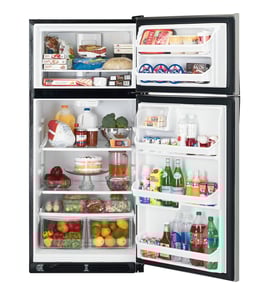



What is the upper part of a fridge called?
On the Frigidaire FRT18S6JW0 top-mount refrigerator, the upper section is the freezer compartment. It’s the coldest area of the appliance, designed to keep foods frozen and, on some setups, support ice-making features.
What the freezer compartment does
The freezer compartment is built to maintain temperatures below freezing so food stays safely stored for longer periods.
Common functions include:
- Freezing and long-term storage of meats, vegetables, and prepared foods
- Keeping ice cream and frozen items at a stable temperature
- Supporting an ice tray or (if equipped) an automatic ice maker
- Helping overall cooling by circulating cold air through the cabinet
How to confirm what’s “upper” on your exact setup
Most Frigidaire top-mount models place the freezer on top, but door swing and installation can affect how you access it.
Check these items in the FRT18S6JW0 use & care manual:
- Compartment names and temperature control guidance
- Door removal and reversal instructions (if your doors were swapped)
- Recommended installation clearances for airflow
Quick reference: common refrigerator sections
| Section | Typical location | Main purpose |
|---|---|---|
| Freezer compartment | Top (top-mount) | Freezes food, stores frozen items |
| Fresh food compartment | Bottom | Refrigerates food above freezing |
| Door bins | On doors | Quick-access storage |
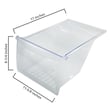
| Crisper drawers | Lower fresh food section | Produce humidity control |
Why it matters
Using the right compartment for the right food helps prevent temperature swings, reduces frost issues, and improves food quality. It also helps when ordering parts or following troubleshooting steps in the manual.
Last updated: January 2026
What are the disadvantages of a top mount fridge?
A top-mount refrigerator like the Frigidaire FRT18S6JW0 puts the freezer at eye level and the fresh-food section below, so the main tradeoffs are more bending for everyday items, fewer premium features, and less flexible storage compared with many bottom-freezer designs. See the FRT18S6JW0 owner’s manual for model-specific use and setup details.
Common disadvantages (what you’ll notice day to day)
- More bending for fresh food: the refrigerator compartment is lower, so you reach down more often.
- Less “grab-and-go” organization: many top-mounts have simpler bins and fewer adjustable zones.
- Fewer built-in dispenser options: many top-mount models do not include external water or ice.
- Freezer space can feel tighter: shelves and door bins are often smaller and less configurable.
- Door swing and placement limits: you may need extra clearance for doors and airflow.
Setup and space considerations for this model
Your installation clearances and leveling affect convenience and door sealing. The installation guidance for this Frigidaire top-mount calls for typical clearances and leveling steps.
| Item | Typical guidance for this style | Why it matters |
|---|---|---|
| Side/top clearance | About 3/8 inch | Airflow and easier installation |
| Back clearance | About 1 inch | Air circulation and connections |
| Leveling | Adjust front rollers or leveling screws | Helps doors close and seal properly |
For step-by-step placement, leveling, and water supply notes, use the FRT18S6JW0 installation guide.
Why it matters
Most “disadvantages” are really comfort and feature tradeoffs. If you use the fresh-food section far more than the freezer, a bottom-freezer layout can feel easier. If you want simpler design and often lower cost, a top-mount can be a solid fit.
Last updated: January 2026
Are all refrigerators 70 inches high?
No. Refrigerators are not all 70 inches high; height varies by style and capacity. For a Frigidaire top-mount like model FRT18S6JW0, the best way to confirm the exact height for your unit and required clearances is to check the FRT18S6JW0 use & care manual and measure your opening.
Typical refrigerator height ranges (what to expect)
Most refrigerators fall into a few common height bands, but there is no single “standard” height.
- Compact and apartment-size models: often shorter than full-size units
- Many top-freezer/top-mount models: commonly in the mid-60s to upper-60s inches
- Many side-by-side and French door models: often in the upper-60s to low-70s inches
- Built-in models: can vary widely depending on the cabinet design
How to measure correctly (so it fits the first time)
Measure your space before shopping or moving the refrigerator.
- Measure height from floor to the lowest overhead obstruction (cabinet, soffit, trim)
- Measure width at the tightest point (often between cabinets)
- Measure depth from the back wall to the front edge of counters
- Plan for door swing and drawer pull-out clearance
- Confirm the floor is level; leveling affects how doors seal and can slightly change stance
Clearance guidance for this Frigidaire top-mount
The installation guidance for this refrigerator calls for airflow space around the cabinet.
| Location | Typical clearance to allow |
|---|---|
| Sides and top | 3/8 inch |
| Back | 1 inch |
For setup details like leveling (front-to-back tilt) and door sealing checks, use the FRT18S6JW0 installation guide.
Why it matters
A refrigerator that is too tall (or installed without proper clearance) can run hotter, cool poorly, and develop door-sealing problems. Proper clearance and leveling help maintain stable temperatures and reduce frost and moisture issues.
Last updated: January 2026
What is the most common problem with a Frigidaire refrigerator?
The most common Frigidaire refrigerator problem is a cooling complaint: the fresh food section gets warm, the freezer temperature drifts, or temperatures swing. On the Frigidaire FRT18S6JW0, the most frequent root causes are airflow restrictions, dirty condenser area, or a door that is not sealing consistently.
Quick checks we recommend first
- Confirm the temperature control is not set to “0” (off).
- If it just stopped cooling, allow 20 minutes in case it is in a defrost cycle.
- Make sure the power plug is fully seated; check the breaker or a 15-amp time-delay fuse.
- Listen for normal operating sounds (fan airflow, compressor hum) so you can tell when something changes.
- Review the troubleshooting section in the FRT18S6JW0 owner's manual.
Most common causes and what they look like
| Symptom | Most likely cause | What you can do now |
|---|---|---|
| Fridge warm, freezer OK | Airflow blocked (overpacked, vents blocked) | Clear vents, leave space around items |
| Freezer warm too | Condenser area dirty or fan/compressor issue | Clean around condenser area; listen for fan/compressor |
| Frost buildup, weak airflow | Defrost system issue | Check for heavy frost; plan a defrost-system diagnosis |
| Moisture, warm spots near door | Door not sealing | Inspect gasket for gaps, tears, or warping |
Parts that commonly relate to cooling complaints
If you find a clear parts-related issue, these are common items tied to symptoms:
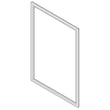
- Door not sealing: consider a replacement door gasket such as refrigerator gasket 242193213 (color and fit must match your unit).
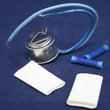
- Frost and defrost concerns: a failed defrost thermostat can contribute; see refrigerator defrost bi-metal thermostat 5303918202.
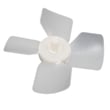
- Fan noise or poor airflow: inspect the evaporator fan area; a damaged blade can be replaced with refrigerator evaporator fan blade 5308000010.
Why it matters
Cooling problems can quickly lead to food spoilage and can force the compressor to run longer than normal. Keeping airflow clear, doors sealing, and the condenser area reasonably clean helps the refrigerator maintain stable temperatures and run efficiently.
Last updated: January 2026