Owner’s manual
 Error Codes


What setting to use on a whirlpool dryer?
For your Whirlpool WED5010LW0 electric dryer, use higher heat for heavy, durable fabrics (towels, jeans) and lower heat for lightweight or delicate items (blouses, synthetics). When in doubt, start with a lower temperature and extend time to prevent shrinkage and overdrying; see the cycle and option details in the WED5010LW0 dryer owner's manual.
Quick setting guide (what to choose and why)
- High heat: towels, denim, cotton workwear, bulky loads
- Medium heat: mixed loads, sheets, everyday cottons
- Low heat: synthetics, athletic wear, lingerie, lightweight knits
- Air/no heat: rubber-backed items, foam, some plastics, items that should not be heated
- Timed dry: best when you want full control over minutes and temperature
- Automatic/sensor dry: best for most loads; helps reduce overdrying
Match the setting to the fabric label
We recommend using the garment care label as the final decision maker. If the label says:
- Tumble dry low: choose low heat
- Tumble dry medium: choose medium heat
- Tumble dry high: choose high heat
- Do not tumble dry: do not use the dryer
Helpful comparison
| Load type | Best heat choice | Typical goal |
|---|---|---|
| Heavy cotton (towels/jeans) | High | Dry thoroughly without long run times |
| Mixed everyday laundry | Medium | Balanced drying and wrinkle control |
| Delicates/synthetics | Low | Prevent heat damage and shrinkage |
| Heat-sensitive items | Air/no heat | Freshen or dry gently |
Why it matters
Using the right heat setting helps protect fabrics, reduces wrinkles, and can prevent overheating conditions that lead to longer dry times. Good airflow also matters; clean the lint screen every load and keep venting clear as described in the WED5010LW0 dryer owner's manual.
Last updated: January 2026
What is the life expectancy of a Whirlpool dryer?
A Whirlpool electric dryer like model WED5010LW0 typically lasts 10 to 15 years. With consistent airflow maintenance, routine lint removal, and timely replacement of wear parts, it’s common for the dryer to reach the upper end of that range.
What affects lifespan the most
We see dryer longevity swing widely based on a few controllable factors:
- Airflow and venting: restricted venting makes the dryer run hotter and longer
- Lint management: lint buildup stresses the heater, motor, and thermostats
- Load habits: chronic overloading strains the drum support system and belt
- Electrical stability: loose connections can overheat terminals and controls
- Preventive part replacement: addressing noise or slipping early prevents bigger failures
For model-specific maintenance intervals and venting requirements, follow the WED5010LW0 owner’s manual.
Typical lifespan by usage pattern
| Usage pattern | Typical expectancy | What usually ends it first |
|---|---|---|
| Light (few loads/week) | 12 to 15 years | Wear parts, door switch, belt |
| Average (most households) | 10 to 15 years | Heating and airflow-related stress |
| Heavy (daily, large loads) | 8 to 12 years | Drum support wear, motor strain |
Parts that commonly extend service life
When a dryer is otherwise in good shape, replacing common wear items can be a cost-effective way to keep it running:
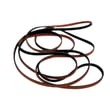
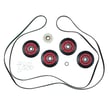
- Belt 341241 if the drum slips, squeals, or won’t tumble
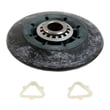
- Support WPW10314173 if you hear thumping, rumbling, or the drum feels rough
- Dryer thermal fuse WP3392519 if the dryer won’t run (often tied to airflow issues)
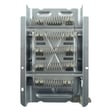
- Dryer heating element 279838 if it runs but won’t heat (after confirming airflow and power)
Why it matters
A dryer that is venting poorly can dry slower, run hotter, and cycle safety thermostats more often. Keeping airflow strong and lint under control is one of the simplest ways to protect major components like the heating circuit, motor, and drum supports.
Last updated: January 2026
How to clear whirlpool dryer error code?
On the Whirlpool WED5010LW0 electric dryer, clearing an error code depends on which code is showing and what triggered it. A safe first step is to cancel the cycle and reset power; if the code returns, use the troubleshooting guidance in the WED5010LW0 owner’s manual to address the cause.
Quick reset steps (safe first try)
- Press Cancel/End (or Power) to stop the cycle.
- Unplug the dryer or switch the breaker OFF for 1 minute.
- Restore power.
- Run a short Timed Dry cycle to see if the code returns.
If the code keeps returning
A repeating code usually means the control is still detecting a problem (often airflow restriction, overheating, or a sensor/door input issue). Start with airflow and lint because it is the most common root cause.
- Clean the lint screen and make sure it seats fully.
- Check the vent for kinks, crushing, or heavy lint buildup.
- Use a 4-inch heavy metal vent (avoid plastic or foil).
- If the dryer shut down from overheating, inspect heat-safety components.
Parts that commonly relate to recurring codes (when symptoms match)
If your WED5010LW0 won’t start, stops mid-cycle, or has heat-related faults, these model-compatible parts are often involved:
| Symptom you notice | What to check next | Example compatible part |
|---|---|---|
| Dryer won’t start or stops when the door is moved | Door switch operation and wiring | Dryer Door Switch WP3406107 |
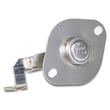
| Dryer overheats or shuts down | High-limit thermostat and airflow | Dryer High-limit Thermostat WP3977767 |
| Dryer overheated and then won’t run or won’t heat | Thermal cut-off safety device | Amana Dryer Thermal Cut-off Fuse Kit, 309-degree F W10900067 |
Why it matters
Clearing the code without fixing the cause can lead to repeat shutdowns, longer dry times, and overheating. Restoring proper airflow and correcting the triggering component helps the WED5010LW0 dry safely and consistently.
Last updated: January 2026
What is the most common problem with whirlpool dryers?
For the Whirlpool WED5010LW0 electric dryer, the most common problem we see is slow drying or no heat caused by restricted airflow (lint buildup, crushed venting, or a long vent run). Poor airflow can also overheat the dryer and open a safety fuse. For model-specific venting and maintenance guidance, use the WED5010LW0 owner’s manual.
Most common symptoms (and what they usually point to)
- Clothes take too long to dry: vent restriction, lint screen residue, weak airflow
- No heat: thermal cut-off opened from overheating, heating circuit issue
- Won’t start: door switch not closing, power supply problem
- Drum won’t spin: broken belt, motor or drum support issue
- Squealing or thumping: worn drum support rollers or related hardware
Quick checks we recommend first (no parts)
- Clean the lint screen before every load; wash it periodically to remove residue.
- Check airflow at the outside exhaust hood; it should be strong and steady.
- Inspect the vent for kinks, crushed sections, or too many elbows.
- Use rigid, heavy metal 4-inch venting (avoid plastic or foil).
- If the dryer is electric, confirm the breaker is fully reset and you have full 240V power.
Parts that commonly come up on this model
If airflow is restricted and the dryer overheats, these model-listed parts are common suspects:
| Symptom | What to inspect/test | Model-listed part example |
|---|---|---|
| Dryer runs but no heat after overheating | Thermal cut-off fuse kit | Amana dryer thermal cut-off fuse kit, 309-degree f W10900067 |
| Dryer won’t start when door is shut | Door switch | Dryer door switch WP3406107 |
| Drum not turning | Drum belt | Belt 341241 |
Why it matters
Good airflow is the foundation of drying performance. When the vent system is restricted, the WED5010LW0 can dry slowly, overheat, and repeatedly open safety fuses, which leads to more downtime and higher energy use.
Last updated: January 2026