Owner’s manual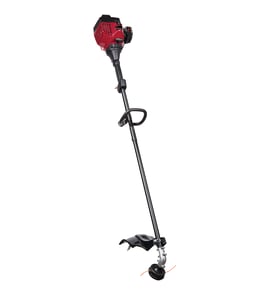




What is the oil gas mixture for a Craftsman trimmer?
For the Craftsman 316711202 gas line trimmer, we use a 40:1 fuel mix: 40 parts unleaded gasoline to 1 part 2-cycle oil (about 2.5% oil). That equals 3.2 oz of 2-cycle oil per 1 gallon of gas. Confirm any fuel notes in the 316711202 owner's manual.
Quick mix chart (40:1)
| Gasoline amount | 2-cycle oil to add |
|---|---|
| 1 gallon (128 oz) | 3.2 oz |
| 1/2 gallon | 1.6 oz |
| 1 quart (32 oz) | 0.8 oz |
| 1 liter | 25 ml |
How we recommend mixing fuel
- Use a clean, approved fuel container (not the trimmer tank).
- Add about half the gasoline first.
- Measure and pour in the correct amount of 2-cycle oil.
- Add the remaining gasoline.
- Cap and shake to fully blend before filling the tank.
- Mix only what you will use in about 30 days for best starting and performance.
Common fuel-mix mistakes to avoid
- Too little oil: causes overheating, scoring, and early engine failure.
- Too much oil: increases smoke, carbon buildup, and plug fouling.
- Using automotive oil instead of 2-cycle oil.
- Mixing in the trimmer’s fuel tank (poor blending).
- Using old fuel that has absorbed moisture or degraded.
Why it matters
A correct 40:1 mix keeps the 2-cycle engine properly lubricated while maintaining clean combustion. That directly affects starting, idle quality, throttle response, and long-term engine life.
Last updated: February 2026
What is the difference between a whipper, snipper, and a line trimmer?
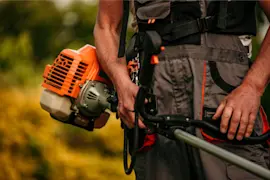
A whipper snipper, snipper, and line trimmer usually refer to the same tool: a handheld trimmer that cuts grass and weeds with a fast-spinning nylon line. For your Craftsman 316711202 gas line trimmer, the practical difference is typically just regional wording, not a different machine.
Common terms and what they mean
In most everyday use, these names overlap:
- Line trimmer / string trimmer: Standard term in the U.S.; uses nylon trimmer line.
- Whipper snipper: Common term in Australia and New Zealand; typically the same as a line trimmer.
- Snipper: Shortened slang for whipper snipper; same general tool.
- Brushcutter (related but different): Often uses a metal blade and is built for heavier brush.
What actually changes between tools
Even when people use different names, the real differences are in the cutting system and drivetrain:
- Nylon line head: Best for edging and grass.
- Fixed line vs bump-feed head: Changes how line advances.
- Straight shaft vs curved shaft: Affects reach and balance.
- Engine size and clutch: Impacts power and how smoothly the head engages.
- Gearbox and drive shaft design: Affects durability and serviceability.
Quick comparison
| Term you hear | Most common meaning | Typical cutting method |
|---|---|---|
| Line trimmer | Standard string trimmer | Nylon line |
| Whipper snipper | Same as line trimmer (regional name) | Nylon line |
| Snipper | Slang for whipper snipper | Nylon line |
| Brushcutter | Heavier-duty cutter | Metal blade or heavy line |
Why it matters
Using the right name helps you order the correct Craftsman 316711202 parts (cutting head, debris shield, drive shaft) and follow the correct maintenance steps like air filter service and fuel system care. For model-specific operation and safety details, use the 316711202 owner's manual.
Last updated: February 2026
How to replace line on Craftsman gas trimmer?
To replace trimmer line on your Craftsman gas line trimmer model 316711202, you typically remove the spool from the bump head, load new line to the correct length, then reinstall the spool and feed the ends through the eyelets. For model-specific steps and line size, use the 316711202 owner's manual.
Quick steps to reload trimmer line
- Shut the engine off and let the muffler and cutting head cool completely.
- Remove the bump knob (or release the head tabs, depending on the head style).
- Lift out the spool and note the direction arrows for winding.
- Cut two equal lengths of trimmer line (most heads use two lines).
- Wind the line tightly and evenly into the spool channels; keep the two lines separated.
- Feed the line ends through the eyelets, reinstall the spool, then reinstall the bump knob.
Line length and diameter (what usually works)
Most Craftsman bump-feed heads use 0.080 in to 0.095 in line. Use the exact diameter listed in the 316711202 owner's manual so the line feeds correctly and the head does not jam.
| If you see this symptom | Most likely cause | What to do |
|---|---|---|
| Line will not feed when bumped | Line too thick or wound loosely | Switch to correct diameter; rewind tight and even |
| Line fuses together in the spool | Overheating from heavy trimming | Shorten line to proper length; avoid constant full-throttle contact |
| Line breaks off at the head | Line too thin or brittle | Replace with fresh line; store line sealed to reduce drying |
While you are there: check these common wear items
- Debris shield for cracks or missing hardware (helps protect you and the head)
- Cutting head for worn eyelets (eyelets that are sharp can shred line)
- Air filter if the engine bogs while trimming (consider the line trimmer air filter 753-06954)
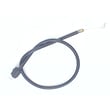
- Throttle cable for sticking throttle response
Why it matters
Correct line size and proper winding keep the bump head feeding smoothly, reduce vibration, and prevent premature wear on the cutting head and drive components.
Last updated: February 2026
What size is the fuel line on a Craftsman trimmer?
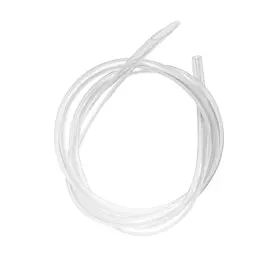
On the Craftsman gas line trimmer model 316711202, fuel line size is determined by the fittings and grommet on your exact unit. Most 2-cycle trimmers use small fuel tubing in the ~1/8 to 3/16 inch OD range; confirm the correct ID/OD by measuring your old line and checking the 316711202 owner's manual.
How to get the correct fuel line size (ID and OD)
Fuel line sizing is about fit and sealing, not just “close enough.” Use this process so the line seals on the carburetor and passes through the tank opening correctly.
- Remove the old line and bring a short sample to match (if it is not crumbling)
- Measure outside diameter (OD) and inside diameter (ID) with calipers
- Test-fit on the carburetor nipple; it should slide on firmly without splitting
- Check the tank pass-through or grommet; OD must fit snugly to prevent air leaks
- Use fuel-rated 2-cycle line (not clear vinyl tubing)
- Replace the in-tank fuel filter/pickup if it is restricted or falling apart
Typical fuel line sizes you will see on 2-cycle trimmers
These are common ranges used across Craftsman and similar MTD-built trimmers; use them as a starting point, then match to your fittings.
| Line type (common) | What it does | Typical OD range | Typical ID range |
|---|---|---|---|
| Small line (often return/vent) | Returns fuel to tank or vents | ~1/8 to 5/32 in | ~3/32 to 1/8 in |
| Large line (often supply) | Feeds carburetor | ~3/16 in | ~1/8 in |
When a “fuel line problem” is really something else
If it still surges, won’t prime, or dies on throttle after replacing the line, check these common causes.
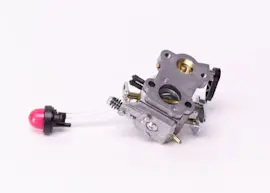
- Cracked primer bulb or loose connections letting air in
- Dirty carburetor screen or clogged jets
- Restricted airflow; replace the line trimmer air filter 753-06954
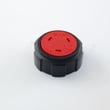
- Fuel cap venting issue causing vacuum in the tank
Why it matters
Correct fuel line ID/OD prevents air leaks and fuel starvation. On a 2-cycle trimmer, a slightly loose line can cause hard starting, poor acceleration, and repeated primer bulb issues.
Last updated: February 2026