 Owner’s manual
 Error Codes




Is GE Cafe considered high end?
Yes. GE Café is considered a high-end (premium) appliance line within the GE brand; it is positioned above standard GE appliances with upgraded design, finishes, and feature sets. For ownership and care details on your GE GTH17DBC2RWW refrigerator, use the GTH17DBC2RWW owner's manual.
GE generally groups its offerings into mainstream and premium lines. GE Café sits in the premium tier, and GE Monogram is also premium, typically positioned as the more luxury-focused line.
- GE (standard): core features and value-focused options
- GE Profile: step-up features and styling over standard GE
- GE Café: premium styling and feature packages (high-end)
- GE Monogram: luxury/premium built-in style and design-forward options
This is a practical way to think about the difference when you are shopping or comparing “high end” labels.
| Line | Typical positioning | Common reasons people choose it |
|---|---|---|
| GE Café | High-end premium | Distinct styling, premium features, coordinated suites |
| GE Monogram | Luxury premium | Built-in aesthetics, luxury design details, flagship positioning |
Brand line does not change the basics of refrigerator troubleshooting, but it can affect which parts, finishes, and feature components you need.
- Model-specific parts (gaskets, shelves, motors) must match the exact model number
- Premium lines often have more feature components (controls, lighting, specialty drawers)
- Cosmetic parts (handles, trim, bins) can vary by series and color
If you are repairing a GE top-mount like GTH17DBC2RWW, these are common wear items to check:
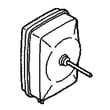
- Refrigerator evaporator fan motor WR60X31522 if cooling is weak or noisy
- Refrigerator door gasket (white) WR24X10229 if you see moisture, frost, or warm spots
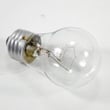
- GE appliance light bulb, 40-watt 40A15 if the interior light is out
Last updated: February 2026
Is a 17.5 cu ft fridge small?
A 17.5 cu. ft. refrigerator is a medium, apartment-friendly size; for the GE GTH17DBC2RWW top-mount, it typically fits 1 to 2 people comfortably, but it can feel small for a 3+ person household, bulk shopping, or large frozen-food storage.
Most top-mount refrigerators fall into these practical “fit” ranges:
- 14 to 17 cu. ft.: compact to small kitchens, 1 to 2 people
- 17 to 20 cu. ft.: medium, common for apartments and smaller families
- 20 to 25+ cu. ft.: larger families, frequent entertaining, bulk shopping
| Capacity | Typical household fit | Common tradeoff |
|---|---|---|
| 17.5 cu. ft. | 1 to 2 people | Less freezer and wide-item space |
| 18 to 22 cu. ft. | 2 to 4 people | Larger footprint |
| 22+ cu. ft. | 4+ people | Higher cost and more kitchen space needed |
You will notice the limits most when you:
- Store pizza boxes, sheet pans, or wide platters
- Keep multiple gallons of milk or large beverage bottles
- Buy bulk meat and rely heavily on the freezer
- Meal prep with stacked containers for the week
- Need extra room for holiday leftovers
Capacity is only part of the story; shelf layout, door bins, and freezer design determine how usable the space feels day to day. Checking the exact interior layout and shelf positions for the GE GTH17DBC2RWW in the GTH17DBC2RWW owner’s manual helps you judge whether your most common items will fit.
Last updated: February 2026
What brand of refrigerator has the least problems?
No refrigerator brand has the least problems in every home; the lowest-trouble choice comes from picking a simple design and maintaining it well. For a GE top-mount like model GTH17DBC2RWW, routine care and correct settings prevent the most common service issues. See the GTH17DBC2RWW owner's manual for model-specific use and care guidance.
- Choose a basic top-mount or bottom-freezer layout over dispenser-heavy designs.
- Skip in-door ice and water dispensers; they add valves, tubing, switches, and leak points.
- Keep airflow clear inside; blocked vents cause warm temperatures and frost.
- Maintain good door sealing; gasket leaks drive long run times and icing.
- Clean dust from condenser areas so the compressor does not overwork.
| Choice | What you gain | What usually breaks more often |
|---|---|---|
| Basic top-mount refrigerator | Fewer parts, simpler airflow | Fewer convenience features |
| Ice maker in freezer (no door dispenser) | Ice without door plumbing | Ice maker fill and freeze issues |
| In-door ice/water dispenser | Maximum convenience | Leaks, clogs, switch and valve failures |
| Smart/Wi-Fi features | Alerts and monitoring | More electronics to troubleshoot |
Most “reliability” complaints trace back to the same systems: airflow (evaporator fan), defrost, door sealing, and compressor starting. A simpler configuration reduces the number of components that can fail, and basic maintenance keeps temperatures stable.
- Pick the simplest configuration that meets your capacity needs.
- Plan for periodic coil and vent cleaning.
- Replace worn seals promptly; for example, a torn gasket can be addressed with the correct part such as the refrigerator door gasket (white) WR24X10229 when it matches your unit.
Last updated: February 2026





