Owner’s manual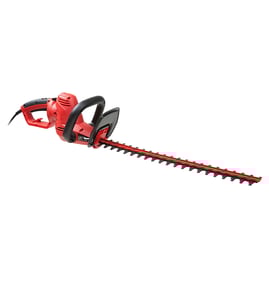

Can you spray WD-40 on hedge trimmer blades?
Yes; you can spray a light coat of WD-40 on the blades of your Craftsman 900799520 hedge trimmer to help displace moisture, reduce sap buildup, and leave a short-term protective film against rust. Wipe off the excess so it does not attract dirt.
Best way to use it (quick steps)
- Turn the trimmer off and let the blades stop completely.
- Disconnect the power source (unplug corded units or remove the battery if applicable).
- Brush off clippings, then wipe the blades with a rag.
- Spray a light, even coat along both sides of the cutting teeth.
- Run the trimmer briefly to distribute the film, then wipe off excess.
- Store the trimmer dry, ideally with a blade cover.
WD-40 vs. blade oil (what to choose)
WD-40 works well for cleaning and moisture protection, but dedicated blade oil is better for long-lasting lubrication.
| Product | Best for | How often | Notes |
|---|---|---|---|
| WD-40 | Cleaning sap, displacing water, rust prevention | After use or before storage | Wipe excess to avoid grime buildup |
| Blade oil (light machine oil) | Ongoing lubrication and smoother cutting | Every 15 to 30 minutes of trimming | Helps reduce heat and wear |
When not to spray
- Do not spray while the trimmer is running.
- Do not soak the gearbox, motor vents, or electrical areas.
- Do not use it as a substitute for sharpening; dull blades still tear branches.
Why it matters
Clean, lightly lubricated blades cut cleaner, run cooler, and resist rust. That reduces strain on the motor and helps your Craftsman hedge trimmer maintain consistent cutting performance.
For model-specific maintenance and storage guidance, follow the owner's manual.
Last updated: February 2026
Is it worth repairing a hedge trimmer?
Yes, repairing a Craftsman hedge trimmer like model 900799520 is worth it when the issue is normal wear (dull blades, loose hardware, worn cord/strain relief, or a failing switch) and the tool is otherwise in good condition. Routine maintenance and a few common repairs typically cost far less than replacing the trimmer.
Quick way to decide
Use this checklist before you spend time on troubleshooting:
- Repair it if the motor runs, the housing is intact, and the problem is blade condition, lubrication, or a simple electrical connection.
- Repair it if the trimmer is a good fit for your yard and you already own the right extension cord and safety gear.
- Replace it if the motor smells burned, trips breakers repeatedly, or the internal drive components are stripped.
- Replace it if the blade bar is bent or cracked (it will cut poorly and can be unsafe).
- Replace it if multiple major issues stack up (for example: switch plus motor plus blade damage).
What to try first (maintenance that often “fixes” it)
Most hedge trimmer complaints come from blade drag and poor cutting performance.
- Clean sap and debris off the blade teeth
- Lightly lubricate the blade bar (a thin film, not dripping)
- Tighten visible screws and blade fasteners
- Check for nicked teeth and burrs; carefully dress small burrs
- Sharpen blades if they are dull (dull blades tear branches and overload the motor)
Common symptoms and what they usually mean
| Symptom | Most common cause | Typical fix |
|---|---|---|
| Runs but won’t cut well | Dull or gummed-up blades | Clean, lubricate, sharpen |
| Hums but blades barely move | Blade binding or internal drive wear | Clean/lube; inspect drive |
| Won’t start | Power cord, switch, or connection issue | Inspect cord, test switch |
| Stops intermittently | Loose wiring or overheating from drag | Check wiring; reduce blade load |
Why it matters
A hedge trimmer that is forced through branches with dull blades works harder, cuts worse, and can overheat. Keeping the cutting blades sharp and lubricated protects the motor and makes trimming faster and cleaner.
Model-specific help
For Craftsman 900799520, use the owner's manual for safety steps, lubrication points, and any model-specific blade care guidance before disassembly.
Last updated: February 2026
What is the difference between a hedge trimmer and a hedge cutter?
A hedge trimmer and a hedge cutter are usually the same type of tool; in everyday use, “hedge cutter” often implies a heavier-duty hedge trimmer meant for thicker, overgrown growth, while “hedge trimmer” often implies lighter, more precise shaping. For your Craftsman 900799520 hedge trimmer, think “trimming and shaping” first.
How the terms are typically used
- Hedge trimmer: Designed for regular maintenance, shaping, and clean lines on hedges and shrubs.
- Hedge cutter: Commonly used as a label for a more powerful trimmer with higher cut capacity.
- Interchangeable naming: Many brands and retailers use the terms interchangeably.
- Power source clue: “Cutter” is more often used for gas or higher-power electric models.
- Job type clue: “Trimmer” is more often used for detail work and routine upkeep.
Practical differences that matter when choosing or using one
| Feature | “Trimmer” (typical) | “Cutter” (typical) |
|---|---|---|
| Best for | Shaping, maintenance | Overgrown hedges, tougher stems |
| Cut capacity | Light to moderate | Moderate to heavier |
| Tool weight | Lighter | Heavier |
| User fatigue | Lower | Higher |
What we recommend for best results
- Cut only what the tool can slice cleanly; forcing thicker branches can damage blades and the drive system.
- For woody stems, use hand pruners or loppers first, then finish with the hedge trimmer.
- Keep the blade clean and lightly lubricated to reduce drag and improve cut quality.
- Inspect the cord/battery (if applicable) and switches before each use.
- Follow the safety and maintenance steps in the owner's manual.
Why it matters
Using the right tool for the branch thickness prevents ragged cuts, reduces motor strain, and helps your Craftsman 900799520 last longer while keeping hedges healthier.
Last updated: February 2026
Which is better, a 20V or 40V hedge trimmer?
A 20V hedge trimmer is usually better for quick, light trimming because it’s lighter and easier to control; a 40V hedge trimmer is better for thicker growth and longer sessions because it delivers more cutting power and runtime. For Craftsman hedge trimmer model 900799520, confirm your battery platform and operating limits in the owner's manual.
Quick comparison: 20V vs 40V
| Feature | 20V hedge trimmer | 40V hedge trimmer |
|---|---|---|
| Best for | Small hedges, touch-ups | Larger hedges, heavier cuts |
| Weight and handling | Lighter, less fatigue | Heavier, more fatigue |
| Power and torque | Moderate | Higher |
| Runtime | Shorter (typical) | Longer (typical) |
| Cutting thicker stems | Limited | Better |
How we recommend choosing
- Choose 20V if you want the lightest tool for routine shaping and you take breaks often.
- Choose 40V if you regularly cut denser hedges, work longer per session, or want fewer slowdowns.
- Match the tool to your typical branch thickness; hedge trimmers are meant for green growth, not woody limbs.
- Consider battery compatibility; staying on one Craftsman battery family usually saves money and hassle.
- Prioritize blade length and tooth gap as much as voltage; those specs often matter more for what you can cut.
Why it matters
Voltage is a practical shortcut for how a cordless hedge trimmer feels in real use: higher-voltage systems typically maintain blade speed better under load and run longer, while lower-voltage systems are easier to maneuver and reduce arm fatigue.
Before you buy or troubleshoot
- Inspect the hedge first and remove thick, woody branches with loppers.
- Keep blades clean and lightly lubricated to reduce drag.
- If performance drops, check for a dull blade, debris in the cutter bar, or a weak battery.
- Use the safety and operating guidance in the owner's manual for model 900799520.
Last updated: February 2026