Owner’s manual


What's the average price of an LG dryer?
LG dryer prices typically run about $600 to $2,000+ depending on capacity, fuel type (gas vs. electric), and features like steam and smart controls. For your LG DLGX3251W gas dryer, the best way to compare value is to match features and installation needs in the DLGX3251W owner's manual.
What drives the price up or down
- Fuel type: gas models often cost more up front than electric models
- Capacity: larger drums usually cost more
- Feature set: steam cycles, sensor dry, and smart connectivity add cost
- Finish and design: premium colors and matching laundry sets can raise price
- Retailer and timing: promotions and delivery/installation bundles change the final price
Quick price bands (typical retail)
| LG dryer tier | Common features | Typical price range |
|---|---|---|
| Entry | basic timed dry, fewer cycles | $600 to $900 |
| Mid-range | sensor dry, more cycles/options | $900 to $1,300 |
| Premium | steam, advanced sensors, smart features | $1,300 to $2,000+ |
Why it matters for your DLGX3251W
A dryer’s real cost is not just the purchase price. Venting setup, airflow, and maintenance affect drying time and energy use. LG’s guidance emphasizes using proper venting materials and keeping ducts clean to improve efficiency and reduce long dry times; those factors can make a mid-priced dryer perform like a higher-priced one.
Smart comparison tip
When comparing LG dryers, we recommend lining up these specs side-by-side:
- Gas vs. electric (match your home hookup)
- Cycle types (sensor dry vs. manual dry)
- Venting options (rear, side, bottom where applicable)
- Warranty terms (labor and parts period)
Last updated: January 2026
How does steam dry work on an LG dryer?
On the LG DLGX3251W steam dryer, steam dry works by injecting a swirling jet of hot steam into the drum during a Steam cycle (such as Steam Fresh) or when you add a Steam option to certain cycles. This helps refresh clothes, reduce static, and make ironing easier; it can also help relax wrinkles.
How to use steam dry (what we recommend)
- Pull out the drawer and lift out the steam feeder.
- Fill the steam feeder with water only, up to the MAX line (just to the filter screen).
- Reinstall the steam feeder, then push the drawer in until it clicks fully closed.
- Select STEAM FRESH or add a Steam option to a compatible cycle.
- Press START/PAUSE to begin.
For the exact cycle and option details for your dryer, follow the steps in the DLGX3251W owner's manual.
Water and safety rules that matter
Steam performance depends on the right water fill and a properly seated drawer.
- Use water only (no detergents, rinse agents, or other additives).
- Do not use distilled water (the level sensor may not read it correctly).
- Do not fill with hot water over 86°F (30°C).
- Wipe up any spilled water around the drawer before starting.
- Empty the steam feeder before moving the dryer.
Common steam symptoms and what they mean
| What you notice | What it usually means | What to do |
|---|---|---|
| “Rdd” error | Steam feeder not filled to MAX or drawer not fully closed | Fill to MAX, close drawer, power off, restart Steam cycle |
| Water drips at start | Steam condensation | Normal; dripping stops shortly |
| Clothes still wrinkled | Load size or fabric not ideal for steam refresh | Reduce load, use Steam Fresh, remove promptly |
Why it matters
Steam features can improve results without extra heat or longer dry times, but only when airflow and water delivery are correct. If you also see duct restriction alerts (Flow Sense), cleaning the venting helps drying performance and overall efficiency.
Last updated: January 2026
What is the most common problem with LG dryers?
The most common problem we see with LG dryers (including model DLGX3251W) is restricted airflow from lint buildup in the lint filter or exhaust ducting, which causes long drying times and can trigger airflow restriction alerts. Keeping the vent system clean restores drying performance and helps prevent overheating.
What to check first (most common airflow causes)
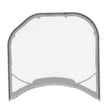
- Clean the lint filter before every load; wash it with warm, soapy water if it is coated with fabric softener residue.
- Inspect the vent hose behind the dryer for kinks, crushing, or sagging.
- Check the outside vent hood for a stuck flap, lint blockage, or bird nest.
- Make sure you are using heavy metal venting (not plastic or thin foil duct).
- If drying performance drops, clean the full duct run; ducts should be checked and cleaned at least yearly.
Other frequent LG dryer issues (after airflow)
Even with good venting, these problems are common on gas dryers:
| Symptom | Likely area | Example parts to consider |
|---|---|---|
| Dryer runs but takes too long | Moisture sensing, airflow | Dryer moisture sensor 6500EL3001A, venting/ductwork |
| Overheats or shuts off | Safety thermostats, airflow restriction | High-limit thermostat, blower thermostat |
| Squealing, thumping, rumbling | Drum support and drive system | Dryer drum belt 4400EL2001F, rollers, idler pulley |
Why it matters
Restricted airflow is the root cause behind many “dryer not drying” complaints because the dryer cannot move enough exhaust air through the drum. That leads to longer cycles, inconsistent drying, and higher operating temperatures.
Where to confirm model-specific guidance
For DLGX3251W, we recommend following the venting and maintenance guidance in the DLGX3251W owner’s manual, including duct material recommendations and cleaning intervals.
Last updated: January 2026
What is the capacity of the LG DLGX3251W?
The LG DLGX3251W dryer has an IEC drying capacity of 7.3 cu. ft. The specifications list IEC 7.3 cu. ft. for both Normal drying and Steam cycles; for exact cycle and load guidance, use the DLGX3251W owner's manual.
Capacity specifications (from the manual)
The manual lists capacity by cycle type under “Drying Capacity”.
- Normal cycle: IEC 7.3 cu. ft.
- Steam cycle: IEC 7.3 cu. ft.
- Capacity is listed as an IEC value in the specifications section
- Real-world usable capacity depends on fabric type, moisture level, and airflow through the lint screen and vent
| Spec item | What LG lists for DLGX3251W |
|---|---|
| Drying capacity (Normal cycle) | IEC 7.3 cu. ft. |
| Drying capacity (Steam cycle) | IEC 7.3 cu. ft. |
Why drying performance can feel “smaller” than the rated capacity
Even with a 7.3 cu. ft. drum, drying time and results change when airflow is restricted or loads are packed too tightly.
- Clean the lint screen before every load
- Check the vent for kinks, crushing, or lint buildup
- Avoid tightly packing bulky items (comforters, towels)
- Use a sensor-dry cycle when possible for mixed loads
Why it matters
Using the correct load size for the cycle helps the moisture sensor work accurately, reduces dry times, and lowers wear on key moving parts such as the drum belt and idler pulley.
Last updated: January 2026