Installation guide
 Owner’s manual



What's the average lifespan of a Maytag washer?
Maytag washers typically last 10 to 13 years with normal household use. For your Maytag MVWC300BW1 top-load washer, lifespan depends most on load size, detergent use, and keeping the tub and drive system from being overstressed; follow the care steps in the MVWC300BW1 owner's manual.
Most washer failures that shorten life come from chronic overloading, repeated out-of-balance spinning, and drainage or fill issues that force the machine to work harder.
- Avoid tightly packing the basket; it increases strain during agitation and spin
- Use the correct water level (load size) for the load
- Measure detergent carefully; too many suds can interfere with proper operation
- Keep loads balanced to reduce vibration and suspension wear
- Address “won’t drain” or “won’t fill” symptoms quickly to prevent secondary damage
The MVWC300BW1 use and care guidance emphasizes correct loading and detergent practices, which directly impacts wear on the gear case, belt, and suspension.
| Habit | What to do | Why it helps |
|---|---|---|
| Loading | Load with dry items, distribute evenly | Reduces out-of-balance spin stress |
| Detergent | Measure per load size and soil level | Prevents excess suds and poor draining |
| Cycle choice | Match cycle and soil level to the load | Avoids unnecessary long, aggressive cycles |
| Drain performance | Ensure drain hose is installed correctly | Prevents slow drain and wet loads |
If your washer starts shaking, not spinning out, or making belt or drive noises, these model-compatible parts are common suspects:
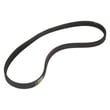
- Washer drive belt WPW10006384 (slipping, squealing, weak spin)
- Washer damper W10780045 (excessive vibration, banging, off-balance)
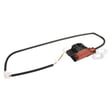
- Washer lid lock assembly W10404050 (won’t start or stops mid-cycle)
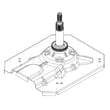
- Washer gear case W11454741 (grinding, poor agitation/spin)
A washer that is overloaded or running with drainage, balance, or suds issues often “still works” for a while, but it accelerates wear on the drive and suspension. Fixing early symptoms usually costs less than waiting for a major breakdown.
Last updated: February 2026
Are Maytag parts easy to get?
Yes. For your Maytag MVWC300BW1 washer, replacement parts are typically easy to get because common wear items (like belts, lid locks, and inlet valves) are widely stocked and can be ordered by model number to ensure fit. Use the owner's manual to confirm part names and service notes before ordering.
We consider parts easy to get when they are commonly replaced, consistently stocked, and simple to match to your exact washer model.
- You can look up parts by the exact model number: MVWC300BW1
- Many high-failure items are standard across similar Maytag top-load platforms
- Parts are listed by functional groups (lid, drive, water fill, drain, suspension)
- You can order individual components instead of replacing large assemblies
These are examples of parts that are frequently needed and are available for this model.
- Washer lid lock assembly W10404050 (won’t start, lid won’t lock, lid lock errors)
- Washer water inlet valve WPW10683603 (won’t fill, fills slowly, wrong temperature)
- Washer drive belt WPW10006384 (won’t spin, burning rubber smell, squealing)
- Washer drain hose W11244231 (leaks, siphoning, poor draining)
Use this to avoid ordering the wrong part.
| Check | What to do | Why it matters |
|---|---|---|
| Model match | Confirm MVWC300BW1 on the washer’s model tag | Ensures correct fit and wiring/connector style |
| Symptom match | Match the failure symptom to the part function | Prevents replacing the wrong component |
| Installation notes | Review safety and access steps in the installation guide | Reduces damage to panels, hoses, and wiring |
Ordering the correct Maytag washer parts the first time reduces downtime and prevents repeat failures. For example, a no-spin complaint can be caused by a belt, a lid lock, or a drive system issue; matching the symptom to the right part saves time and cost.
Last updated: February 2026
Is it worth fixing a Maytag washer?
Yes, it’s usually worth fixing a Maytag MVWC300BW1 washer when the problem is a common, repairable failure (like a lid lock, belt, or suspension issue) and the total repair cost stays well below the price of a comparable replacement washer. It’s less worthwhile when the repair is major and labor-heavy.
Use these practical checkpoints before you buy parts or schedule service:
- Age and condition: If the washer has been reliable and this is the first major issue, repair is typically the better value.
- Repair cost target: If the repair is under about 50% of replacement cost, repair usually makes sense.
- Type of failure: Simple mechanical or fill/drain issues are often cost-effective; major drivetrain or tub work is often not.
- Repeat breakdowns: Multiple recent failures usually point toward replacement.
- Parts availability: If the needed parts are readily available for MVWC300BW1, repair is more practical.
These are frequent, straightforward fixes on top-load Maytag washers:
- Won’t start or lid won’t lock: check the washer lid lock assembly W10404050
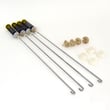
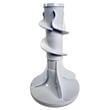
- No agitation or weak agitation: inspect the agitator dog 80040
- Squealing, burning rubber smell, or no spin: inspect the washer drive belt WPW10006384
- Excessive shaking or banging: inspect the washer damper W10780045
- Not filling correctly: inspect the washer water inlet valve WPW10683603
- Slow drain or siphoning issues: verify drain hose setup and inspect the washer drain hose W11244231
Some repairs tend to be expensive because they involve major disassembly or multiple related parts.
| Situation | What it often points to | Typical direction |
|---|---|---|
| Loud mechanical noise with poor wash/spin performance | Gearcase or drive system wear | Replace if total cost is high |
| Chronic leaks from the tub area | Tub or seal-related repairs | Replace if labor is significant |
| Multiple major repairs in a short time | Overall wear | Replace |
A targeted repair can restore safe, normal operation and extend the washer’s life, but overspending on a major teardown can cost nearly as much as replacing the machine. Following the setup and troubleshooting guidance in the owner's manual also helps prevent repeat issues like out-of-balance loads and drain problems.
Last updated: February 2026
What is the most common problem with a Maytag washer?
Drain and spin problems are the most common issues we see on Maytag washers like model MVWC300BW1; loads stay wet, the washer will not drain in time, or it stops mid-cycle. The fastest fixes are correcting drain hose setup, reducing oversudsing, and reloading for balance using the steps in the MVWC300BW1 owner's manual.
- Clothes still wet after the cycle: drain restriction, oversudsing, or an overloaded basket
- Washer not draining or not spinning: drain hose issue, pump restriction, or lid not locking
- Spin light stays on: washer did not pump out water fast enough
- Gurgling or humming: normal draining sound, or water moving through a restricted drain path
- Clicking or metallic noise: unbalanced load, or an object caught in the drain system
- Load dry items in loose heaps evenly around the basket; do not tightly pack.
- Measure detergent carefully; too much detergent can slow or stop draining and spinning.
- Check the drain hose for kinks and clogs; remove any blockage you can reach.
- Confirm drain hose installation:
- Do not push the hose too far into the standpipe (about 4.5 in. max).
- Keep the hose end below 96 in. above the floor.
- Clear extra suds: run Rinse & Spin with no detergent.
| What you notice | Most likely cause | Best next step |
|---|---|---|
| Wet clothes after cycle | Drain restriction or oversudsing | Clear hose, reduce detergent, run Rinse & Spin |
| Stops or bangs in spin | Unbalanced or overloaded load | Redistribute, select correct load size |
| Slow fill or no fill | Inlet restriction | Check hose kinks, clean inlet screens |
- Washer drain hose W11244231 for kinks, internal blockage, or poor fit
- Washer lid lock assembly W10404050 if the washer will not start or will not spin because the lid is not locking
- Washer water inlet valve WPW10683603 for slow fill or fill problems
Drain and spin complaints often come from installation details, oversudsing, or load balance. Fixing those first prevents repeat stoppages and reduces wear on the belt and drive system.
Last updated: February 2026