Owner’s manual
 Error Codes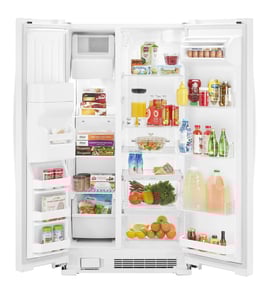



How can I tell how many cubic feet my Kenmore refrigerator is?
To estimate the cubic feet of your Kenmore refrigerator model 10657077791, measure the usable interior space (not the outside cabinet) and calculate volume in cubic feet. For the most accurate capacity listing for your exact configuration, check the specifications section in the 10657077791 owner's manual.
How to calculate cubic feet (quick method)
- Measure the interior of the refrigerator compartment in inches:
- Height (top to bottom of usable space)
- Width (left to right)
- Depth (front to back, not including door bins)
- Multiply: Height × Width × Depth = cubic inches
- Convert to cubic feet: cubic inches ÷ 1,728 = cubic feet
Measurement tips that improve accuracy
- Remove bulky items; measure to the inside walls, not the door gasket.
- Measure usable depth; exclude door shelves and any protruding housings.
- If shelves are adjustable, measure the largest continuous space.
- For a side-by-side, calculate fresh food and freezer separately, then add them.
- Round to the nearest tenth; published capacity is often slightly higher than “usable” space.
Example calculation
| Compartment | Interior (inches) | Cubic inches | Cubic feet |
|---|---|---|---|
| Fresh food | 60 × 18 × 16 | 17,280 | 10.0 |
| Freezer | 60 × 12 × 16 | 11,520 | 6.7 |
| Total | 28,800 | 16.7 |
Why your number may not match the label
Manufacturers often rate capacity using standardized measurement methods that can differ from “real-world usable space” because of:
- Air channels and evaporator covers
- Ice maker and bin space
- Shelving, drawers, and interior liners
If you are troubleshooting cooling or airflow while measuring space, the how to fix your evaporator cooling fan guide can help you understand how the evaporator fan and air passages affect usable storage.
Last updated: January 2026
What are the most common issues with 10657077791?
The most common issues we see with the Kenmore 10657077791 side-by-side refrigerator involve ice and water dispensing problems, warm temperatures from airflow or defrost faults, and door sealing issues that cause frost or sweating. Many of these symptoms trace back to a few serviceable parts and basic checks in the owner's manual.
Common symptoms and what usually causes them
- Ice maker not making ice or slow ice production: water supply restriction, inlet valve problem, or ice maker failure
- Water dispenser weak or not dispensing: frozen/blocked reservoir or tube, or a failing inlet valve
- Refrigerator or freezer too warm: evaporator fan airflow issue, dirty condenser area, or thermostat/control problem
- Frost buildup or moisture around doors: door gasket not sealing, door not aligned, frequent door openings
- No interior light or light flickers: bulb failure or door switch issue
Parts that commonly fix these problems (when symptoms match)
| Symptom | Likely part to check | Example part for this model |
|---|---|---|
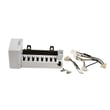
| No ice | Ice maker assembly | Ice maker assembly 4317943 |
| No water or weak water flow | Water inlet valve | Refrigerator inlet valve W10853654 |
| Warm temps, poor airflow | Evaporator fan motor or blade | Refrigerator evaporator motor 4389144 and refrigerator evaporator fan blade WP2169142 |
| Frost or air leaks at door | Door gasket | Refrigerator door gasket 2188405A or refrigerator door gasket 2188404A |
Quick checks we recommend before replacing parts
- Confirm the temperature settings are at normal operating ranges (fresh food about 37°F, freezer about 0°F).
- Make sure the condenser area is clean and airflow around the cabinet is not blocked.
- Verify the water supply valve is fully open and the supply line is not kinked.
- Listen for the evaporator fan running when the doors are closed (a failed fan often causes warm sections).
- Inspect door gaskets for gaps, tears, or hardened sections; a poor seal drives frost and temperature swings.
Why it matters
These issues affect food safety, ice quality, and energy use. Catching airflow, defrost, or door-seal problems early helps prevent heavier frost buildup and longer compressor run times.
Last updated: March 2026
What is the code Sy Ef on a Kenmore refrigerator?
On Kenmore refrigerator model 10657077791, the SY EF code points to a freezer evaporator fan problem (the fan that circulates cold air through the freezer and into the fresh food section). When that fan is not running correctly, cooling becomes uneven and temperatures can rise.
What to check first (quick, no-parts steps)
- Power reset: Unplug the refrigerator for 2 minutes, then plug it back in.
- Door switch test: Hold the freezer door switch in; listen for the evaporator fan to run.
- Ice buildup: Look for heavy frost on the freezer back wall (a defrost issue can stop airflow).
- Airflow blockage: Make sure packages are not blocking vents inside the freezer.
- Condenser area: Verify the unit has breathing room and the condenser area is not packed with dust.
Likely causes and common fixes
If the code returns after a reset, these are the most common root causes on side-by-side refrigerators:
| Symptom you notice | Most likely issue | What usually fixes it |
|---|---|---|
| No fan sound with door switch held | Failed evaporator fan motor or wiring | Replace fan motor or repair harness |
| Fan runs but weak airflow | Damaged fan blade or ice obstruction | Clear ice; replace blade if cracked |
| Heavy frost on freezer back panel | Defrost system problem | Check defrost thermostat and related components |
| Intermittent cooling, code comes and goes | Loose connection or failing motor | Inspect connectors; replace motor if noisy/erratic |
Parts that commonly relate to SY EF symptoms
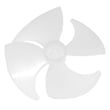
- If the fan blade is broken or rubbing, replace the Refrigerator evaporator fan blade WP2169142.
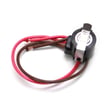
- If you find heavy frost and suspect a defrost control issue, the Refrigerator defrost bi-metal WPW10225581 is a common failure item.
Where to find model-specific guidance
For component locations, access panels, and safe disassembly steps for model 10657077791, follow the diagrams and procedures in the 10657077791 owner's manual.
Why it matters
The evaporator fan is what moves cold air through the refrigerator. When it fails or airflow is blocked by frost, the freezer may still feel cold near the evaporator but the fresh food section warms up, ice production drops, and the compressor can run longer than normal.
Last updated: January 2026