 Owner’s manual


What is the lifespan of a Whirlpool washer?
Most Whirlpool washers, including the Whirlpool WTW6700TW1, typically last 10 to 15 years with normal household use. Consistent care (proper detergent, avoiding overloads, and replacing wear items like hoses on schedule) helps push lifespan toward the high end.
What affects washer lifespan the most
- Load size and frequency (daily heavy loads shorten life)
- Using HE detergent and the right amount (too much causes residue and stress)
- Keeping the washer clean and dry between uses
- Fixing small issues early (leaks, unusual noise, off-balance spinning)
- Replacing inlet hoses on time (the manual recommends every 5 years)
Maintenance that extends life on the WTW6700TW1
Use these habits as your baseline care plan; they align with common Whirlpool Cabrio-style top-load maintenance.
- Use only High Efficiency (HE) detergent
- Wipe spills and clean the exterior with mild soap and water (no abrasives)
- Inspect inlet hoses periodically for bulges, kinks, cuts, wear, or leaks
- Replace inlet hoses after 5 years and mark the replacement date
- If you will be away, unplug the washer and turn off the water supply
For the exact care and cleaning guidance written for this washer, follow the WTW6700TW1 owner's manual.
Quick lifespan expectations by component
| Item | Typical replacement timing | What you may notice |
|---|---|---|
| Inlet hoses | Every 5 years | Bulges, cracking, leaks |
| Lid lock | 5 to 10 years | Won’t start, lid won’t lock |
| Drain pump | 7 to 12 years | Won’t drain, humming, water left in tub |
| Suspension | 7 to 12 years | Banging, walking, off-balance spins |
Why it matters
A washer usually fails from a few high-wear systems (water handling, spinning support, and safety interlocks). Staying ahead of hose replacement and addressing vibration or draining problems early reduces breakdowns and helps the WTW6700TW1 reach its full service life.
Last updated: January 2026
How to fix F06 E01?
On a Whirlpool WTW6700TW1 washer, an F06 E01 error typically points to a communication problem between the main control and a drive or motor-related component. We start by resetting power and checking wiring connections; if the code returns, a failed motor control, stator/rotor, or harness is likely.
Quick fixes to try first
- Unplug the washer for 2 minutes, then plug it back in (power reset).
- Press PAUSE/CANCEL once to clear the code, then press START to retry the cycle.
- Confirm the outlet is a grounded 3-prong outlet and avoid extension cords.
- If the washer stopped mid-cycle, redistribute the load and restart.
What to inspect (most common causes)
Unplug power before opening panels.
- Loose or damaged wiring between the control and drive system (pinched wires, backed-out connectors).
- Wire harness issue (intermittent open, corrosion at connectors).
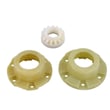
- Motor drive components such as the stator or rotor.
- Control failure (less common than wiring, but possible after surges or moisture).
If you need model-specific access steps and panel locations, use the WTW6700TW1 owner's manual.
Parts that commonly relate to drive communication problems
These are common suspects when the error repeats after a reset and connection check:
Symptom-to-check table
| What you notice | What to check next | Why it helps |
|---|---|---|
| Code appears immediately on Start | Harness connections at control and motor | Rules out a loose plug or backed-out pin |
| Washer fills but won’t agitate/spin | Stator/rotor area wiring and components | Confirms the drive system is being commanded |
| Works sometimes, fails randomly | Wire harness and connector fit | Intermittent opens often trigger communication codes |
Why it matters
When the control cannot reliably “talk” to the drive system, the washer may stop to prevent damage to the motor and to avoid uncontrolled spinning. Fixing the root cause (often wiring or a drive component) restores normal wash and spin performance.
Last updated: January 2026
What is the most common problem with Whirlpool washers?
The most common Whirlpool washer problems are draining or spinning issues, leaks, and loud or off-balance operation. On the Whirlpool WTW6700TW1, many of these complaints trace back to load balance and leveling, inlet screen clogs, oversudsing, or a drain system issue. See the WTW6700TW1 owner's manual for model-specific troubleshooting steps.
Most common issues we see (and what to check first)
- Won’t drain or leaves water behind: listen for normal pump humming; check for a restriction in the drain path.
- Won’t spin or goes off-balance: redistribute the load; keep the load height below the top row of basket holes.
- Noisy or vibrating: confirm the washer is level and all feet are firmly on the floor.
- Fills slowly or won’t fill: verify both faucets are on; straighten kinked hoses; clean inlet valve screens.
- Too many suds: cancel, run drain and spin, then restart with cold water and less detergent.
Quick symptom-to-likely-cause guide
| Symptom | Most likely cause | Best first action |
|---|---|---|
| Loud banging in spin | Unbalanced load, washer not level | Rebalance load; level the cabinet |
| Humming with gurgle during drain | Normal drain pump sound | Let cycle finish; check only if it won’t drain |
| “HC” code at end of cycle | Hot and cold hoses reversed | Swap hoses at the faucets |
| Washer seems underfilled | Auto water level behavior | Continue cycle; this is normal on this design |
Parts that commonly relate to these problems
If basic checks do not resolve the issue, these model-matched parts are often involved:
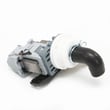
- Pump-water W10536347 for no-drain or intermittent draining
- Washer lid lock WPW10619844 for lid-related start/spin interruptions
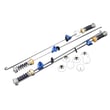
- Washer suspension W10820048 for chronic off-balance and excessive vibration
Why it matters
On the WTW6700TW1, the auto water level and hydro plate wash action can look and sound different than older washers (for example, the load may not be fully submerged). Knowing what is normal helps you avoid unnecessary part replacement and focuses troubleshooting on true faults like restrictions, leveling, or oversudsing.
Last updated: January 2026
Does a Whirlpool front load washer have a filter to clean?
Whirlpool front load washers often have a clean-out filter you can access and rinse, but the Whirlpool WTW6700TW1 is a top load washer that uses a built-in Force Filter wash/rinse system that automatically flushes trapped grit down the drain, so there is no routine user-cleaned filter like many front loaders.
What your WTW6700TW1 uses instead of a front-load filter
This model filters and recirculates wash and rinse water, then flushes sand and dirt out through the drain during operation.
- No front-load style pump filter door to open
- No periodic “unscrew and clean” filter maintenance
- Normal draining sounds can include humming and gurgling as the pump clears the last water
- Use the washer’s cleaning cycle to keep the inside fresh
For cycle features and care steps specific to this washer, use the WTW6700TW1 owner's manual.
When you should still check for a drain restriction
Even without a clean-out filter, a top load washer can still have a drain problem if the drain path is restricted.
- Washer will not drain, or drains very slowly
- Standing water left in the tub after the cycle
- Loud surging during drain that is new or persistent
- Water backing up at the standpipe or laundry sink
If you suspect a drain pump issue, the drain pump for this model is pump-water W10536347.
Quick comparison: front load filter vs. this top load system
| Washer type | Typical “filter to clean”? | What you maintain |
|---|---|---|
| Many front load washers | Yes, a pump clean-out filter | Rinse debris from filter periodically |
| Whirlpool WTW6700TW1 top load | No user-cleaned filter | Run Clean Washer cycle; keep drain hose clear |
Why it matters
Cleaning a front-load filter helps prevent no-drain errors and odors. On the WTW6700TW1, the best prevention is using HE detergent, running the Clean Washer cycle as recommended, and making sure the drain hose and household drain can move water away quickly.
Last updated: January 2026





