Owner’s manual
 View engine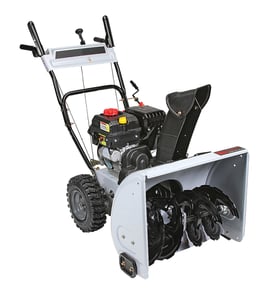





How to tell if a snowblower auger belt is bad?
On our Craftsman snow thrower model 536886531, a bad auger drive belt typically shows visible wear (cracks, fraying, glazing) or acts loose and slips, which makes the auger/impeller slow down or stop and the machine stops discharging snow effectively. Confirm belt condition and tension using the steps in the 536886531 owner's manual.
Quick signs the auger belt is failing
- Auger/impeller does not spin when you squeeze the auger lever
- Snow discharge is weak or stops under load
- Belt looks cracked, frayed, or has missing chunks
- Belt surface looks shiny or slick (glazed)
- Burning rubber smell after engaging the auger
- Belt tension is out of spec even after adjustment
Safe check first (before you inspect)
The manual’s safety steps matter here because you will be near moving parts.
- Stop the engine and remove the key
- Disconnect the spark plug wire and keep it away from the plug
- Wait until the auger/impeller and all moving parts fully stop
- If you hit a foreign object or the unit vibrates abnormally, inspect for damage before operating again
How to confirm it is the belt (not the cable)
Per the manual, if the snow thrower will not discharge snow, check the auger control cable adjustment first; if that is correct, then check the auger drive belt for looseness or damage.
Belt tension spec (model 536886531)
With the belt cover removed and the auger drive lever pressed, the belt should deflect about 1/2 inch with moderate pressure (opposite the auger idler pulley). If it is looser than that, it will slip.
| What you see | What it usually means | What to do next |
|---|---|---|
| Belt damaged (cracks/fraying/glazing) | Belt is worn out | Replace the belt |
| Belt looks OK but deflects more than 1/2 inch | Belt stretched or idler not set | Adjust idler pulley, then recheck |
| Belt tight but auger still weak | Cable or belt guides out of adjustment | Check cable and belt guide settings |
Parts that commonly solve the problem
If the auger belt is worn or damaged, replace it with the correct auger belt for this model: auger belt 37X120MA.
Why it matters
A slipping auger belt reduces throwing distance and can overheat, which accelerates wear on the belt, idler pulley, and belt guides. Catching it early helps restore normal snow discharge and prevents secondary damage.
Last updated: February 2026
How to tell year of Craftsman snowblower by serial number?
For a Craftsman snow thrower like model 536886531, the serial number format varies by manufacturer and production run, so the most reliable way to identify the build year is to match your serial number to the date-code chart and ID label location shown in the 536886531 owner's manual.
Where to find the serial number
Most Craftsman snowblowers place the model and serial tag on the frame or rear housing near the engine.
- Look on the rear of the auger housing (near the scraper bar area)
- Check the frame rails near the wheels
- Inspect the engine mounting plate area
- Wipe off snow, oil, and grime so every character is readable
- Write the serial number exactly as shown (letters matter)
How serial numbers commonly encode the date
Across many Craftsman snowblower builds, the serial number often includes a date code (month and year) in the first several characters. Common patterns you may see:
- A letter for the month (A = Jan through L = Dec)
- One or two digits for the day of the month
- A single digit for the year within a decade
- Additional digits for the production sequence
Quick decode examples (common formats)
| Example pattern | What it usually means | What you do next |
|---|---|---|
M 15 3 XXXXX |
Month, day, year-in-decade | Determine the decade by the machine’s features and purchase timeframe |
MMDDY XXXXX |
Month, day, year-in-decade | Confirm decade using the manual label info and parts style |
YYWW XXXXX |
Year, production week | Convert week number to an approximate build month |
Why it matters
Knowing the build year helps us match the correct Craftsman parts and diagrams for wear items like the auger belt 37X120MA and snowblower drive belt 1733324SM, since belt lengths, pulleys, and control linkages can change between production runs.
Tips to confirm you have the right year
- Compare your serial number format to the label example in the manual
- Cross-check the chute and handle style against the parts diagrams
- If your unit has been rebuilt, rely on the model number first (536886531), then serial
Last updated: February 2026
Is it worth fixing a snowblower?
Yes, it’s worth fixing a Craftsman snow thrower model 536886531 when the problem is a normal wear item (like belts) or basic maintenance (spark plug, oil change), because those repairs are usually far less than replacing the whole machine and can restore reliable performance.
Quick way to decide (cost vs. condition)
Use this checklist before you buy parts or schedule service:
- Fix it when the machine starts and runs, but has drive or auger issues (often belt related).
- Fix it when the repair is routine maintenance (spark plug gap, oil service, lubrication).
- Fix it when the unit is structurally solid (auger housing, chute, controls not badly damaged).
- Replace it when the engine has major internal damage (severe knocking, seized engine, heavy smoke) and multiple systems are worn.
- Replace it when the machine has extensive rust-through or repeated failures that keep returning.
Common “worth it” repairs on this model
These are typical, high-impact fixes that often bring a snowblower back to life:
| Symptom | Likely area | Typical fix type |
|---|---|---|
| Wheels do not drive | Traction drive | Belt inspection, adjustment, replacement |
| Auger does not spin | Auger drive | Belt inspection, adjustment, replacement |
| Hard starting | Ignition, fuel, tune-up | Spark plug service, fresh fuel, carb cleaning |
For belt-related problems, the most common wear parts are the snowblower drive belt 1733324SM (ground drive) and the auger belt 37X120MA (auger drive).
Why it matters
A snowblower that is maintained, lubricated, and tuned up on schedule delivers better throwing performance and fewer mid-storm breakdowns. The owner’s manual also calls out that wear items such as spark plugs and drive belts are expected to wear during normal use, so replacing them is a normal part of ownership.
What we recommend before spending money
- Review the maintenance and adjustment procedures in the 536886531 owner’s manual.
- If starting is the issue, service the spark plug; the manual procedure includes setting the gap to 0.030 in.
- If drive or auger performance is the issue, inspect belts for glazing, cracking, stretching, or contamination.
Last updated: February 2026
Should I spray my snowblower with WD-40?
Yes. For Craftsman snow thrower model 536886531, we recommend using a light rust-preventative spray on bare metal areas (housing, auger, impeller) to help prevent corrosion and reduce sticking; apply sparingly and keep spray off belts, pulleys, and friction surfaces. See the 536886531 owner's manual.
Where WD-40 helps (and where it causes problems)
WD-40 type sprays work best as a moisture barrier on exposed metal, especially after you finish clearing snow and before storage.
- Good places: auger housing interior, chute interior, impeller surfaces (light coat)
- Good timing: after use (to reduce freeze-up) and during end-of-season storage
- Avoid spraying: belts, idler pulleys, drive plate, friction wheel area, and any braking surfaces
- Avoid soaking: control cables and plastic parts; use a light mist, then wipe excess
- Safety: spray only with the engine off and cooled down
Best practice for this model after throwing snow
The manual recommends running the snowblower a few minutes after throwing snow to help prevent auger and impeller freeze-up. After that, you can apply a light rust preventative to bare metal.
Quick routine
- Run the machine 2 to 5 minutes to clear snow from the auger and impeller area
- Shut off engine; let hot parts cool
- Brush off packed snow and wipe moisture
- Apply a light coat of spray to bare metal; wipe off drips
Storage guidance (what matters most)
For longer storage, the manual emphasizes cleaning, lubricating points, touching up rust, and covering the unit with a breathable cover (not plastic or vinyl). It also warns not to store indoors with fuel in the tank near ignition sources and not to cover the unit while the engine and exhaust are still warm.
| Task | Why it matters | When to do it |
|---|---|---|
| Run after use | Helps prevent freeze-up | Every use |
| Light rust-preventative spray | Reduces corrosion on bare metal | After drying, before storage |
| Keep spray off drive system | Prevents slipping and loss of traction | Always |
Why it matters
Overspray on the drive system can cause slipping, poor self-propelled performance, and premature belt wear. If you suspect belt slip after spraying, inspect the belts and pulleys and replace worn belts such as the snowblower drive belt 1733324SM or auger belt 37X120MA.
Last updated: February 2026
What are common Craftsman snowblower problems?
Common problems on the Craftsman snow thrower model 536886531 are no-start or rough running (fuel and ignition issues), poor snow throwing (auger or chute issues), and drive problems (machine will not move or slips). Our 536886531 owner's manual also lists key tune-up specs like SAE 5W-30 oil and a Champion RJ19LM spark plug gapped at 0.030 in.
Most common symptoms and what usually causes them
- Engine will not start: old fuel, clogged carburetor, fouled spark plug, incorrect choke/primer use
- Engine runs rough or surges: stale fuel, partially clogged carburetor, restricted fuel flow
- Auger will not turn or throws poorly: belt worn or loose, jammed auger/chute, shear pin failure
- Snowblower will not drive: worn/slipping drive belt, traction/drive adjustment out of spec
- Controls feel loose or inconsistent: stretched cable, worn idler pulley, missing spacers/washers
Quick checks we recommend (in order)
- Fuel: drain old gas; refill with fresh unleaded (this model’s tank capacity is 2 quarts).
- Spark: inspect/replace the plug; this model uses Champion RJ19LM with a 0.030 in. gap.
- Belts: look for glazing, cracking, or slack; a slipping belt is a top cause of “won’t move” or “auger won’t spin.”
- Auger/chute: shut the engine off and clear packed snow or debris.
- Basic maintenance: change oil (SAE 5W-30 is specified for this unit) and follow the maintenance schedule.
Parts that commonly fix drive and auger complaints
| Symptom | Common wear item | Example part for this model |
|---|---|---|
| Wheels slip or unit won’t move | Ground drive belt | Snowblower drive belt 1733324SM |
| Auger won’t engage or stops under load | Auger belt | Auger belt 37X120MA |
| Belt won’t stay tight | Idler pulley | Idler pulley 1502120MA |
Why it matters
Most “big” snowblower failures start as simple maintenance or wear issues. Catching a weak belt, dirty fuel system, or worn ignition part early prevents no-start days and protects the drive and auger systems from extra strain.
Last updated: February 2026
What is the typical lifespan of a gas snowblower?
A gas snowblower typically lasts 10 to 20 years. For a Craftsman snow thrower like model 536886531, lifespan is driven less by age and more by maintenance habits such as seasonal adjustments, lubrication, and proper fuel storage outlined in the 536886531 owner's manual.
What most affects lifespan
A well-maintained machine lasts longer because wear parts stay adjusted and corrosion is reduced.
- Do seasonal checks and adjustments at least once each season
- Remove snow and slush after each use to prevent freeze-up and damage
- Lubricate key points on schedule (chute flange, chute control rod, auger shaft)
- Change engine oil on schedule and keep oil at the correct level
- Store it correctly so fuel does not gum up the carburetor
Maintenance schedule snapshot (typical)
These intervals match the kind of routine described in the manual for ongoing care.
| Task | When to do it | Why it helps |
|---|---|---|
| Inspect for loose/damaged parts, tighten fasteners | After first use; then seasonally | Prevents vibration damage and failures |
| Clear snow and slush from housing and controls | After each use | Prevents frozen controls and auger bind-up |
| Lubricate chute flange and chute control rod | About every 5 hours of use; before storage | Keeps chute turning smoothly and reduces wear |
| Lubricate auger shaft (especially for storage) | About every 10 hours; before storage | Helps prevent rust seizure and shear bolt issues |
| Fuel system storage steps (treat or remove fuel) | If storing more than 30 days | Prevents carburetor varnish and hard starting |
Parts that commonly limit “real-world” life
Most snowblowers get retired because a few wear items slip, stretch, or seize, not because the whole unit is worn out.
| Symptom | Common wear area | Example part for this model |
|---|---|---|
| Won’t drive or drive slips | Ground drive belt, idler system | Snowblower drive belt 1733324SM |
| Auger or impeller won’t engage well | Auger belt, clutch linkage | Auger belt 37X120MA |
Why it matters
A snowblower that is lubricated, adjusted, and stored correctly starts easier, throws snow farther, and avoids expensive mid-season breakdowns (especially belt and carburetor problems).
Last updated: February 2026