Owner’s manual
 View engine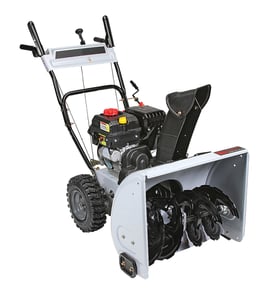

What is the typical lifespan of a gas snowblower?
A typical gas snowblower lasts 10 to 20 years with consistent maintenance. For the MTD 31AM32AD799, the manual also lists an average useful life of 7 years or 60 hours of operation, after which we recommend annual inspections and staying current on wear-item replacement (belts, shear pins, spark plug). See the 31AM32AD799 owner's manual.
Your snowblower’s real-world life is usually limited by maintenance, storage, and how often it’s used. The manual’s 7 years or 60 hours figure is a safety and inspection benchmark; many owners get longer service life by keeping the fuel system clean and replacing wear parts on schedule.
| Measure | Typical expectation | What it depends on |
|---|---|---|
| Service life (well maintained) | 10 to 20 years | Storage, corrosion, maintenance consistency |
| Manual “average useful life” | 7 years or 60 hours | Usage hours and condition of safety systems |
| Belt inspection interval | Every 50 hours | Snow conditions, belt tension, pulley wear |
These actions prevent the most common “end of life” failures (no-start, slipping drive, weak throwing performance):
- Check engine oil before each use; change oil after the first 5 hours, then every 50 hours
- Inspect drive belts every 50 hours for cracking, fraying, or glazing
- Clean and gap the spark plug to 0.030 in at least once a season (replace around 200 hours)
- Use proper off-season fuel storage practices (stabilize fuel for short-term storage; avoid storing fuel indoors near ignition sources)
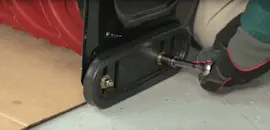
- Replace shear pins only with the correct type (never substitute standard bolts)
If you’re doing belt service, our DIY guide how to replace a snowblower belt video pairs well with the belt inspection schedule.
Wear items are normal and expected over the life of a gas snowblower. For this model, common replacements include:
- Craftsman snowblower shear pin 738-04124A
- MTD snowblower auger drive belt 754-04014
- Snowblower ground drive belt 754-04013
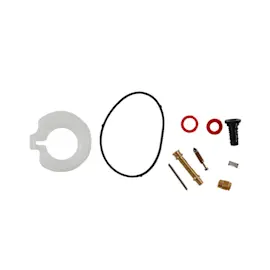
- Carburetor assembly (fuel varnish and hard-start issues)
You can order replacement parts from the parts list for model 31AM32AD799, or search by model number on Sears PartsDirect.
Planning around both years and engine hours helps you avoid mid-storm breakdowns. Staying ahead of belts, shear pins, and fuel-related issues keeps the auger, impeller, and drive system working safely and at full performance.
Last updated: February 2026
How do I tell how old my snowblower is?
To tell how old your MTD snow thrower model 31AM32AD799 is, we use the model and serial number from the ID label on the machine and match that serial format to the correct date code. The fastest path is to locate the label, record the full serial, then confirm the decoding steps in the 31AM32AD799 owner's manual.
On most MTD snow throwers, the ID label is on the frame of the unit (commonly near the engine area, handle support, or rear frame). Write the numbers exactly as shown.
- Look for a sticker or metal tag on the main frame (not on the plastic belt cover)
- Record model number and serial number separately
- Take a clear photo before the label gets worn or snow-salt damaged
- If the label is missing, check for a stamped number on the frame rails
- Keep the numbers with your maintenance notes for belts, shear pins, and oil changes
MTD serial formats vary by production run, so the most reliable method is to use the full serial number and decode it using the format that matches your label.
- Copy the serial number exactly (including any letters).
- Compare the serial pattern to the identification section in the 31AM32AD799 owner's manual.
- If your snowblower has an engine ID plate, record the engine model/type/code as well; it can help confirm the approximate manufacturing window.
| What you’re trying to date | Where the number is | What it tells you |
|---|---|---|
| Snowblower (MTD) | Frame ID label | Approximate build date of the machine |
| Engine | Engine shroud/valve cover area | Engine manufacturing code/date |
| Purchase age | Receipt/warranty docs | When it was bought (not built) |
Knowing the build year helps us match the correct parts list and avoid fit issues, especially for wear items like auger drive belts, ground drive belts, and shear pins. It also helps you follow the right maintenance schedule for oil changes, spark plug service, and belt inspections.
If you’re replacing broken shear pins, use the correct shear pin for the auger system; standard hardware-store bolts can damage the gearbox.
- Correct replacement option: craftsman snowblower shear pin 738-04124A
You can order replacement parts for model 31AM32AD799 from the parts list for this model, or search by model number on Sears PartsDirect.
Last updated: February 2026
How to find snowblower model number?
Your snowblower’s model number is on the product identification label attached to the machine’s frame or housing. On MTD snow throwers like model 31AM32AD799, it’s most often found near the engine area, on the rear frame between the wheels, or on the auger housing; confirm the exact label location in the owner's manual.
Use a flashlight and check these spots first:
- Rear frame between the wheels (near the base)
- Frame rail near the engine and controls
- Auger housing side panel (front bucket area)
- Handle support or lower handle frame
- Under the belt cover area (sometimes nearby, not under the cover itself)
For parts lookup and repairs, we recommend recording these items exactly as printed:
- Model number (example format: 31AM32AD799)
- Serial number (helps match production runs)
- Product name (snow thrower, snowblower)
- Engine information (engine model and type, if listed)
Many snowblowers have two different identifiers. The snowblower model number identifies the chassis and drive/auger system; the engine model number identifies engine-specific parts.
| Identifier | Used for | Where it’s found |
|---|---|---|
| Snowblower model number | Belts, auger parts, wheels, controls | Frame or auger housing label |
| Engine model number | Carburetor, ignition, recoil starter | Engine shroud, valve cover, or recoil housing |
The model number is how we match the correct parts list for your exact build. For example, the correct shear pin style and size is model-specific; using the right OEM shear pin helps protect the auger gearbox if the auger jams.
- Wipe off snow, oil, and grime; let the surface dry
- Take a close-up photo and zoom in
- Look for a stamped number on metal if the sticker is missing
- Once you have the model number, order parts from the list for your machine or search by model on Sears PartsDirect
Last updated: February 2026
Is it worth fixing an old snowblower?
Yes; it’s worth fixing an older MTD snow thrower like model 31AM32AD799 when the problem is a normal wear item (shear pins, belts, skid shoes, fuel-related tune-up issues) and the rest of the machine is solid. Replacement makes more sense when repair cost reaches about half the price of a comparable new unit.
Use this to decide before you buy parts or disassemble anything:
- Identify what failed: wear item vs. engine, transmission, or gearbox
- Add up total cost: parts plus any shop labor
- Check overall condition: rust-through, bent auger housing, damaged controls
- Consider maintenance basics: oil changes, clean fuel, proper storage
- Confirm you can get the parts you need for 31AM32AD799
For model-specific safety steps and maintenance guidance, follow the 31AM32AD799 owner's manual.
These fixes commonly restore performance without major teardown:
- Replace a sheared auger pin after a jam (never substitute a bolt)
- Replace a slipping auger or ground drive belt
- Service fuel delivery when old gas causes hard starting (often carburetor-related)
- Inspect and tighten worn hardware and fasteners
| What you notice | What it often means | Example part |
|---|---|---|
| Augers stop turning after hitting ice or debris | Shear pin did its job and broke | Craftsman snowblower shear pin 738-04124A |
| Auger won’t engage or slips under load | Auger belt worn or stretched | MTD snowblower auger drive belt 754-04014 |
| Unit won’t move or drive slips | Ground drive belt worn | Snowblower ground drive belt 754-04013 |
These conditions push repairs into “not worth it” territory:
- Transmission or gearbox failure (high parts cost, high labor)
- Severe engine damage (impact damage, internal failure)
- Multiple major problems at once (drive plus auger plus engine)
Snowblowers are designed so inexpensive parts fail first (especially shear pins) to protect the auger gearbox and drivetrain. Fixing the correct wear part restores safe operation and prevents bigger, costlier damage.
If you decide to repair, order parts from the model’s parts list or search by model number on Sears PartsDirect.
Last updated: February 2026