Installation guide
 Owner’s manual
 Error Codes


What is the average lifespan of a KitchenAid dishwasher?
A KitchenAid dishwasher typically lasts 9 to 12 years. For your KitchenAid KDTE104DSS1, lifespan depends most on water quality, detergent use, and routine cleaning; consistent maintenance helps the wash system, racks, and controls stay reliable longer.
- Hard water and mineral buildup: can reduce cleaning performance and strain the pump and heater
- Detergent and suds issues: using the wrong soap or too much detergent can cause foaming that disrupts operation
- Incoming water temperature: most dishwashers perform best with at least 120°F (49°C) water
- Rinse aid use: improves drying and helps control hard-water deposits
- Load habits: scraping (not pre-rinsing) and proper loading reduces clogs and wear
- Clean the filter area and sump regularly (follow the steps in the KDTE104DSS1 owner’s manual)
- Use fresh automatic dishwasher detergent; avoid hand soap or laundry detergent
- Keep rinse aid filled and cap secured
- Run a dishwasher cleaner cycle periodically to reduce odor and scale
- Check spray arms for debris and clear blocked holes
Your KDTE104DSS1 is designed for efficiency, so cycle times are commonly 2 to 3 hours, and some option selections can push cycles longer. Longer cycles are normal and help deliver cleaning with lower energy use.
| What you notice | Usually normal | Usually needs attention |
|---|---|---|
| 2 to 3 hour cycles | Yes | No |
| Occasional longer cycles | Yes (options/sensing) | If every cycle is excessively long with poor cleaning |
| Poor drying | Often rinse aid related | If rinse aid is full and heater issues persist |
Knowing the typical 9 to 12 year lifespan helps you decide when maintenance is worth it versus when a major repair (pump, motor, heater, or control) may not be cost-effective.
Last updated: January 2026
What is the most common problem with a KitchenAid dishwasher?
Drain and water-flow issues are the most common problems we see on KitchenAid dishwashers like model KDTE104DSS1. A clogged filter or drain path can leave water in the tub, and a weak drain pump can prevent proper draining, which often leads to poor cleaning and cycle interruptions.
These symptoms typically point to a drainage or water-supply problem:
- Water left in the bottom after the cycle
- Dishes not coming out clean because wash water is not circulating well
- The Clean light flashing after a cycle stops
- Suds or foam in the tub (can confuse the sensing system)
- Slow draining or gurgling at the sink drain connection
Start with the simple items that cause the most service calls:
- Confirm the water supply valve to the dishwasher is fully open
- Check the overfill protection float; it must move up and down freely
- Look for excessive suds (often caused by the wrong soap or too much detergent)
- Make sure incoming hot water is at least 120°F (49°C)
- Use rinse aid plus a heated dry option for better drying performance
| Problem area | What happens | What to check |
|---|---|---|
| Drain path (filter, hose, disposer connection) | Water stays in tub | Kinks, clogs, high loop/air gap, blocked inlet at disposer |
| Drain pump | Hums but won’t move water | Debris in pump, weak pump motor |
| Water inlet and fill | Poor wash pressure, incomplete cleaning | Supply valve open, inlet screen, proper water temp |
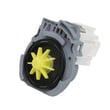
If you suspect a drain pump problem, the model KDTE104DSS1 uses a replaceable pump such as the dishwasher drain pump WPW10348269.
Drainage and water-flow problems affect everything: cleaning, drying, cycle time, and whether the dishwasher can complete a cycle without flashing lights or stopping early.
For model-specific troubleshooting steps and indicator light guidance, use the KDTE104DSS1 owner's manual.
Last updated: January 2026
Is it worth fixing a KitchenAid dishwasher?
Yes, it’s usually worth fixing a KitchenAid dishwasher like model KDTE104DSS1 when the problem is a normal wear part (drain pump, inlet valve, latch, rack hardware) and the tub is in good shape; most repairs cost far less than replacing the entire dishwasher.
Use these practical checkpoints before you spend money:
- Repair it when the issue is isolated (won’t drain, won’t fill, door won’t latch, rack won’t roll) and the unit otherwise runs normally.
- Repair it when you can confirm a clear failure (for example, a noisy or non-running drain pump).
- Replace it when you have repeated major failures (multiple leaks plus electrical issues) or heavy corrosion and structural damage.
- Replace it when the dishwasher has a history of poor cleaning even after maintenance and correct loading.
- Repair it when you can follow the diagnostic and care steps in the KDTE104DSS1 user manual.
Prices vary by labor rates and access, but these are common “worth fixing” repairs on this model family.
| Symptom | Common fix area | Example part for KDTE104DSS1 |
|---|---|---|
| Not draining | Drain system | Dishwasher drain pump WPW10348269 |
| Not filling | Water supply | Dishwasher water inlet valve W11175771 |
| Door won’t start cycle | Door switch/latch | Dishwasher door latch WPW10653840 |
A surprising number of “needs repair” calls are actually setup or detergent problems:
- Make sure incoming water is at least 120°F (49°C).
- Use fresh automatic dishwasher detergent (not hand soap or laundry detergent).
- Avoid overfilling detergent and always replace the rinse aid cap after filling.
- Scrape food off dishes (do not pre-rinse) and load so spray arms can spin freely.
- If you see foam or suds, stop and correct detergent type and amount; suds can prevent proper filling and operation.
Fixing the right problem restores cleaning and drying performance and prevents secondary damage (for example, a drain problem that leaves standing water can lead to odors and pump strain). Using the correct detergent and water temperature also prevents false “failure” symptoms.
Last updated: January 2026