Installation guide
 Owner’s manual
 Error Codes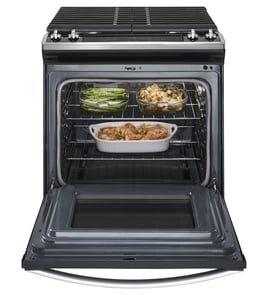



Why are gas stoves being discontinued?
Gas stoves are not being universally discontinued; instead, some cities, states, builders, and utilities are limiting new gas hookups or encouraging electric cooking due to indoor air quality and climate goals. Your Electrolux EW30GS75KSD gas range can still be installed and serviced normally where local codes allow, following the EW30GS75KSD installation guide.
What is actually changing (and what is not)
In most areas, the change is about new construction and new gas connections, not about forcing existing gas ranges out of homes.
- Some jurisdictions restrict gas piping in new buildings or require electric-ready kitchens.
- Some programs promote induction or electric ranges for energy and emissions goals.
- Existing homes with gas service typically continue to use gas appliances.
- Replacement rules vary by local code and utility policies.
- Proper ventilation remains important for any gas cooking appliance.
How this affects an Electrolux EW30GS75KSD owner
If you already have this range installed, day-to-day use and maintenance do not change. If you are installing or moving the range, the key is meeting local code requirements and safe installation practices.
| Situation | What to expect | Best next step |
|---|---|---|
| Existing home with gas service | Gas range use is typically allowed | Keep the range maintained and ventilate while cooking |
| Replacing an older gas range | Usually allowed if gas service exists | Confirm shutoff location, connector condition, and code requirements |
| New build or major remodel | Gas may be limited in some areas | Check local code and builder requirements early |
| Converting to electric/induction | Requires electrical capacity planning | Review electrical requirements in the manual and plan the circuit |
Safety and installation basics we recommend
The installation instructions for this style of 30-inch gas slide-in range emphasize qualified installation and code compliance.
- Have a qualified installer verify gas supply, leak checks, and grounding.
- Follow local codes and the National Fuel Gas Code guidance referenced in the instructions.
- Use proper ventilation; never use the oven to heat the room.
- Keep flammables away from the range area.
- If you smell gas: do not operate switches; contact your gas supplier immediately.
Why it matters
Understanding the difference between a local policy shift and a product being “discontinued” helps you plan correctly: you can focus on safe installation, ventilation, and code compliance rather than replacing parts or appliances unnecessarily.
Last updated: January 2026
What type of gas is used for a gas stove?
Most gas stoves, including the Electrolux EW30GS75KSD gas range, are set up from the factory to run on natural gas; this model can also be converted to LP/Propane using the supplied conversion orifices and instructions in the EW30GS75KSD installation guide.
Natural gas vs LP/Propane: what’s the difference?
Natural gas and LP/Propane both fuel burners, but they require different orifices and regulator settings to burn correctly.
- Natural gas is the default fuel in many homes with a gas utility line.
- LP/Propane is common with a propane tank (often in rural areas).
- You must match the range setup to your home’s gas supply; do not run LP through a natural-gas setup (or vice versa).
- Conversion uses fixed orifices for surface, oven, and broil burners (as described in the installation instructions).
- A manual shutoff valve should be installed in the gas supply line so you can turn gas on/off to the range.
How to tell what your home is supplying
Use these quick checks before you order parts or schedule service.
| What you have | Most likely fuel | Common clue |
|---|---|---|
| Utility gas line | Natural gas | Gas meter outside or in a utility area |
| On-site tank | LP/Propane | Propane tank in yard or near home |
| Not sure | Verify first | Ask your gas supplier or check your bill |
Safety notes we follow for gas ranges
If you ever smell gas, treat it as urgent and follow the safety steps in the EW30GS75KSD installation guide.
- Do not try to light any appliance.
- Do not touch electrical switches.
- Use a phone away from the area to contact your gas supplier.
- If you cannot reach your gas supplier, call the fire department.
Why it matters
Using the wrong gas type or an unconverted setup can cause poor ignition, weak flames, soot, or unsafe operation. Correct fuel setup also helps the igniter, gas valve, and burner orifices work the way Electrolux designed them.
Last updated: January 2026
What are signs of a faulty gas stove part?
On the Electrolux EW30GS75KSD gas range, faulty-part symptoms show up as ignition problems (clicking, slow lighting), abnormal flames (yellow or uneven), poor oven heating, or any gas odor. Follow the safety and gas-supply checks in the EW30GS75KSD installation guide before troubleshooting.
Safety first (gas odor or suspected leak)
- Do not try to light any burner or the oven.
- Do not touch electrical switches.
- Use a liquid leak detector (soap and water) on joints and connections; never use a flame.
- Make sure the manual shutoff valve is accessible and fully open.
Quick symptom checklist
| Symptom | What it points to | What to check first |
|---|---|---|
| Clicking continues after burner lights | Moisture, dirty burner parts, weak spark | Clean and reseat burner cap and head; dry the electrode area |
| Burner sparks but lights slowly or not at all | Gas flow issue or clogged ports | Shutoff valve open, burner ports clear, cap/head seated correctly |
| Yellow, lazy, or uneven flames | Dirty or misaligned burner parts | Clean burner head, confirm correct placement |
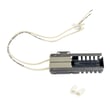
| Oven will not heat or heats inconsistently | Ignition or gas delivery problem | Consider the frigidaire range oven burner igniter 5303935066 and gas valve operation |
| Oven temperature seems inaccurate | Sensing/control issue | Test the range oven temperature sensor 5304504897 |
Model-specific checks for EW30GS75KSD sealed burners
The installation instructions emphasize correct burner head and cap placement and normal ignition timing.
- Burner caps and heads must be correctly placed before use.
- When you turn a knob to LITE, you should hear sparking and the burner should light within about 4 seconds (after air is purged from the gas line).
- If multiple burners act up after moving the range, recheck gas connections and verify the shutoff valve is fully open.
Why it matters
Ignition delays, abnormal flames, and gas odors reduce cooking performance and can signal problems in the igniter, spark module, burner head/orifice area, or gas valve.
Last updated: January 2026