Owner’s manual




Is a treadmill good for a 60 year old?
Yes. For many 60-year-olds, treadmill walking is a safe, effective way to improve cardiovascular fitness with controlled speed and incline. On the Proform model 831296061 (XP 650E treadmill), using the safety key and following the built-in precautions helps keep workouts low-impact and predictable; see the 831296061 owner's manual.
How to use a treadmill safely at 60
- Get medical clearance if you have heart, balance, or joint concerns.
- Start with walking, not running; increase speed in small steps.
- Use the handrails for balance when starting and stopping.
- Always use the safety key clip so the belt stops if you slip.
- Wear supportive walking shoes and avoid loose clothing.
- Place a mat under the treadmill to reduce vibration and protect flooring.
Smart starting plan (simple and realistic)
Aim for consistency first, then intensity.
| Week | Frequency | Duration | Intensity goal |
|---|---|---|---|
| 1 | 3 days/week | 10 to 15 min | Easy pace, comfortable breathing |
| 2 to 3 | 4 days/week | 15 to 25 min | Slightly brisk, can still talk |
| 4+ | 4 to 5 days/week | 25 to 40 min | Brisk walk, steady effort |
When a treadmill is not a good choice
Stop and get medical advice if you notice:
- Chest pain, unusual shortness of breath, or dizziness
- New or worsening knee, hip, or back pain
- Numbness, tingling, or frequent loss of balance
Why it matters
A treadmill lets you control pace, avoid uneven outdoor surfaces, and build a repeatable routine. That combination is especially helpful for older adults who want low-impact exercise with fewer trip hazards.
Last updated: January 2026
What is the best treadmill for under $500?
If you’re shopping for a treadmill under $500, we recommend prioritizing safety, stability, and parts support over “extra” features. Your Proform XP 650E treadmill (model 831296061) is a solid example of what matters most: a reliable walking belt system, a safety key, and clear operation guidance in the 831296061 user’s manual.
What to look for in a sub-$500 treadmill
- Safety key and clip: This is a must-have for home use, especially for beginners.
- Stable frame and handrails: Reduces wobble and improves confidence at higher speeds.
- Serviceable belt system: Walking belt, drive belt, and rollers should be replaceable.
- Basic console readability: Speed, time, and distance should be easy to see while moving.
- Fold-and-move design: Helpful if you need to store it between workouts.
Quick comparison: what matters most
| Priority | What to check | Why it matters |
|---|---|---|
| 1 | Safety key included | Helps stop the belt quickly if you slip |
| 2 | Walking belt and deck condition | Worn surfaces cause slipping, noise, and motor strain |
| 3 | Drive system health | A slipping drive belt reduces speed consistency |
| 4 | Parts availability | Keeps the treadmill repairable long-term |
If you already own the Proform 831296061: keep it running strong
The XP 650E manual notes the walking belt is pre-lubricated and warns against using silicone spray or other substances on the belt or platform. Following that guidance helps prevent premature belt and deck wear.
Common wear items we see customers replace:
- Treadmill safety key assembly 208603 (if the treadmill will not start or stops unexpectedly)
- Treadmill walking belt 220585 (if the belt slips, frays, or feels “sticky”)
- Treadmill drive belt 189462 (if the motor runs but the walking belt hesitates)
Why it matters
In the under-$500 range, the “best” treadmill is the one you can use consistently and maintain safely. A model with replaceable belts, rollers, and a working safety key typically delivers better long-term value than a feature-heavy unit with limited parts support.
Last updated: January 2026
What does E6 mean in a treadmill?
On the Proform XP 650E treadmill model 831296061, an E6 code typically points to a problem with the drive system feedback or motor control, meaning the console is not seeing the expected belt movement signal or the motor is not being driven correctly. Use the 831296061 owner's manual to confirm the exact code behavior and any reset steps.
What to check first (safe, quick checks)
- Remove the safety key, wait 30 seconds, then reinsert it and try again.
- Verify the treadmill is plugged into a properly grounded outlet and a working surge suppressor (a bad suppressor can damage the control system).
- Inspect the walking belt for binding: with power off, you should be able to push the belt by foot; it should move smoothly.
- Check for obvious loose wiring at the lower motor area (unplug first).
- If the console is in demo mode, exit it using the information mode procedure in the manual.
Common causes of an E6-style drive error
In this model family, E6 is most often triggered by one of these conditions:
- Speed sensor issue (reed switch not reading the front roller or flywheel)
- Motor control board issue (board not driving the motor correctly)
- Drive motor issue (motor not starting, overheating, or drawing excessive current)
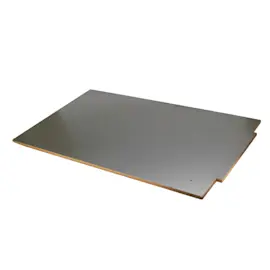
- Mechanical drag (worn walking belt or walking board increasing load)
Parts that commonly fix the problem
If your checks point to a failed component, these parts are commonly involved:
- Toyostove treadmill reed switch and sensor wire 165798
- Treadmill motor control board 408938
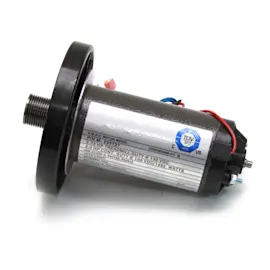
- Proform treadmill drive motor 286075
Symptom-to-part guide
| What you notice | Most likely area | What to inspect/replace |
|---|---|---|
| Belt does not move; console powers on | Motor control or motor | Motor control board, drive motor |
| Belt starts then stops; E6 returns | Speed feedback | Reed switch and sensor wire, sensor gap/alignment |
| Belt slips under load | Drive train | Drive belt tension/condition |
| Belt feels “sticky” when pushed | Deck friction | Walking belt, walking board |
Why it matters
A drive or feedback fault can cause the walking belt to change speed or stop unexpectedly. Fixing the root cause protects the motor control system and helps keep workouts stable and predictable.
Last updated: January 2026