Owner’s manual
 Error Codes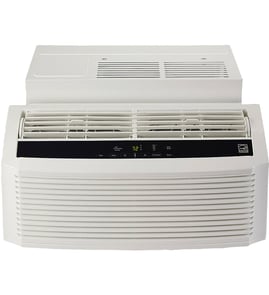



What are the most common issues with 58075051500?
For the Kenmore 58075051500 room air conditioner, the most common problems are weak or no cooling, poor airflow, water leaking into the room, and the unit not starting or tripping power. These issues usually trace to airflow restrictions, sensor problems, or worn electrical start components.
Most common symptoms and what usually causes them
- Not cooling or cooling poorly: dirty filter/coils, low airflow, or a failing compressor start circuit
- Weak airflow: clogged filter, dirty evaporator, or a failing blower wheel
- Water leaking indoors: unit not level, blocked drain path, or iced evaporator that later melts
- Won’t start: power cord issues, control/sensor faults, or a weak capacitor
- Short cycling (turns on and off quickly): thermistor (temperature sensor) reading incorrectly or restricted airflow
Quick checks we recommend first
- Unplug the unit for 2 minutes, then plug it back in (resets many controls).
- Confirm the unit is slightly tilted to the outside so condensate drains outdoors.
- Clean the air filter and check for lint or debris on the front intake.
- Make sure the temperature is set well below room temperature and the mode is set to Cool.
- Inspect the cord and plug for heat damage; use a dedicated outlet.
Parts that commonly relate to these issues
| Symptom | Common part involved | What it does |
|---|---|---|
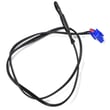
| Short cycling, wrong temperature | Thermistor 6323A20003S | Senses room/coil temperature for control decisions |
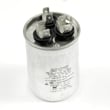
| Hums but won’t start, weak cooling | Capacitor 0CZZA20005B | Helps start/run the compressor or fan motor |
| Poor airflow or loud airflow noise | Turbo fan 5900A10005B | Moves air across the evaporator for cooling |
| Intermittent power/no power | Power cord 6411A20056A | Supplies power safely to the unit |
Why it matters
Airflow and accurate temperature sensing control how long the compressor runs. When airflow is restricted or the thermistor is inaccurate, the Kenmore 58075051500 can ice up, leak water, short cycle, and lose cooling performance.
Where to confirm model-specific procedures
Use the 58075051500 owner’s manual for cleaning steps, operating modes, and any model-specific troubleshooting guidance.
Last updated: March 2026
What is the average lifespan of 58075051500?
A Kenmore room air conditioner like model 58075051500 typically lasts 10 years with normal seasonal use and basic maintenance. Keeping airflow unrestricted and electrical components in good condition has the biggest impact on reaching that lifespan.
What affects lifespan the most
- Filter and coil cleanliness: clogged airflow makes the compressor run hotter and longer.
- Correct sizing: an undersized unit runs constantly; an oversized unit short-cycles.
- Power quality: loose outlets, damaged cords, and voltage drops stress the compressor.
- Drainage and moisture control: standing water accelerates corrosion and mold.
- Storage and off-season care: covering and keeping it dry prevents rust and debris buildup.
Maintenance schedule we recommend
Use your 58075051500 owner’s manual for model-specific cleaning and access steps.
| Task | How often | Why it matters |
|---|---|---|
| Clean/replace air filter | Every 2 to 4 weeks in season | Protects airflow and cooling performance |
| Clean evaporator/condenser coils | 1 to 2 times per season | Reduces run time and compressor strain |
| Check cord and plug for heat/discoloration | Monthly in season | Prevents intermittent power and shutdowns |
| Verify unit is level and draining | At install and mid-season | Prevents water leaks and rust |
Parts that commonly extend service life
If cooling is weak, the unit runs constantly, or temperatures seem inaccurate, these parts are often involved:
- Thermistor 6323A20003S (temperature sensing)
- Power cord 6411A20056A (safe, consistent power)
- Capacitor 0CZZA20005B (helps motors start and run)
Why it matters
A room air conditioner’s most expensive wear item is the sealed system and compressor; good airflow and stable power reduce heat and start-up stress, which is what most often shortens life.
Last updated: March 2026
What size air conditioner do I need for a 1500 square foot house?
For a 1,500 sq ft house, we typically start sizing around 30,000 BTU (about 2.5 tons), then adjust for insulation, sun exposure, ceiling height, and climate. The Kenmore 58075051500 is a room (window) air conditioner, so most homes this size use multiple room units or a central system.
Quick sizing guidance (BTU)
Use these ranges as a practical starting point, then confirm with a load calculation.
- Well-insulated, mild climate: ~24,000 to 30,000 BTU
- Average insulation, mixed sun exposure: ~30,000 to 36,000 BTU
- Hot climate, lots of windows or high ceilings: ~36,000 to 42,000+ BTU
- Open floor plans often need more capacity than the same square footage in closed rooms
- Duct issues (central systems) can increase required tonnage
Why “room size must fit capacity” matters
Your Kenmore manual explains that proper unit size is determined by the square feet in the area to be cooled, and that higher heat or humidity loads make the air conditioner run longer and more often. Oversizing can lead to short cycling and poorer humidity control; undersizing can run constantly and still feel warm. See the 58075051500 owner's manual.
Central vs. room air conditioner: what to choose
If you are cooling the entire 1,500 sq ft house, compare these common approaches:
| Cooling approach | Typical total capacity for 1,500 sq ft | Best when |
|---|---|---|
| Central AC / heat pump | ~30,000 to 36,000 BTU (2.5 to 3 tons) | You want whole-home, even cooling |
| Multiple room (window) units | Often 2 to 4 units totaling ~24,000 to 40,000 BTU | You cool zones or specific rooms |
Practical next steps
- Measure the areas you actually cool (not unused rooms).
- Note ceiling height, insulation level, and how much afternoon sun you get.
- If using room units, prioritize bedrooms and main living areas first.
- Use a proper load calculation (Manual J) for the most accurate central sizing.
- For operating tips that improve comfort without upsizing, use room air conditioner installation and operation tips.
Last updated: January 2026