Error Codes


What is the average lifespan of a Kenmore washer?
A Kenmore washer typically lasts 10 to 15 years. For Kenmore model 11082881100, lifespan depends most on load size, leveling, water quality, and how quickly you address wear items such as the drive system and drain components.
Typical lifespan by washer type
Most Kenmore washers fall into these real-world ranges:
| Washer type | Typical lifespan | Notes |
|---|---|---|
| Top-load (traditional agitator) | 12 to 15 years | Often simpler mechanically; wear parts are common and serviceable |
| Top-load (high-efficiency) | 10 to 14 years | More sensors and control components |
| Front-load | 10 to 12 years | More prone to seal, bearing, and moisture-related issues |
What shortens washer life fastest
We see these issues reduce lifespan more than anything else:
- Running frequent overloaded cycles (stresses the motor, clutch, and gearcase)
- Washer not level (increases vibration and suspension wear)
- Slow draining or repeated clogs (overworks the pump)
- Hard water and sediment (can shorten inlet valve life)
- Ignoring early symptoms (grinding, burning smell, leaks, or weak agitation)
Parts that commonly affect longevity on this model
On Kenmore 11082881100, these parts are often involved when performance drops with age:
- Coupling 285753A (connects the motor to the drive system; can fail after heavy loads)
- Water pump WP3363394 (draining problems, noise, or leaks)
- Clutch 285785 (spin issues, slow or weak spin)
- Washer valve 285805 (slow fill, no fill, or temperature mix problems)
Why it matters
Knowing the typical lifespan helps you decide whether to repair or replace. If your washer is near the 10 to 15 year mark, fixing a single wear item (like a coupling or pump) often restores reliable operation, while repeated major drive or tub repairs can signal end-of-life.
Last updated: January 2026
What is the cubic foot of my Kenmore washer model 11082881100?
For Kenmore washer model 11082881100, the exact tub capacity in cubic feet varies by the specific platform and tub design, but most Kenmore 110-series top-load washers of this era commonly fall in the about 3.2 to 3.5 cu. ft. range.
How to estimate capacity (quick, practical method)
If you need a working estimate for load sizing, you can use the tub measurement method (good for top-load washers):
- Measure the inside tub diameter (in inches)
- Measure the inside tub depth (in inches)
- Use the formula: (Diameter ÷ 2)² × π × Depth ÷ 1728 = cubic feet
- Measure to the bottom of the tub ring, not to the top of the cabinet
- Round to the nearest tenth for a realistic “usable” capacity
Typical capacity ranges (what most customers see)
These ranges help you sanity-check your estimate:
| Washer type (top-load) | Typical capacity range |
|---|---|
| Standard/older direct-drive style | ~2.9 to 3.5 cu. ft. |
| Larger-capacity traditional top-load | ~3.6 to 4.0 cu. ft. |
| High-capacity HE top-load (no tall agitator) | ~4.2 to 5.3+ cu. ft. |
Why it matters
Capacity affects how much you can load without poor cleaning, out-of-balance spinning, or extra wear on drive components like the clutch 285785 and coupling 285753A. Using the right load size also helps reduce strain on the water pump WP3363394 during drain and spin.
If you are sizing loads right now
- 3.2 to 3.5 cu. ft.: medium to medium-large loads (avoid packing tightly)
- Keep bulky items (comforters, blankets) to one at a time unless the tub is clearly larger
- If the washer bangs in spin, reduce load size and redistribute
Last updated: January 2026
How to hard reset kenmore washer?
For the Kenmore washer model 11082881100, a hard reset is simple: unplug the washer (or switch off the breaker) for 2 minutes, then restore power and run a short cycle. This clears many temporary control glitches and can stop false error behavior.
Hard reset steps (safe and effective)
- Turn the washer OFF.
- Unplug the power cord (or turn the breaker OFF).
- Wait 2 full minutes.
- Restore power.
- Lift and close the lid once, then select a Rinse/Spin or Drain/Spin cycle.
- Press Start and let it run for 1 to 2 minutes.
If it still will not run: quick checks that matter
A “reset” will not fix a mechanical failure. These checks often explain why a Kenmore top-load washer will not agitate, spin, or drain after power is restored.
- No drain or slow drain: check for a jammed or leaking pump; see water pump WP3363394.
- Agitates poorly or makes ratcheting noise: worn agitator dogs are common; see agitator dog 80040.
- Won’t spin or struggles under load: a worn clutch can cause slipping; see clutch 285785.
- Motor runs but tub does not move: a broken coupler is a frequent cause; see coupling 285753A.
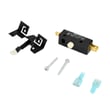
- Stops when you open or close the lid: a failing lid switch can interrupt operation; see switch W10820036.
What “reset” can and cannot fix
| Symptom | Reset helps? | More likely cause |
|---|---|---|
| Random stopping, odd lights, cycle confusion | Often | Power glitch, control logic hiccup |
| Won’t drain | Rarely | Pump blockage/failure, drain restriction |
| Won’t spin but drains | Sometimes | Lid switch issue, clutch/coupler wear |
| Loud grinding during agitation/spin | No | Drive components (coupler, clutch, gearcase) |
Why it matters
Resetting power is a fast way to clear temporary electronic issues, but repeated problems usually point to a failing part (pump, clutch, coupler, or switch). Identifying the symptom first helps you buy the right Kenmore replacement part the first time.
Last updated: January 2026
How to unclog drain hose on Kenmore washer?
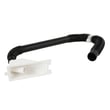
On Kenmore washer model 11082881100, we unclog the drain hose by draining any standing water, checking the standpipe first, then disconnecting the hose at the standpipe and pump outlet to flush out lint, coins, or small clothing items before reinstalling it kink-free.
Safety and prep
- Unplug the washer.
- Turn off hot and cold water valves.
- Keep towels and a shallow pan ready.
- If the tub is full, bail water or use a wet/dry vacuum.
Steps to clear the clog
- Pull the washer forward to access the drain hose.
- Check the standpipe or laundry sink for a clog (a blocked standpipe mimics a washer drain problem).
- Remove the hose from the standpipe and inspect the hose end for lint buildup.
- Access the pump outlet connection (front lower area on many Kenmore top-load designs) and loosen the clamp.
- Flush the hose with hot water; gently work a flexible brush through to break up debris.
- Reinstall the hose and clamps; route the hose with no kinks or crushing behind the washer.
- Run a drain and spin test; watch both connections for leaks.
If it still will not drain
- Pump is jammed or weak; inspect or replace the water pump WP3363394.
- Lid switch is not closing electrically; some cycles will not drain or spin with a failed switch W10820036.
- Hose is internally collapsed; replace the hose if it feels soft, flattened, or cracked.
Quick symptom guide
| Symptom | Likely cause | Next step |
|---|---|---|
| Slow drain | Partial hose or standpipe restriction | Flush hose; clear standpipe |
| Hums, no water movement | Pump jam or failure | Check pump; replace if needed |
| Drains but leaks | Loose clamp or damaged hose | Re-seat clamp; replace hose |
Why it matters
A restricted drain hose makes the washer hold water, stall mid-cycle, and overwork the drain pump; clearing it promptly helps prevent odors and repeat drain failures.
Last updated: January 2026