Installation guide
 Owner’s manual
 Error Codes


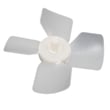
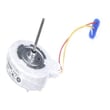

What is the most common problem with Frigidaire refrigerators?
Cooling and ice maker issues are the most common problems we see on Frigidaire refrigerators like model FGHD2368TF1. In many homes, the root cause is airflow or sealing problems (dirty coils, weak fan, door not sealing) or water-supply problems that stop the ice maker and dispenser from working correctly.
Most common symptoms (and what they usually point to)
- Fridge warm, freezer OK (or vice versa): airflow problem, evaporator fan issue, or frost buildup
- Ice maker not making ice: ice maker turned off, water valve closed, kinked line, filter not seated, or clogged filter
- Doors not closing or sealing: unit not level, cabinet interference, or worn gasket
- Odd-tasting water: water not dispensed for a while, or not connected to a proper cold-water supply
Quick checks we recommend first (FGHD2368TF1)
Use the FGHD2368TF1 owner’s manual to match symptoms to the “Before you call” checks, then start here:
- Confirm the refrigerator is level and doors align; Frigidaire recommends a slight tilt back (about 1/4 inch) so doors close and seal.
- Verify the ice maker is turned on and the water supply valve is open.
- Inspect the water line for kinks behind the unit.
- Reseat or replace the water filter if it is loose or restricted.
- Make sure doors close gently and the cabinet is not touching a wall.
Common parts involved when symptoms persist
If basic checks do not resolve the issue, these parts are frequently involved on this model:
| Symptom | Common part to inspect | Example part for FGHD2368TF1 |
|---|---|---|
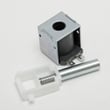
| No ice | Ice maker assembly | Refrigerator ice maker 243297613 |
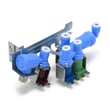
| No water/slow fill | Water inlet valve | Refrigerator water inlet valve assembly 242253002 |
| Temps swing, warm sections | Temperature sensing | Refrigerator temperature sensor 5303918775 |
Why it matters
Cooling and ice maker problems often get worse over time: poor airflow can lead to temperature swings and food spoilage, and water-supply issues can cause repeated no-ice complaints. Leveling and sealing also reduce compressor run time and help the refrigerator operate efficiently.
Last updated: January 2026
Why is there ice on the bottom of my freezer side by side?
Ice on the freezer floor is almost always caused by a clogged defrost drain; defrost water can’t flow to the drain pan, so it refreezes at the bottom. On the Frigidaire FGHD2368TF1 bottom-mount, clearing the drain and confirming the freezer drawer seals and closes fully typically fixes it. See the FGHD2368TF1 owner's manual for access and care details.
What to check first (fast, no-parts steps)
- Unplug the refrigerator or turn off power at the breaker.
- Remove the freezer drawer and look for a sheet of ice on the freezer floor.
- Melt the ice with a hair dryer on low (keep heat moving) or use warm towels.
- Flush the drain opening with hot water (a turkey baster works well).
- If the drain refreezes quickly, clear the drain tube all the way to the drain pan.
- Make sure the freezer drawer closes completely and nothing is holding it open.
How to clear a clogged drain safely
- After melting the floor ice, locate the drain opening under/near the evaporator cover area.
- Flush with hot water until you hear water dripping into the drain pan underneath.
- If flow is slow, repeat with a hot-water and baking-soda mix (about 1 teaspoon baking soda in 2 cups hot water).
- Reassemble, restore power, and monitor for 24 hours.
When a part is likely involved
If you keep getting ice buildup after clearing the drain, the issue is usually airflow, a door seal leak, or a defrost system problem.
| Symptom | Most common cause | What we recommend |
|---|---|---|
| Ice returns in 1 to 3 days | Drain still restricted or drain tube refreezing | Re-flush drain; confirm full flow to drain pan |
| Frost on packages and drawer rails | Door not sealing or drawer not closing | Inspect gasket, level unit, remove obstructions |
| Heavy frost plus warm temps | Defrost problem | Follow diagnostics in the manual; test components |
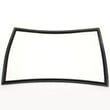
For sealing issues, inspect the freezer door gasket for gaps, tears, or areas not contacting the cabinet. If the gasket is damaged, replacing it can stop humid air from entering and creating excess frost and meltwater. For this model, the Frigidaire refrigerator freezer door gasket (gray) 5304537408 is a common replacement option.
Why it matters
A blocked drain can lead to recurring ice sheets, drawer binding, water leaks, and temperature swings that stress the compressor and reduce food quality.
Last updated: January 2026
What are the disadvantages of a bottom freezer refrigerator?
Bottom-freezer refrigerators like the Frigidaire FGHD2368TF1 make fresh food easy to reach, but the tradeoffs are real: you typically bend more for frozen items, freezer drawers can be harder to organize, and these designs often cost more than comparable top-freezer models. See the FGHD2368TF1 owner's manual for use and loading tips.
Common disadvantages (what most owners notice)
- More bending and lifting: frozen foods sit low, so you squat for heavy items (meat, bulk bags, ice cream tubs).
- Drawer organization challenges: stacked baskets can hide items; small packages get buried.
- Heavier freezer access: pulling out a loaded freezer drawer takes more effort than opening a swing door.
- Potentially higher purchase price: bottom-freezer and French door layouts often cost more than top-freezer styles.
- Space planning matters: doors and drawers need room to fully open for access to baskets and drawers.
How to reduce the downsides
- Use bins to group foods (breakfast items, vegetables, proteins) so you can lift one bin instead of digging.
- Keep the heaviest items in the upper freezer basket when possible.
- Avoid overloading; leaving space helps cold air circulate and keeps freezing performance steady.
- Confirm the refrigerator is level and stable; a tilted cabinet can make drawers feel harder to open.
Quick comparison: bottom freezer vs top freezer
| Feature | Bottom freezer | Top freezer |
|---|---|---|
| Fresh food access | Best (eye-level shelves) | Requires bending more |
| Frozen food access | More bending, drawer pull-out | Easier reach, swing door |
| Organization | Can be harder in deep drawers | Often simpler shelves |
| Typical cost | Higher | Lower |
Why it matters
If you use the freezer daily or store heavy frozen items, the drawer-style freezer can feel less convenient over time. If you mostly use fresh-food shelves, bottom-freezer designs are usually more comfortable day to day.
Last updated: January 2026
What is the bottom part of a refrigerator called?
On your Frigidaire FGHD2368TF1 bottom-mount refrigerator, the “bottom part” is commonly called the machine compartment (the area that houses the cooling system components) and the toe grille (the vented grille at the lower front). Keeping the toe grille clear helps airflow for proper operation.
What you will typically find at the bottom
The lower area of most refrigerators includes parts that move heat out of the cabinet and keep temperatures stable:
- Toe grille: the front lower vent that lets air circulate
- Machine compartment: the enclosed area behind the toe grille or rear lower cover
- Compressor: pumps refrigerant through the sealed system
- Condenser area: where heat is released (coils may be underneath or on the back)
- Drain pan: catches defrost water so it can evaporate
Why the name matters (and what to check)
If you are troubleshooting noise, overheating, or poor cooling, knowing whether you mean the toe grille vs. the machine compartment helps you focus on the right inspection.
- If the toe grille is blocked, airflow drops and cooling performance can suffer.
- If the machine compartment is dusty, the system can run longer and sound louder.
- If you see water near the front, it can be a drain or defrost-water issue rather than a door leak.
Quick reference: common “bottom” terms
| What people call it | What it usually means | Where it is |
|---|---|---|
| Bottom vent | Toe grille | Lower front |
| Bottom back panel | Rear access cover (varies by design) | Lower rear |
| Bottom compartment | Machine compartment | Lower rear or behind toe grille |
| Bottom tray | Drain pan | Under the cabinet |
Helpful model-specific tip
Your FGHD2368TF1 documentation specifically warns not to block the toe grille because sufficient air circulation is essential for proper operation. For placement clearances and airflow guidance, use the FGHD2368TF1 owner’s manual.
Related DIY help
If you are asking because the refrigerator is showing a code or acting unusual, use Frigidaire refrigerator error codes to match the display to the next best step.
Last updated: January 2026