 Installation guide
 Owner’s manual
 Error Codes




How do I clear the error code on my GE dishwasher?
On the GE GSD2100V50BB dishwasher, most error codes clear after a simple reset: turn the dishwasher off at the breaker (or unplug it) for about 5 minutes, then restore power and start a new cycle. If the code returns, troubleshoot the underlying cause.
- Turn the dishwasher OFF at the household breaker (preferred) or unplug it.
- Wait 5 minutes to let the control fully power down.
- Restore power.
- Select a normal wash cycle and press Start.
- Watch the display or indicator lights for the code to reappear.
For model-specific control behavior and any keypad sequence your unit may use, follow the reset guidance in the GSD2100V50BB owner's manual.
Many GE dishwasher codes are symptoms of a real issue (drain, fill, door latch, or motor). Start with these common checks:
- Door fully latched: a misaligned latch can trigger a door-related fault.
- Drain path clear: check the sink/disposer connection and hose routing for kinks.
- Standing water: indicates a drain problem that will often retrigger the code.
- Cycle won’t start: confirm power, then check the door switch circuit.
- Unusual humming or no wash action: points to a circulation or motor issue.
If troubleshooting points to a failed component, these are common on GSD2100V50BB:
| Symptom you see | Often involved | Example part for this model |
|---|---|---|
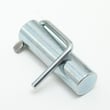
| Won’t start or stops when door moves | Door interlock | Dishwasher door switch WD21X10261 |
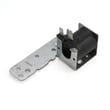
| Won’t drain, water left in tub | Drain actuation | GE dishwasher drain solenoid assembly WD21X10268 |
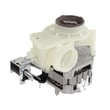
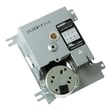
| Weak wash, not cleaning well | Wash motor/pump | GE dishwasher pump and motor assembly WD26X10051 |
Clearing the code without fixing the cause usually means the dishwasher will fault again mid-cycle. A quick reset gets you running, but repeat codes help pinpoint whether the issue is electrical (switch/control) or mechanical (drain, pump, hose).
For code definitions and next-step troubleshooting, use GE dishwasher error codes.
Last updated: January 2026
What is the most common problem with GE dishwashers?
The most common issue we see with GE dishwashers, including model GSD2100V50BB, is a no-start or no-run condition. In most cases, the cause is simple (power, door not latching, or a control not advancing), but it can also involve a failed door switch or timer.
- Make sure the dishwasher door closes firmly; a weak latch feel often points to a door-switch issue.
- Confirm the kitchen breaker is on; reset it fully OFF then ON.
- Verify the cycle is actually selected and started; some cycles require the door to be closed to begin.
- Cancel and drain, then try a normal cycle again.
- If the unit hums but does not wash, listen for water fill and pump sounds.
If the basics check out, these model-relevant parts are frequent culprits:
- Dishwasher door switch WD21X10261 (won’t run if the control thinks the door is open)
- Dishwasher timer WD21X33640 (can stall and stop advancing the cycle)
- Control panel and wiring connections (loose or corroded terminals can interrupt power)
| Symptom | Most likely area | What to do next |
|---|---|---|
| No lights, no response | Power supply | Check breaker, junction box connections, house GFCI if present |
| Lights on, won’t start | Door switch/latch | Test/inspect door switch and latch alignment |
| Starts then stops | Timer/control | Check timer advance and wiring harness connections |
| Runs but won’t drain | Drain system | Inspect drain hose routing and drain components |
A GE dishwasher that won’t start is often a safety interlock problem (door switch) or a control-advance problem (timer). Fixing the right root cause prevents repeat failures and avoids unnecessary part replacement.
- Use the GSD2100V50BB owner’s manual for cycle-start steps and control operation details.
- Use the installation guide to confirm proper electrical connection and drain routing, since installation issues can mimic “won’t start” or “won’t run” symptoms.
- If you’re seeing a code on an electronic control, follow GE dishwasher error codes (applies to many GE dishwashers and helps narrow the failure quickly).
Last updated: January 2026
Can a clogged drain cause an FTD error?
Yes. On the GE GSD2100V50BB dishwasher, a clogged or restricted drain can trigger an FTD error because the dishwasher expects the tub to empty before it can fill and continue the cycle; standing water makes the unit think draining failed.
- Cancel the cycle and see whether water leaves the tub.
- Remove and clean the sump area and any screens where food debris collects.
- Check the sink drain/disposer connection for a knockout plug or blockage.
- Inspect the drain hose for kinks, pinches, or a sag that traps water.
- Verify the drain hose routing has a high loop (or air gap if your setup uses one).
| What you see | Most likely cause | What usually fixes it |
|---|---|---|
| Water left in bottom after cycle | Partial clog in hose or sink connection | Clear hose and sink/disposer inlet; correct routing |
| Hums but drains slowly | Debris at pump area or weak drain action | Clean sump; check drain components |
| Drains sometimes, not always | Intermittent drain mechanism issue | Inspect drain solenoid linkage and related parts |
If cleaning and hose checks do not solve it, these model-matched parts are common next suspects:
- Dishwasher drain hose WD24X10014 (cracked, kinked, or internally restricted hose)
- GE dishwasher drain solenoid assembly WD21X10268 (drain valve not opening reliably)
FTD is often a symptom, not the root problem. Restoring proper draining prevents re-fills over standing water, reduces odor, and helps protect the pump and motor from working against a restriction.
Use the GSD2100V50BB owner’s manual for the correct cancel-drain procedure, drain hose routing guidance, and any model-specific diagnostics.
Last updated: January 2026
What is the average life expectancy of a GE dishwasher?
A GE dishwasher typically lasts about 10 years with normal household use. For your GE GSD2100V50BB, consistent cleaning, correct detergent use, and fixing small issues early (like draining or spray problems) helps you reach that lifespan.
Most dishwashers wear out from heat, moisture, and moving parts (pump, motor, seals, and door components). These factors have the biggest impact:
- Water quality (hard water speeds up mineral buildup)
- How often you run cycles (daily use wears parts faster)
- Loading habits (overloading blocks spray and strains racks)
- Routine cleaning (filters, spray arms, tub)
- Small leaks or poor draining left uncorrected
Use these habits to reduce strain on the pump, motor, and wash system:
- Scrape off heavy food; avoid loading dishes with large debris
- Run hot water at the sink before starting a cycle (improves wash performance)
- Clean the spray arm holes if you see weak spray or gritty residue
- Use a dishwasher cleaner periodically to reduce grease and mineral buildup
- Check for slow draining and correct it before it stresses the motor
For model-specific care and cleaning steps, follow the GSD2100V50BB owner's manual.
A single failed part can be worth repairing, especially if the tub is in good shape.
| Symptom | Common cause | Example part for this model |
|---|---|---|
| Not draining | Drain solenoid or drain hose issue | GE dishwasher drain solenoid assembly WD21X10268 |
| Loud grinding or no wash action | Pump/motor wear or obstruction | GE dishwasher pump and motor assembly WD26X10051 |
| Poor cleaning | Clogged or damaged spray arm | Dishwasher spray arm, lower WD12X10244 |
Knowing the typical 10-year life expectancy helps you decide whether to invest in a repair (often cost-effective mid-life) or plan for replacement when multiple major components start failing.
Last updated: January 2026





