Owner’s manual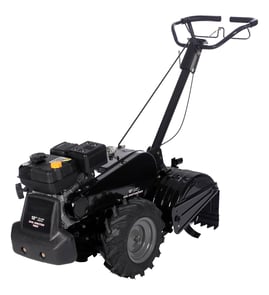




How to identify old Troy-Bilt tiller?
To identify an older Troy-Bilt tiller, we match the model family and the model and serial number tag location on the machine. On Troy-Bilt tillers, the ID tag is commonly on the tine hood or near the handlebars; on some older units, the serial number is cast into the transmission housing. Confirm the exact location and format in the 12089 owner’s manual.
Where to look first (fast checks)
- Check the tine hood for a sticker or plate with model and serial information.
- Check near the handlebars for an ID plate (common on many older builds).
- Inspect the transmission housing for cast-in numbers (seen on some older Troy-Bilt designs).
- Note whether the tiller has a PTO capability; many rear-tine Troy-Bilt units can be configured as a PTO power unit by removing the tines.
- Record any engine nameplate information (engine model and type) separately from the tiller model.
What to write down (so you get the right parts)
| Item to capture | Where it’s found | Why it matters |
|---|---|---|
| Tiller model number | Sticker/plate on tine hood or near handlebars | Determines correct Troy-Bilt 12089 parts diagrams and hardware |
| Tiller serial number | Same tag, or cast into transmission on some older units | Helps narrow production run and revisions |
| Engine model/type | Engine nameplate | Engine parts and tune-up items are matched to the engine, not the tiller |
Why it matters
Troy-Bilt used multiple tag styles over the years, and rear-tine tillers often share similar frames while using different transmissions, tine sets, and PTO-related components. Getting the exact model and serial information prevents ordering the wrong tine, fastener, or drive components.
If you’re identifying a Troy-Bilt 12089 specifically
In the 12089 documentation, we reference controls and features like the Wheels/Tines/PTO drive lever and PTO attachment capability; those feature cues can help confirm you are working with the correct rear-tine platform before you order parts.
Last updated: February 2026
What kind of gear oil goes in a Troy-Bilt Tiller?
For the Troy-Bilt 12089 rear-tine tiller, we use SAE 85W-140 gear oil with an API GL-4 rating in both transmissions (the power unit transmission and the tine attachment transmission). This matches the factory-fill lubricant specified in the 12089 owner's manual.
What to use (and what to avoid)
Use gear oil that matches these specs so the transmission is protected under load and heat.
- Recommended for this model: SAE 85W-140, API GL-4
- Acceptable for small top-offs: SAE 80W-90 or 85W-140 gear oil (stay with GL-4)
- Avoid for full refills: GL-5-only gear oil (GL-5 additives can be harder on some yellow-metal components)
- Do not substitute: engine oil, ATF, or hydraulic oil
Where the gear oil goes on model 12089
Your tiller has two separate transmissions, and both need the correct gear oil.
| Location | What it does | What you fill it with |
|---|---|---|
| Power unit transmission | Drives wheels and power unit gearing | SAE 85W-140, API GL-4 |
| Tine attachment transmission | Drives tine/PTO gearing | SAE 85W-140, API GL-4 |
Checking and filling basics
We follow the service intervals and “cold” checking method described in the manual.
- Let transmissions cool before checking; hot oil expands and reads high.
- Park on level ground and set the depth regulator as described in the manual.
- Check both transmissions; low oil can damage internal gears quickly.
- When topping off the tine attachment, add oil slowly to prevent overfilling.
For step-by-step procedures and plug/dipstick locations, use the 12089 owner's manual.
Why it matters
Rear-tine tillers put heavy shock loads on the drivetrain. Using the correct viscosity and GL rating helps prevent gear wear, overheating, and hard shifting, especially during hot-weather tilling.
Last updated: February 2026
Where is the model number on a tiller?
On a Troy-Bilt rear-tine tiller like model 12089, the model number is printed on the product identification label. You’ll typically find that label on the tine shield/guard area, on or near the fuel tank, or on the front of the frame.
Where to look first (fast checks)
- Check the tine shield/guard above or behind the tines
- Look around the fuel tank (side or rear-facing label)
- Inspect the front frame or engine mounting area
- Check near the handlebar base and control cable routing points
- Wipe off dirt and oil; labels are often hidden under grime
What the label usually looks like
Most tiller ID labels are a small decal or metal tag that includes the model number and often a serial number. For Troy-Bilt equipment, it is commonly a rectangular label with printed black text.
| What you see on the label | What it’s used for |
|---|---|
| Model number (example: 12089) | Matching parts and diagrams |
| Serial number | Identifying production run/version |
| Brand name (Troy-Bilt) | Confirming manufacturer |
Why it matters
Using the correct model number keeps you from ordering the wrong parts for your tiller’s transmission, tines, controls, and hardware. Even similar Troy-Bilt tillers can use different shafts, worm gears, or tine sets.
If the label is missing or unreadable
- Check the 12089 owner’s manual for typical label locations and identification tips
- Compare your tiller’s major assemblies (tine area, transmission housing, handlebar base) to the parts diagrams for model 12089
- If you’re replacing wear items, match by application and mounting style; for example, rear-tine sets such as troy-bilt tine are selected by the correct fit and orientation
Last updated: February 2026
What engine is on the Troybilt 12089 tiller?
The Troy-Bilt 12089 rear-tine tiller is identified in the manual as an 8HP Standard model; the exact engine manufacturer, model, and type are listed on the engine nameplate (tag) on your engine. For the most accurate match, we use that nameplate information when selecting engine parts or service.
How to identify the exact engine on a Troy-Bilt 12089
Use the steps below, then compare what you find to the engine parts and service information.
- Shut the tiller off and let the engine cool completely.
- Locate the engine nameplate (often on the blower housing, valve cover area, or near the muffler shield).
- Write down the engine model and type/spec numbers exactly as shown.
- If the tag is dirty, wipe it gently; avoid scraping off printed numbers.
- Use the engine model and type to match tune-up parts (spark plug, air filter) and service procedures.
For diagrams, control locations, and model identification details, use the 12089 owner’s manual.
What “8HP Standard” means (and what it does not)
“8HP Standard” is the tiller model designation shown for model 12089; it helps identify the tiller platform and parts lists, but it does not replace the engine’s own model and type numbers.
| Identifier | Where you’ll find it | What it’s used for |
|---|---|---|
| Tiller model: 12089 | Tiller ID label and manual | Tiller chassis, transmission, wheels, tine drive parts |
| Engine model/type | Engine nameplate/tag | Engine service parts and engine-specific repair info |
Why it matters
Rear-tine tillers often share the same tiller model number across multiple engine builds over time. Using the engine nameplate prevents ordering the wrong ignition, carburetor, or governor parts and keeps troubleshooting accurate.
Last updated: February 2026