Installation guide
 Owner’s manual
 Error Codes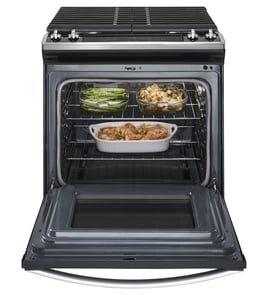



What model is my Kenmore gas range?
Your Kenmore gas range model number is printed on the serial plate (rating label). On Kenmore model 79036933902, the serial plate is typically on the oven front frame behind the oven door, or on the drawer side frame. Use that exact model number when ordering parts.
Where to look on the range
Check these common label locations first:
- Open the oven door and look along the front frame (around the door opening)
- Pull out the bottom storage drawer and check the side frame inside the drawer opening
- Look for a sticker or metal plate labeled Model and Serial
- Write down the full model number and serial number exactly as shown
What the serial plate tells you (and why it matters)
The serial plate is more than a model tag. It also lists key information used for safe setup and correct parts matching.
- Model number (needed to match parts diagrams)
- Serial number (helps identify production details)
- Burner ratings (BTU information)
- Fuel type and gas pressure settings from the factory
Why it matters
Using the exact model number prevents ordering the wrong igniter, burner parts, or control components for your Kenmore gas range.
Quick checklist before you order parts
Use this checklist to avoid mix-ups:
- Confirm the model number matches 79036933902 character-for-character
- Compare the part name and part ID before ordering
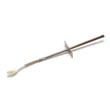
- If you are troubleshooting “no bake” or slow ignition, check the frigidaire range oven burner igniter 5303935066
- Keep your model and serial info handy when referencing the installation guide
Common label locations at a glance
| Area on the range | What to do | What you will see |
|---|---|---|
| Oven door open | Inspect the front frame behind the door | Serial plate with model and serial |
| Storage drawer area | Pull drawer out and check side frame | Serial plate on the frame |
Last updated: February 2026
How to take the top off a Kenmore gas range?
On the Kenmore 79036933902 gas range, the cooktop (top) is not removable because it uses a sealed-top burner design. For cleaning or service access, we remove surface parts (grates, caps, burner heads) and, when needed, pull the range forward instead of lifting the top. See the installation guide for the sealed-top warning and safe moving steps.
What you can remove from the top (safe, routine)
- Remove the grates once the range is completely cool.
- Lift off burner caps (if equipped) and set them aside.
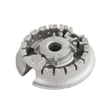
- Lift off the burner heads on sealed burners (if they are designed to lift off).
- Wipe spills around the burner area; keep liquids out of gas ports and igniters.
- Reinstall parts in the same positions so flames light evenly.
If you need access for service (recommended approach)
If the goal is to reach wiring, gas components, or the back of the unit, we service this style range by sliding it out.
- Turn off power at the breaker (or unplug if accessible).
- Turn off the manual gas shut-off valve.
- Make sure the range is cold.
- Remove the storage or warmer drawer (if equipped) to reduce weight and improve access.
- Carefully slide the range out; avoid pinching the flexible gas line.
Quick comparison: removable cooktop vs sealed cooktop
| Feature | Removable cooktop designs | Sealed cooktop designs (79036933902) |
|---|---|---|
| Top lifts up | Often yes | No |
| Spill control | More spill-through | Better spill containment |
| Typical service access | Under the top | From front, back, or by pulling range out |
Why it matters
Trying to lift a sealed cooktop can bend panels, damage burner/ignition parts, and create gas-leak or ignition problems. Using the correct access method protects the burner system and keeps the range operating safely.
Last updated: February 2026
How long should a Kenmore gas stove last?
A Kenmore gas range like model 79036933902 typically lasts 15 years with normal household use. Consistent cleaning, correct flame adjustment, and prompt replacement of wear items (like igniters and light bulbs) help you reach that lifespan; see the care guidance in the owner's manual.
Typical lifespan and what affects it
Most gas ranges land in a similar life range, but these factors make the biggest difference:
- Cooking frequency (daily heavy use shortens life)
- Heat and grease management (keeping vents and surfaces clean reduces corrosion and failures)
- Proper burner flame size (flame should not extend past the pan edge)
- Timely part replacement (igniters, sensors, bulbs)
- Avoiding misuse (for example, using a stove-top grill on sealed burners can cause incomplete combustion)
Maintenance checklist that extends range life
Use this quick routine to keep your Kenmore 79036933902 running reliably:
- Wipe spills after the cooktop cools; baked-on spills trap heat and odors
- Keep burner heads and caps seated correctly so ignition is consistent
- Adjust flames to match pan size (no flames licking up the sides)
- Replace weak-ignition parts early, such as the frigidaire range oven burner igniter 5303935066
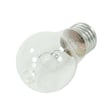
- Replace dim or failed oven lights with the correct wattage bulb, such as appliance light bulb, 40-watt 316538904
Common “end-of-life” symptoms and likely fixes
| Symptom | What it often points to | Example part on this model |
|---|---|---|
| Oven won’t heat or takes too long to light | Weak/hot-surface igniter | 5303935066 igniter |
| Oven temperature swings or bakes unevenly | Temperature sensor drifting | 5304504897 sensor |
| Surface burners click but don’t light consistently | Ignition component issue or dirty burner parts | 5304505695 spark module, burner head/cap |
Why it matters
A gas range can look “fine” but still waste time and fuel if ignition is slow or temperatures drift. Replacing a few common wear parts and following safe burner-use practices helps you get the full expected service life.
Last updated: February 2026
What are the parts of a gas stove?
A gas stove (and a full gas range like Kenmore model 79036933902) is made up of cooktop burner parts for surface cooking plus an oven system underneath. Key components include burner heads and caps, grates, control knobs, igniters, gas valves, and the electronic controls that manage ignition and temperature (see the owner's manual).
Main parts you will see on the cooktop
- Burner grates (support cookware)
- Surface burner heads (shape and distribute the flame)
- Surface burner caps (help stabilize and spread the flame)
- Burner skirts and spill areas (help route spills away from gas openings)
- Control knobs and the control panel (set flame level)
- Electrodes/igniters (spark to light the burner)
Main parts inside the oven section
Your 79036933902 uses an electric ignition system for the oven burner: the igniter glows, then the oven gas valve opens and the burner lights.
- Oven burner and flame spreader/tube
- Oven burner igniter (common no-heat culprit) such as the frigidaire range oven burner igniter 5303935066
- Oven gas valve such as the range oven gas valve 316404901
- Oven temperature sensor/probe such as the range oven temperature sensor 5304504897
- Oven light system (bulb, socket, lens) such as the appliance light bulb, 40-watt 316538904
- Electronic oven control/control board (clock and temperature control)
Quick “what does what” table
| Part | What it does | Common symptom when it fails |
|---|---|---|
| Surface burner head/cap | Shapes the cooktop flame | Uneven flame, poor ignition |
| Oven burner igniter | Heats up to light the oven burner | Oven won’t heat, long preheat |
| Oven temperature sensor | Tells control the oven temperature | Overheats, underheats |
| Oven gas valve | Opens to let gas flow to oven burner | No bake/broil flame |
Why it matters
Knowing the major gas range parts helps you troubleshoot faster. For example, if the oven takes 30 to 60 seconds to light, that can be normal ignition timing; if it takes much longer or never lights, the igniter or gas valve is often where we start.
Last updated: February 2026